
New Car vs. Used Car: Weighing the Real Trade-Offs
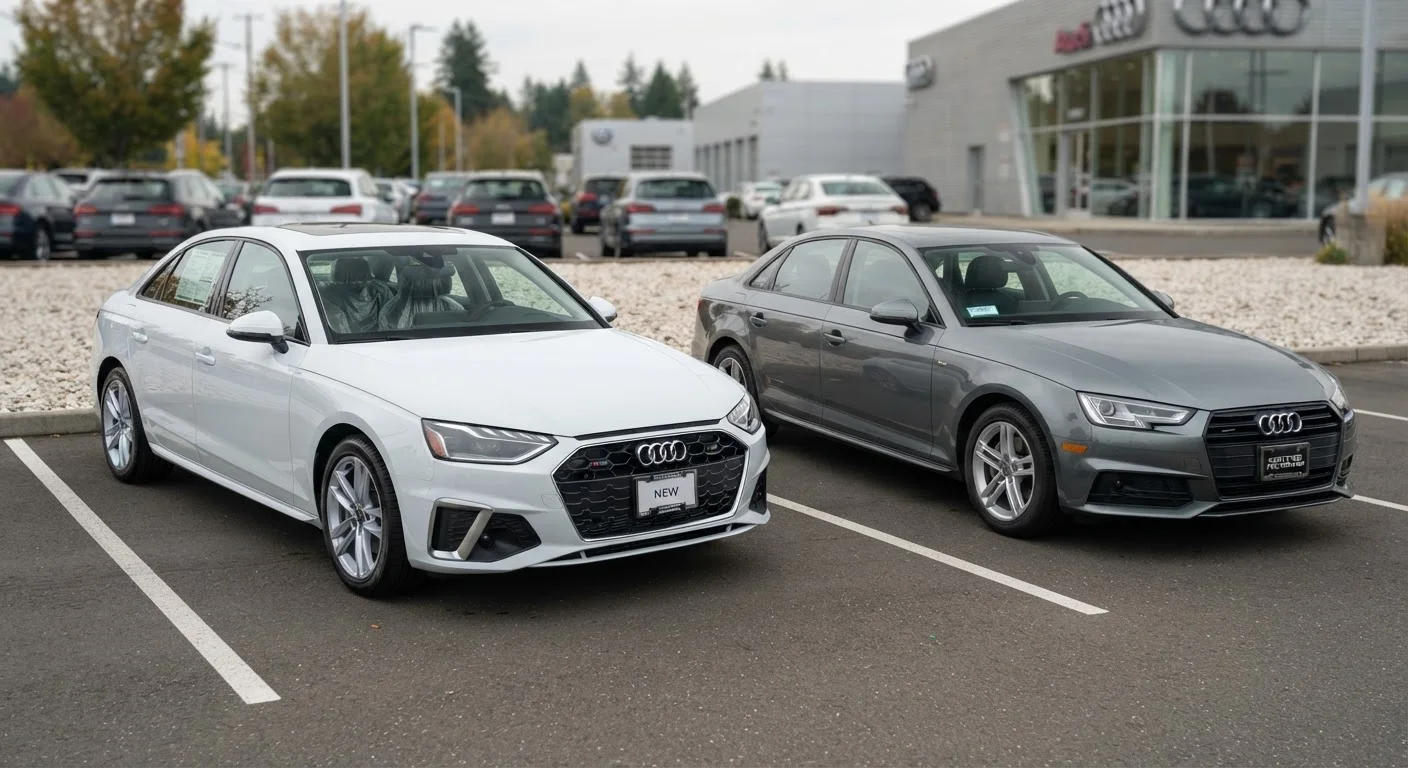
Photo credit: FaqInsider.com
In this article
Depreciation, warranty coverage, financing rates — a balanced look at what you actually gain and give up on each side of the new-vs-used decision.
Key Takeaways
- New cars lose significant value in the first year through depreciation, which benefits used-car buyers.
- New vehicles typically offer manufacturer warranties and the latest safety technology.
- Used cars generally cost less upfront but may carry hidden maintenance needs.
- Financing rates on new cars are often lower than on used vehicles.
- Certified pre-owned programs can bridge the gap between new and standard used.
Full manufacturer warranty from day one
New vehicles come with comprehensive bumper-to-bumper and powertrain coverage, reducing the financial risk of early mechanical issues.
Latest active safety technology included
Current model-year vehicles typically include automatic emergency braking, lane assist, and other systems that may be absent on older used cars.
Lower financing interest rates available
Automaker financing arms and lenders commonly offer more competitive rates on new vehicles than on used ones, which can reduce total loan cost.
No prior ownership history to investigate
Buying new eliminates concerns about previous accidents, deferred maintenance, or odometer irregularities that can complicate used-car purchases.
Used cars offer more value per dollar spent
The sharpest depreciation occurs in a vehicle's first one to three years, meaning used buyers often acquire equivalent transportation for significantly less money.
Lower purchase price reduces financing amount
A smaller loan principal means less total interest paid over the loan term, even when the interest rate itself is somewhat higher than a new-car loan.
New cars depreciate sharply in year one
The largest single-year drop in vehicle value typically occurs immediately after purchase, meaning new-car buyers absorb that loss if they sell or trade within a few years.
Higher insurance premiums for newer vehicles
Because insurers base comprehensive and collision coverage on replacement cost, newer vehicles generally carry higher annual insurance premiums.
Used cars may require more near-term maintenance
Wear items like brakes, tires, and belts may be approaching end of life on a used vehicle, leading to repair costs that don't show up in the sticker price.
Vehicle history requires independent research
Without a full service history, used-car buyers rely on vehicle history reports and pre-purchase inspections that may not surface every issue.
The Depreciation Reality
Depreciation is the single biggest financial factor separating new and used vehicles. A new car can lose a substantial portion of its value within the first year of ownership - estimates commonly cited in the automotive industry suggest the sharpest drop occurs immediately after purchase. By the time a vehicle is two to three years old, that steepest depreciation curve has already played out.
For used-car buyers, that drop represents an opportunity. You're effectively letting the original owner absorb the largest loss, then stepping in to buy the remaining value at a lower price. For new-car buyers, the flip side is that your vehicle retains its full warranty coverage and comes with no prior ownership history - a trade-off some buyers consider worth the premium.
~20%
Typical first-year depreciation on a new car
Industry estimates commonly cited by automotive analysts suggest new vehicles lose roughly 15-20% of their value in the first year of ownership.
2-3 yrs
Age where depreciation curve typically flattens
Automotive valuation data indicates that vehicles aged two to three years have absorbed the steepest value loss, offering used buyers more stable ownership costs.
Warranty and Reliability Considerations
One of the clearest advantages of buying new is the manufacturer's warranty. Most new vehicles come with a bumper-to-bumper warranty covering defects for a set period, along with a longer powertrain warranty on the engine and transmission. This coverage can significantly reduce out-of-pocket repair costs during the early years of ownership.
Used vehicles, by contrast, may be partially or fully out of warranty, depending on their age and mileage. That said, certified pre-owned (CPO) programs - manufacturer-backed inspection and warranty programs applied to select used vehicles - can substantially close this gap. Before assuming a used car carries no protection, it's worth understanding exactly what any CPO label actually guarantees. Our guide on what CPO programs actually cover breaks down the differences between programs.
Full manufacturer warranty from day one
New vehicles come with comprehensive bumper-to-bumper and powertrain coverage, reducing the financial risk of early mechanical issues.
Latest active safety technology included
Current model-year vehicles typically include automatic emergency braking, lane assist, and other systems that may be absent on older used cars.
Lower financing interest rates available
Automaker financing arms and lenders commonly offer more competitive rates on new vehicles than on used ones, which can reduce total loan cost.
No prior ownership history to investigate
Buying new eliminates concerns about previous accidents, deferred maintenance, or odometer irregularities that can complicate used-car purchases.
Used cars offer more value per dollar spent
The sharpest depreciation occurs in a vehicle's first one to three years, meaning used buyers often acquire equivalent transportation for significantly less money.
Lower purchase price reduces financing amount
A smaller loan principal means less total interest paid over the loan term, even when the interest rate itself is somewhat higher than a new-car loan.
Financing Rates and Total Cost of Ownership
Financing rates are often overlooked in the new-vs-used comparison. Lenders and automakers' financial arms frequently offer lower interest rates on new vehicles, sometimes including promotional rates for qualified buyers. Used-car loans, particularly on older vehicles, typically carry higher rates - which can partially offset the lower purchase price.
Running a full cost-of-ownership calculation matters here. That includes insurance premiums (often higher on newer vehicles due to replacement cost), fuel economy, anticipated maintenance, and registration fees, which in many states are tied to vehicle value and model year. A used car with a lower sticker price doesn't always mean lower total spending over a three- to five-year ownership window.
New cars depreciate sharply in year one
The largest single-year drop in vehicle value typically occurs immediately after purchase, meaning new-car buyers absorb that loss if they sell or trade within a few years.
Higher insurance premiums for newer vehicles
Because insurers base comprehensive and collision coverage on replacement cost, newer vehicles generally carry higher annual insurance premiums.
Used cars may require more near-term maintenance
Wear items like brakes, tires, and belts may be approaching end of life on a used vehicle, leading to repair costs that don't show up in the sticker price.
Vehicle history requires independent research
Without a full service history, used-car buyers rely on vehicle history reports and pre-purchase inspections that may not surface every issue.
Safety Technology and Features
Automotive safety technology has advanced rapidly. Features like automatic emergency braking, lane-keeping assist, blind-spot monitoring, and rearview cameras - once found only on premium models - have become standard equipment on most new vehicles. Buying new virtually guarantees access to the current generation of active safety systems.
Used vehicles from just a few model years back may lack these features entirely, or offer them only on higher trim levels. For buyers with young families or high-mileage commutes, this gap in safety capability carries real weight. It's one area where the new-car premium may reflect genuine, measurable value rather than simply newness for its own sake.
Safety Ratings Change Year to Year
Organizations such as the National Highway Traffic Safety Administration (NHTSA) and the Insurance Institute for Highway Safety (IIHS) update their crash-test standards regularly. A vehicle that earned high marks several years ago may not meet current criteria. When evaluating any vehicle - new or used - checking current safety ratings for that specific model year is worthwhile.
Making the Decision Work for Your Situation
The new-vs-used decision rarely comes down to a single factor. Buyers should start by anchoring to an honest monthly budget - not just the purchase price - and consider how long they intend to keep the vehicle. Longer ownership windows reduce the sting of new-car depreciation because you spread that loss over more years of use.
If you're considering trading in a current vehicle as part of the deal, it's worth separating that transaction from the car-buying decision itself. Understanding the trade-in process independently helps you evaluate each piece clearly. Our breakdown of common trade-in myths can help you avoid leaving money on the table. And once you've made your purchase, routine maintenance practices play a major role in protecting the value and reliability of whichever vehicle you choose.

Author
Cars Editorial Team
Cars Editorial Team is the collective byline for our editorial team and contributor network. Articles published under this byline or an editorial pen name are researched, written, and reviewed according to our editorial standards for clarity, consistency, and independence before publication.
View all articles →