
Basement Waterproofing From the Inside vs. the Outside
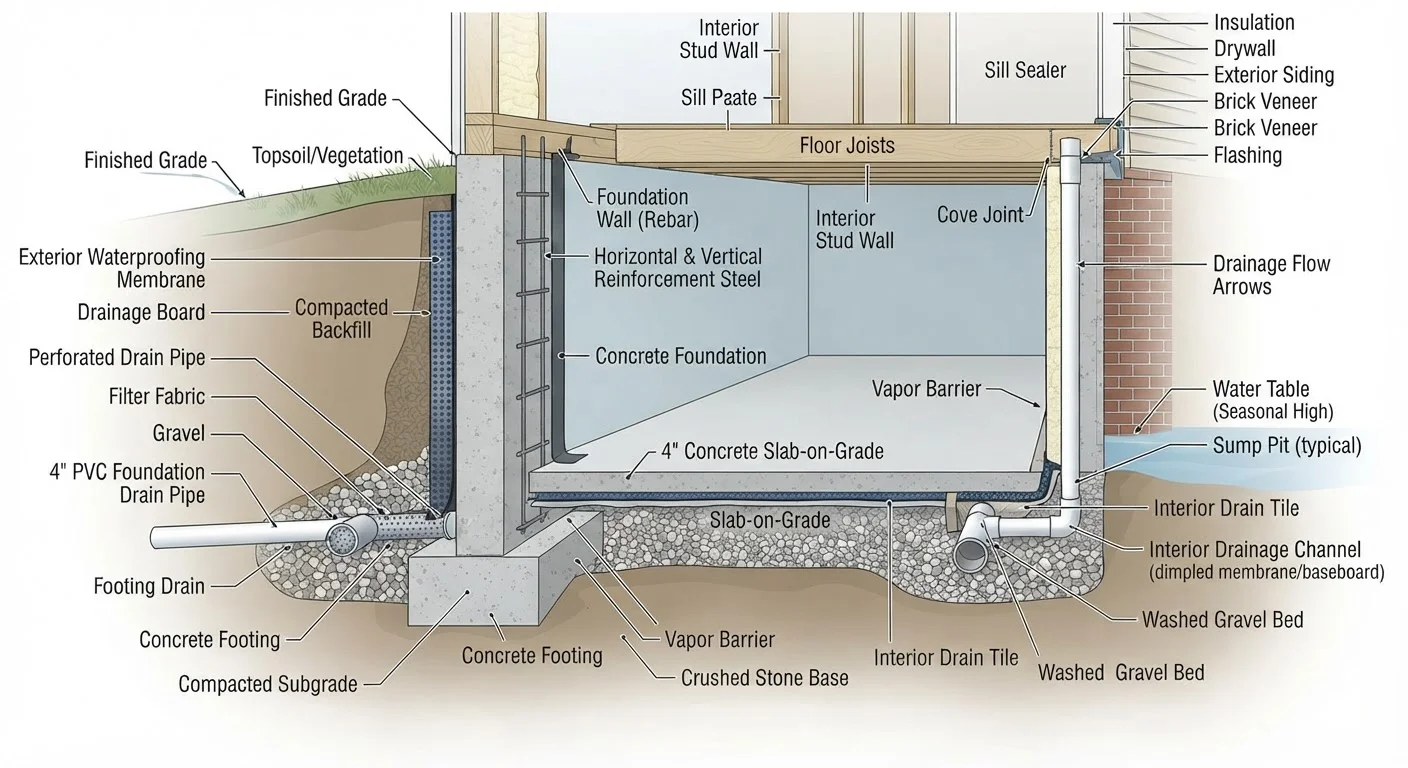
Photo credit: FaqInsider.com
In this article
Interior and exterior waterproofing solve moisture problems differently. Here's how each method works, what it costs roughly, and when each makes sense.
Key Takeaways
- Interior waterproofing manages water after it enters; exterior waterproofing stops it at the source before it reaches the foundation wall.
- Exterior methods require excavating around the foundation, making them significantly more invasive and typically more expensive.
- Interior systems - drainage channels and sump pumps - are effective at controlling moisture and protecting finished spaces.
- Neither approach eliminates the need to address grading, gutters, and surface drainage around the home.
- For serious structural water damage, consult a licensed waterproofing contractor or structural engineer before choosing a method.
How Each Method Actually Works
Basement moisture problems fall into two broad categories: water pushing through the foundation wall from saturated soil outside (hydrostatic pressure), and condensation forming on cool surfaces inside. Both methods target the first category - true water intrusion - but they intervene at different points in that journey.
Interior waterproofing does not stop water from entering the wall. Instead, it intercepts water once it has passed through and channels it away before it can pool on the floor or damage framing. The most common interior system involves cutting a channel around the perimeter of the basement floor, laying a perforated drain pipe, and routing collected water to a sump pit where a pump ejects it away from the house. Wall panels or drainage matting are sometimes added to guide wall seepage down into the channel.
Exterior waterproofing intervenes before water ever touches the interior surface. Contractors excavate the soil down to the foundation footing, clean the wall, apply a waterproof membrane or coating (typically a rubberized asphalt or polymer-based material), install a drainage board to direct water downward, and lay a perforated drain tile at the footing level to carry water away. When done correctly, this creates a barrier the water never crosses.
Understanding this distinction matters: interior systems manage water, while exterior systems exclude it. See our guide to basement and crawl space moisture for a deeper look at how water finds its way in.
| Criterion | Interior Waterproofing | Exterior Waterproofing |
|---|---|---|
| How it works | Captures and redirects water after entry | Blocks water before it contacts the wall |
| Excavation required | No - work is inside the basement | Yes - full perimeter excavation needed |
| Typical disruption level | Low to moderate; confined to basement | High; affects yard, landscaping, hardscaping |
| General cost range | Lower - labor and materials inside only | Higher - excavation and restoration add cost |
| Addresses root cause | Partially - manages symptoms | Yes - stops water at the source |
| Best timing | Any time, especially in finished basements | New construction or major renovation |
| Ongoing maintenance | Sump pump inspection and upkeep required | Minimal once installed correctly |
Cost, Disruption, and Practical Trade-Offs
The gap in cost and disruption between these two approaches is significant, and it's often the deciding factor for homeowners.
Interior systems are generally less expensive because they don't require excavating the yard, removing landscaping, or restoring hardscaping afterward. Labor is contained to the basement itself. Most interior drainage installations can be completed in one to three days. The main downside is that you'll need to break up the concrete floor along the perimeter and temporarily vacate the space. A sump pump also requires electricity and ongoing maintenance - the pump, check valve, and pit should be inspected annually.
Exterior systems involve excavating entirely around the perimeter of the home, sometimes 8 to 10 feet deep. This means removing decks, patios, landscaping, and even driveways in some cases - all of which need to be restored afterward. Project timelines can run one to two weeks or more, and costs reflect that scope. However, exterior waterproofing addresses the problem at its source, which can reduce long-term foundation stress.
~98%
Of basements will experience some water intrusion
The American Society of Home Inspectors has estimated that the vast majority of basements experience water intrusion at some point, underscoring how common the problem is.
3-5x
Cost multiplier for exterior vs. interior systems
Industry estimates generally place exterior waterproofing at three to five times the cost of interior drainage systems, largely due to excavation and site restoration.
It's worth noting that neither method is a substitute for good surface drainage. Grading should slope away from the foundation, and gutters should discharge well clear of the house. Our overview of gutters and water damage explains why the drainage system above ground is your first line of defense.
When to Call a Professional - and What to Ask
Both interior and exterior waterproofing projects typically require professional installation to be effective and, in many jurisdictions, may require permits. This is not standard DIY territory, especially exterior excavation work near a foundation.
Before hiring anyone, get multiple written estimates and ask contractors to explain specifically where water is entering and why they recommend one approach over the other. A reputable contractor will inspect the wall for crack patterns, efflorescence (white mineral deposits that signal water migration), and signs of hydrostatic pressure before making a recommendation.
If there are visible cracks in the foundation wall, you may also want a structural engineer's assessment before proceeding. Water intrusion can sometimes signal settling or structural movement that waterproofing alone won't fix. Unchecked moisture damage also spreads - our article on what happens when moisture goes unchecked explains how hidden water damage compounds over time.
Finally, review your homeowner's insurance policy. Sudden water damage is often covered; long-term seepage typically is not. Documenting the problem and your remediation steps is good practice regardless of which method you choose.
Don't overlook exterior maintenance as part of your overall moisture strategy - routine exterior maintenance tasks can reduce the water load your foundation faces in the first place.
Permits and Local Codes Matter
Waterproofing work - especially exterior excavation near a foundation - may require a building permit in your municipality. Requirements vary widely by location. Before any work begins, check with your local building department to understand what approvals are needed. Working without required permits can complicate home sales and may affect your homeowner's insurance coverage.

Author
Home & Garden Editorial Team
Home & Garden Editorial Team is the collective byline for our editorial team and contributor network. Articles published under this byline or an editorial pen name are researched, written, and reviewed according to our editorial standards for clarity, consistency, and independence before publication.
View all articles →