
Air Filters, Cabin Filters, and the Confusion Between Them
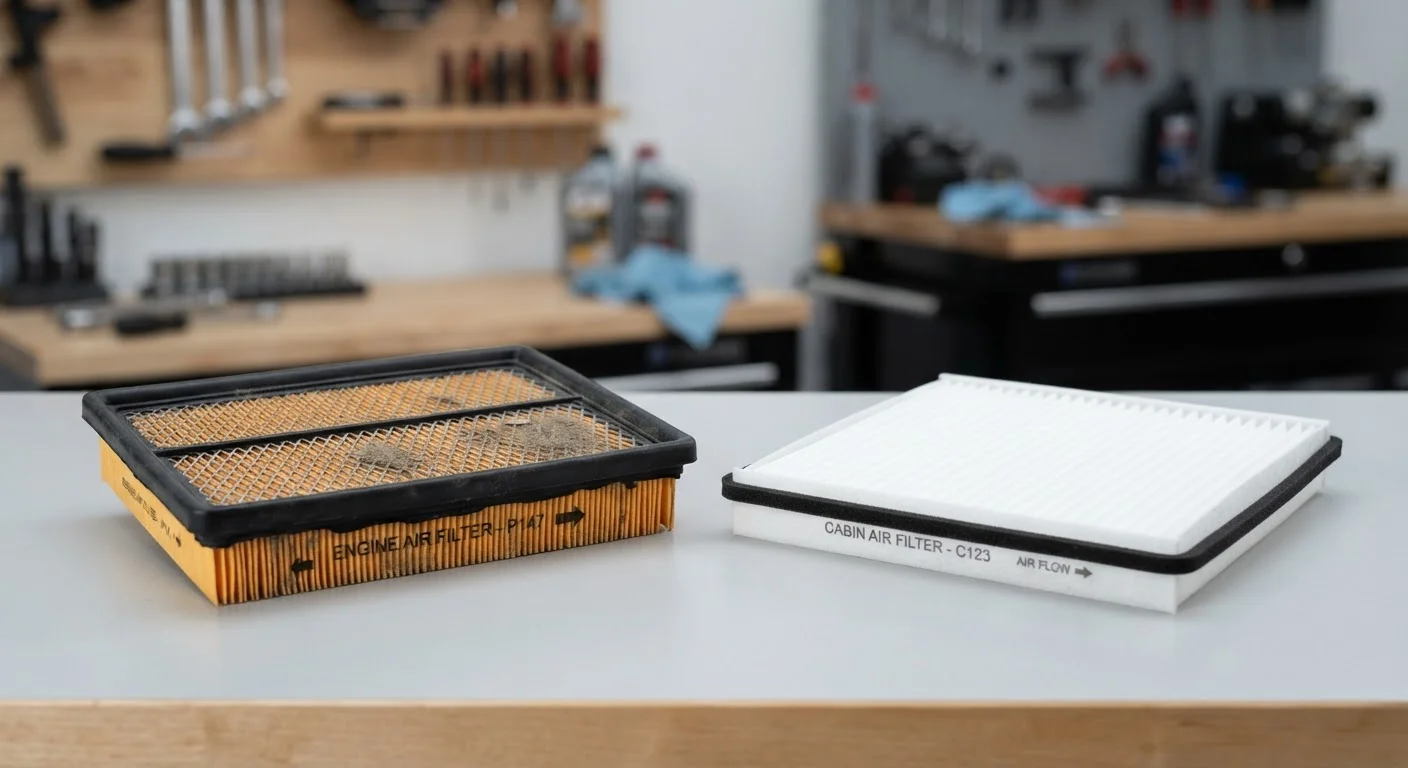
Photo credit: FaqInsider.com
In this article
Your car has two filters that are easy to mix up. Learn what each one protects, how often each should be replaced, and what happens when you skip them.
Key Takeaways
- Engine air filters protect the engine; cabin air filters protect the air passengers breathe - they are not interchangeable.
- Most engine air filters need replacement every 15,000-30,000 miles, depending on driving conditions.
- Cabin air filters typically need replacing every 15,000-25,000 miles, or more often in dusty or high-pollen environments.
- A clogged engine air filter can reduce fuel economy and accelerate engine wear over time.
- A dirty cabin filter restricts airflow through your HVAC system and can worsen in-car air quality.
- Both filters are generally straightforward to inspect and, in many vehicles, to replace yourself.
Two Filters, Two Completely Different Jobs
Ask a service writer to check your air filter, and the first question they should ask back is: which one? Most drivers don't realize their vehicle contains two separate filters that trap airborne particles - and those filters protect entirely different systems.
The engine air filter sits between the outside air intake and the engine's throttle body. Every time the engine runs, it draws in large volumes of air to mix with fuel for combustion. The air filter's job is to ensure that air is clean - stopping fine dirt, dust, insects, and debris from entering the engine, where abrasive particles can wear cylinder walls and damage sensitive components over time.
The cabin air filter - sometimes called a pollen filter or HVAC filter - is part of the vehicle's heating, ventilation, and air conditioning system. It filters the air that flows through the dashboard vents into the passenger compartment. It traps pollen, dust, road grime, mold spores, and in some cases even fine exhaust particles, directly affecting what you and your passengers inhale during every drive.
Neither filter does the other's job. Neglecting one has no bearing on the health of the other - but neglecting either creates its own category of problems.
How Each Filter Fails - and What You'll Notice
Filters don't fail catastrophically the way a blown fuse or a cracked belt does. They degrade gradually, and the symptoms build slowly enough that many drivers adapt to them without realizing something is wrong.
A clogged engine air filter restricts airflow to the engine. The engine management system compensates to a point, but over time you may notice reduced throttle response, a slight drop in fuel economy, or - in severe cases - a rough idle. Because modern engines are tightly managed by computer systems, some drivers notice nothing dramatic until the filter is truly overloaded.
A clogged cabin air filter makes itself known differently: weaker airflow from the dashboard vents, longer times for the defroster to clear the windshield, or an unpleasant musty or stale odor inside the car. In allergy season, a spent cabin filter offers little protection against pollen. The filter can also become a breeding ground for mold if moisture becomes trapped in it.
| Criterion | Engine Air Filter | Cabin Air Filter |
|---|---|---|
| What it protects | Engine intake and combustion system | Passenger compartment air quality |
| Location in vehicle | Engine bay, near intake/throttle body | Behind glove box or under dashboard |
| Typical replacement interval | 15,000-30,000 miles | 15,000-25,000 miles |
| Key symptom when clogged | Reduced power, lower fuel economy | Weak vent airflow, musty cabin odor |
| DIY accessibility | Generally straightforward | Often the easiest swap on the car |
| Affected by pollen season | Minimally | Significantly |
For a broader look at which maintenance tasks fall within reach of the average driver, see our guide to DIY-friendly maintenance.
Replacement Intervals and What Affects Them
Most manufacturers suggest replacing the engine air filter somewhere between 15,000 and 30,000 miles, and the cabin air filter between 15,000 and 25,000 miles. Your owner's manual is the authoritative source for your specific vehicle - intervals vary by make, model, and engine type.
Those figures assume average driving conditions. Several factors push replacement intervals shorter:
- Dusty or unpaved roads: Gravel roads and construction zones load both filters much faster than highway driving.
- High-pollen environments: The cabin filter absorbs pollen quickly during spring and fall peaks.
- Urban stop-and-go traffic: Frequent low-speed driving in areas with exhaust particulates taxes the cabin filter more heavily.
- Wildfire smoke or air quality events: Elevated particulate levels will shorten cabin filter life significantly.
Inspecting both filters visually at each oil change is a practical habit. A filter that looks uniformly gray or brown and feels stiff with trapped debris is due for replacement. Many filters are accessible without tools - though locations vary by vehicle. When in doubt, a shop can check both during a routine service visit.
Check Your Owner's Manual First
Replacement intervals published by manufacturers are based on tested conditions for that specific engine and HVAC system. Your owner's manual will list the recommended interval for both filters - and may differentiate between 'normal' and 'severe' driving conditions. If you drive frequently on unpaved roads, in heavy traffic, or in regions with poor air quality, the severe-service interval is the more relevant benchmark.
Keeping both filters in good shape is one piece of a broader routine maintenance picture. Our car fluids explainer covers other systems worth monitoring on a regular basis.

Author
Cars Editorial Team
Cars Editorial Team is the collective byline for our editorial team and contributor network. Articles published under this byline or an editorial pen name are researched, written, and reviewed according to our editorial standards for clarity, consistency, and independence before publication.
View all articles →