
Building a Balanced Plate: A Practical Starting Point for Everyday Eating
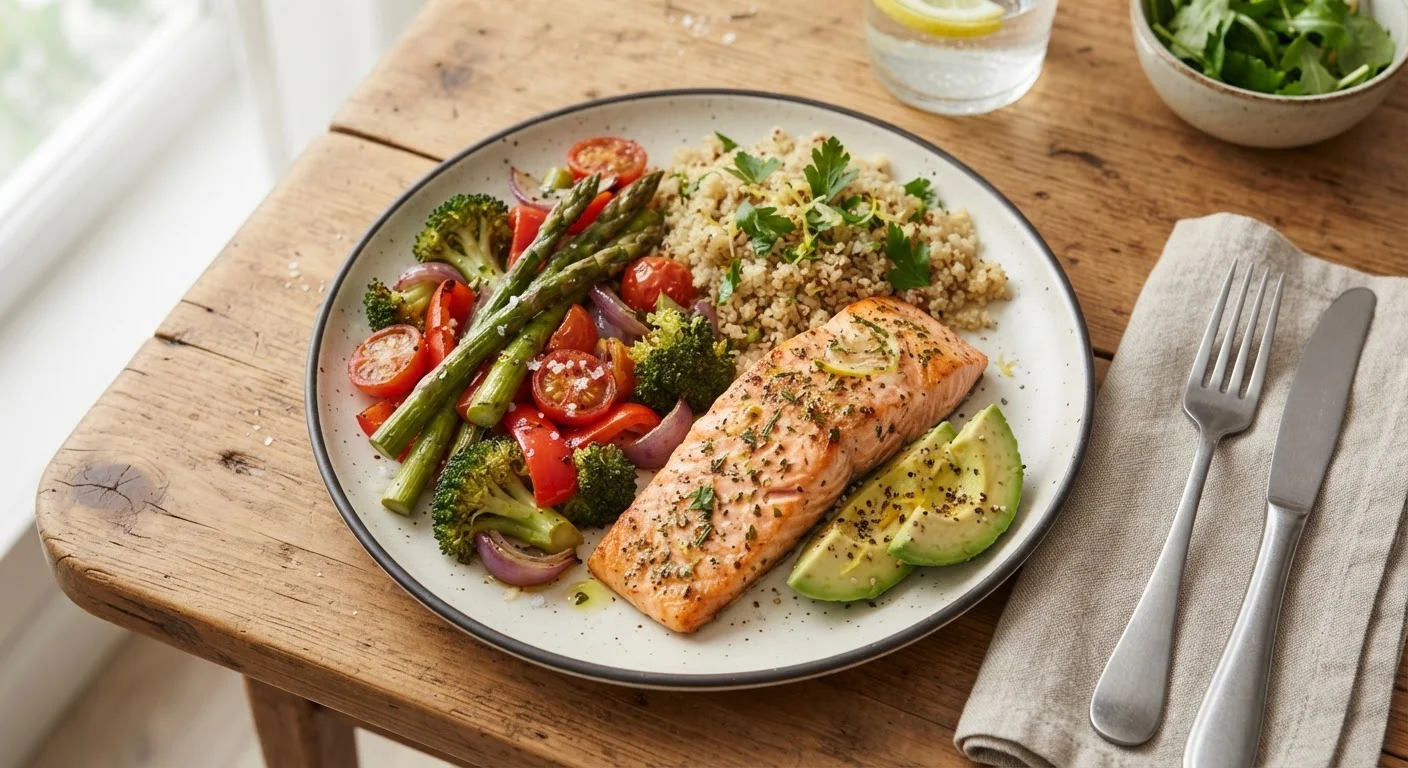
Photo credit: FaqInsider.com
In this article
A beginner-friendly introduction to portioning meals with vegetables, protein, grains, and healthy fats — no counting required.
Key Takeaways
- Half your plate filled with vegetables supports fiber, vitamins, and satiety without complex rules.
- Protein, whole grains, and healthy fats each play distinct roles and belong at every main meal.
- Visual portion cues - like using your hand or plate sections - work without calorie counting.
- No single meal needs to be perfect; consistency across the day and week matters most.
- Small, sustainable changes to plate composition outperform short-term restrictive diets.
What Does a Balanced Plate Actually Mean?
A balanced plate isn't a rigid prescription - it's a practical framework for consistently eating enough of the right variety of foods. The concept draws from long-standing dietary guidance, including the USDA's MyPlate model and similar frameworks used by nutrition organizations worldwide. The core idea is straightforward: structure each meal so multiple food groups are represented, ensuring your body receives a broad mix of macronutrients and micronutrients across the day.
What makes this approach valuable for everyday eaters is its flexibility. It doesn't require food scales, apps, or eliminating entire food groups. Instead, it uses visual proportion - what fraction of your plate is covered by what type of food - as the practical guide. Understanding the reasoning behind those proportions makes it far easier to apply consistently, even when eating at a restaurant or making a quick meal at home.
Macronutrients
The three main nutrients the body needs in large amounts for energy and function: carbohydrates, protein, and fat. Each plays a distinct role and should appear in every balanced meal.
Micronutrients
Vitamins and minerals the body needs in smaller amounts to support processes like immune function, bone health, and energy metabolism. A varied diet generally provides a broad range.
Dietary fiber
A type of carbohydrate found in plant foods that the body cannot fully digest. It supports digestive health, helps maintain steady blood sugar, and contributes to feelings of fullness after eating.
Whole grains
Grains that retain their outer bran layer and germ during processing, preserving more fiber and nutrients than refined grains. Examples include brown rice, oats, quinoa, and whole wheat.
Unsaturated fats
A category of dietary fat found in plant oils, nuts, seeds, and fatty fish that is generally associated with heart-health benefits. They are considered a healthy fat choice in most dietary guidance.
Plate method
A visual approach to portioning meals using sections of a standard dinner plate rather than weighing or counting food. It is widely used in nutrition education as a practical, no-calculation alternative.
The Four Building Blocks of Every Meal
Most nutrition frameworks agree on four core components that should appear - in varying amounts - at each main meal:
- Vegetables and fruit: These provide dietary fiber, vitamins, minerals, and antioxidants. Variety in color generally signals variety in nutrient type, so mixing leafy greens, orange vegetables, and cruciferous options like broccoli or cauliflower covers more ground than sticking with one or two favorites.
- Protein: Protein supports muscle maintenance, immune function, and satiety. Sources range from animal proteins (poultry, fish, eggs, dairy) to plant-based options (beans, lentils, tofu, edamame). Each has a different accompanying nutrient profile, so rotating sources over the week broadens intake.
- Whole grains and starchy vegetables: These supply sustained energy through complex carbohydrates and fiber. Brown rice, quinoa, whole wheat, oats, sweet potato, and corn are practical examples. Choosing whole over refined grains most of the time preserves fiber content that gets stripped during processing.
- Healthy fats: Unsaturated fats - from foods like olive oil, avocado, nuts, and seeds - support cardiovascular health and help the body absorb fat-soluble vitamins (A, D, E, and K). A small, intentional portion at each meal goes a long way.
For those interested in building meals without animal products, our overview of plant-based eating nutritional strengths and gaps covers how to fill potential nutrient gaps within this framework.
How to Portion Without Counting
The most widely taught visual guide divides a standard dinner plate roughly as follows: half filled with non-starchy vegetables, one quarter with a lean or plant-based protein, and one quarter with a whole grain or starchy vegetable. A small portion of healthy fat - about a thumb-sized amount of oil or a small handful of nuts - rounds out the meal.
Your hand is a surprisingly reliable portable measuring tool. A palm-sized serving approximates a reasonable protein portion for most adults. A cupped hand reflects a reasonable grain serving. A thumb represents a fat serving. These won't be medically precise, but for most healthy adults aiming to eat more consistently, they provide enough structure to build good habits.
Use Your Plate as a Visual Anchor
Before adding food, mentally divide your plate into sections. Filling half with vegetables first - before adding protein or grains - makes it harder to crowd them out. This simple sequencing habit tends to result in better vegetable intake with minimal extra effort.
It's also worth noting that not every meal looks identical, and that's fine. A lunchtime salad heavy in greens and topped with chickpeas and olive oil fits this framework just as well as a dinner with salmon, roasted vegetables, and brown rice - the composition just shifts slightly across meals. The guide to building a plate that covers your nutritional bases explores nutrient mix in greater depth for those ready to go further.
Common Pitfalls and How to Sidestep Them
Even with a clear framework, a few patterns tend to trip people up when they're first building balanced eating habits:
- Skipping vegetables to save time: Pre-washed greens, frozen vegetables, and canned legumes all count. Convenience options make it far easier to hit the half-plate vegetable target without significant prep time.
- Defaulting to refined grains: White rice, white bread, and standard pasta aren't harmful in moderation, but choosing whole grain versions most of the time meaningfully increases fiber intake without changing the basic meal structure.
- Treating fat as optional: Low-fat eating patterns from decades past led many people to undereat healthy fats. Fat is essential - the goal is choosing unsaturated sources rather than avoiding fat altogether.
- Expecting perfection at every meal: One unbalanced meal doesn't undermine a healthy overall pattern. What matters is the average composition across meals over days and weeks, not any single plate.
Avoid Oversimplifying Healthy Eating
The plate method is a useful starting framework, but it isn't designed to address individual medical conditions, food allergies, or specific nutrient needs. People managing diabetes, kidney disease, eating disorders, or other conditions should work with a registered dietitian rather than relying solely on general frameworks like this one. Always consult a qualified healthcare professional for personalized dietary guidance.
Putting It Into Practice
Starting with just one meal per day - typically dinner - and applying the half-plate vegetable, quarter-protein, quarter-grain structure is a realistic entry point. Once that feels natural, applying the same approach to lunch becomes the next step. Breakfast can incorporate these principles too, though it naturally looks different (eggs with vegetables and whole-grain toast, for example, fits the framework).
Pairing this approach with even basic weekly meal planning makes consistency much easier. Having key ingredients on hand - a variety of vegetables, a protein source or two, a cooked whole grain - means each meal requires assembly rather than improvisation. For practical strategies on structuring your week, see our guide on meal planning that actually works.
If you grow some of your own produce, the freshness and accessibility of home-grown vegetables can make reaching that half-plate target even more natural. Our article on starting a vegetable garden from the ground up is a useful companion for anyone interested in that route.
Nutrition is not one-size-fits-all, and individual health conditions, medication interactions, allergies, and life stage all affect what a genuinely appropriate diet looks like for any given person. This article is general health information and education - not personalized medical or dietary advice. If you have specific health concerns or conditions, please consult a registered dietitian or qualified healthcare professional before making significant changes to your diet.
This article is for informational and educational purposes only and does not constitute medical or dietary advice. Consult a qualified healthcare professional for guidance specific to your health needs.
Frequently Asked Questions

Author
Health & Wellness Editorial Team
Health & Wellness Editorial Team is the collective byline for our editorial team and contributor network. Articles published under this byline or an editorial pen name are researched, written, and reviewed according to our editorial standards for clarity, consistency, and independence before publication.
View all articles →