
Keeping a Car Maintenance Log: Why It Matters More Than Most Drivers Realize
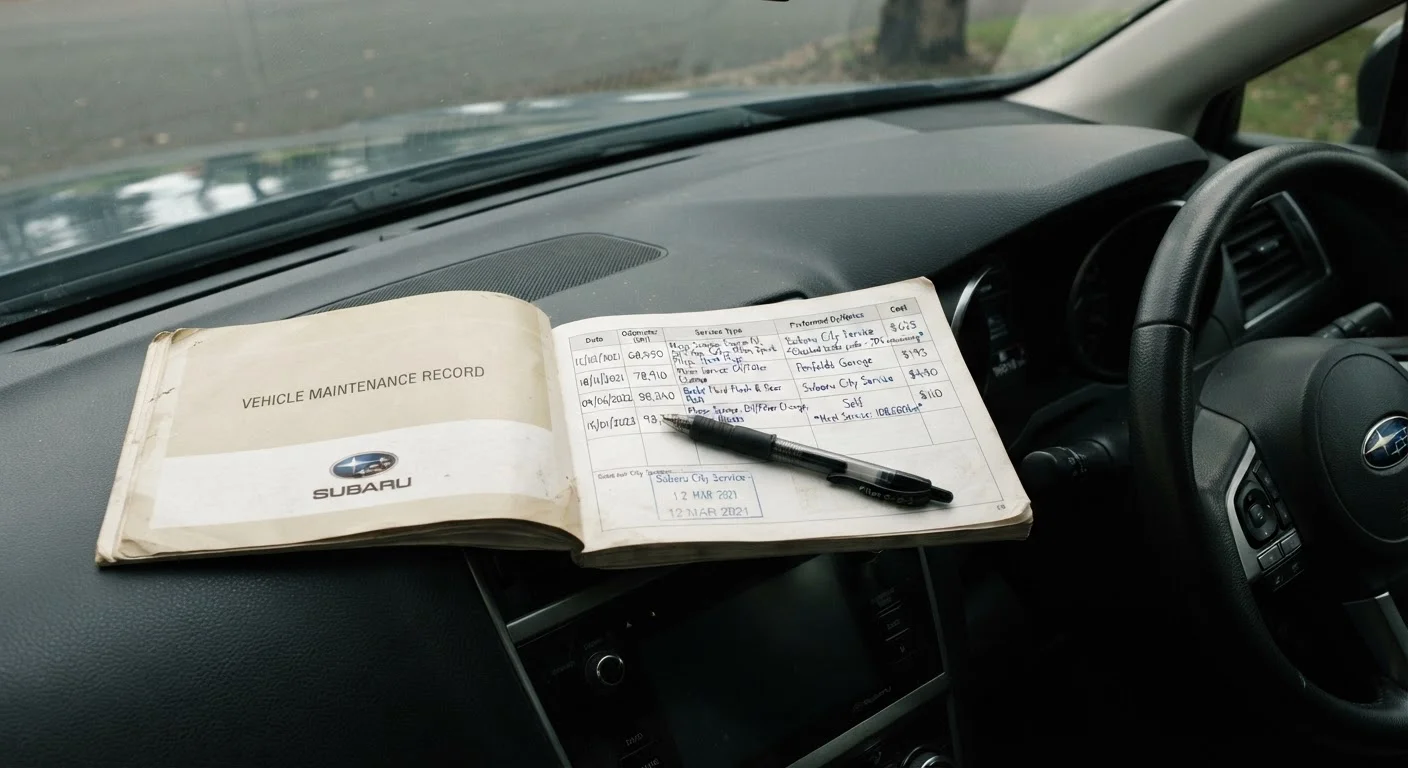
Photo credit: FaqInsider.com
In this article
A maintenance log documents your vehicle's service history, supports resale value, and helps catch patterns before they become costly problems.
Key Takeaways
- A maintenance log creates a documented service history that supports resale value and buyer confidence.
- Tracking service dates and mileage helps drivers catch recurring problems before they become expensive repairs.
- Both paper notebooks and digital apps can serve as effective maintenance logs depending on your preference.
- Gaps in a maintenance log can raise red flags for mechanics, lenders, and prospective buyers.
- Consistent record-keeping is especially valuable for high-mileage vehicles with complex service histories.
Supports a higher resale price with documented proof
Buyers and dealers place real value on verifiable service history. A complete log signals responsible ownership and reduces the perceived risk of the purchase.
Helps identify recurring mechanical patterns early
Seeing the same repair appear multiple times in a log points to an underlying issue that isolated service visits would obscure, potentially saving significant money on repeated fixes.
Strengthens warranty and insurance claims
Manufacturers and insurers may ask for evidence that routine maintenance was performed. A log provides that documentation in a clear, chronological format.
Reduces duplicate work at the repair shop
Mechanics can review what was recently serviced and avoid unnecessary repeat services, saving both time and money on each visit.
Empowers drivers to have informed conversations with mechanics
Knowing your full service history puts you on more equal footing when a shop recommends additional work, helping you evaluate whether it's genuinely needed.
Requires consistent effort to remain useful
A log only delivers its full benefit when kept current. Many drivers start one but stop updating it after the first year, leaving a partial record that can mislead rather than inform.
Doesn't replace actual maintenance - only documents it
A meticulously kept log of deferred or skipped services doesn't protect the vehicle mechanically. The record reflects decisions made, for better or worse.
Paper logs can be lost, damaged, or forgotten
Physical notebooks are vulnerable to being left behind, water damaged, or misplaced during ownership transfers. Digital backups are advisable but require their own maintenance habit.
Incomplete logs may raise buyer suspicion
A log that covers some periods but not others can prompt questions about what happened during the undocumented stretches, potentially undermining trust during a sale.
What a Car Maintenance Log Actually Is
A car maintenance log is a running record of every service, repair, inspection, and replacement performed on a vehicle. At minimum, it captures the date, odometer reading, and nature of the work done. More thorough logs also include the cost, the name of the shop or technician, and any parts used.
Logs can take many forms - a pocket-sized notebook kept in the glove compartment, a dedicated app on your phone, a spreadsheet, or the service records folder that some dealerships provide at purchase. What matters is consistency, not format. A log that's updated irregularly is only marginally more useful than no log at all.
Unlike the reminder stickers mechanics place on windshields, a proper log is cumulative. It tells the full story of a vehicle over time, not just when the next oil change is due. For drivers building a maintenance schedule tailored to their car, a log is the foundation that makes that schedule meaningful.
The Real Advantages of Keeping One
The benefits of a maintenance log compound over time. In the short term, it's a convenient reference. In the long term, it becomes a financial and mechanical asset.
Supports a higher resale price with documented proof
Buyers and dealers place real value on verifiable service history. A complete log signals responsible ownership and reduces the perceived risk of the purchase.
Helps identify recurring mechanical patterns early
Seeing the same repair appear multiple times in a log points to an underlying issue that isolated service visits would obscure, potentially saving significant money on repeated fixes.
Strengthens warranty and insurance claims
Manufacturers and insurers may ask for evidence that routine maintenance was performed. A log provides that documentation in a clear, chronological format.
Reduces duplicate work at the repair shop
Mechanics can review what was recently serviced and avoid unnecessary repeat services, saving both time and money on each visit.
Empowers drivers to have informed conversations with mechanics
Knowing your full service history puts you on more equal footing when a shop recommends additional work, helping you evaluate whether it's genuinely needed.
~$500
Estimated resale premium for documented maintenance
Industry estimates from automotive valuation analysts suggest well-documented service histories can add several hundred dollars to a used vehicle's private-party value, though the exact amount varies by vehicle age and condition.
3 in 4
Used-car buyers who consider service history important
Consumer surveys conducted by automotive research organizations consistently find that a majority of used-car buyers cite verifiable maintenance history as a key factor in purchase decisions.
Perhaps the most underappreciated advantage is pattern recognition. When you can see that a particular component has needed attention three times in 18 months, that's a signal worth acting on - either to investigate a root cause or to reassess whether continued repair makes financial sense. Without a log, those patterns are invisible.
Logs are also valuable at the repair shop. A mechanic who can see your full service history can make better-informed recommendations and is less likely to duplicate work that was recently completed. This is especially relevant for high-mileage vehicles, where service intervals often become more frequent and varied.
The Honest Drawbacks
No habit is without friction, and maintenance logging is no exception. Understanding the real disadvantages helps drivers set realistic expectations.
Requires consistent effort to remain useful
A log only delivers its full benefit when kept current. Many drivers start one but stop updating it after the first year, leaving a partial record that can mislead rather than inform.
Doesn't replace actual maintenance - only documents it
A meticulously kept log of deferred or skipped services doesn't protect the vehicle mechanically. The record reflects decisions made, for better or worse.
Paper logs can be lost, damaged, or forgotten
Physical notebooks are vulnerable to being left behind, water damaged, or misplaced during ownership transfers. Digital backups are advisable but require their own maintenance habit.
Incomplete logs may raise buyer suspicion
A log that covers some periods but not others can prompt questions about what happened during the undocumented stretches, potentially undermining trust during a sale.
Digital Logs Have a Backup Advantage
Apps and cloud-based spreadsheets automatically create redundant copies of your records, eliminating the risk of losing a paper notebook during a move or vehicle sale. Several free apps are designed specifically for vehicle maintenance tracking and include reminder features tied to mileage thresholds. Whichever format you choose, the consistency of entries matters far more than the platform itself.
The most common failure point is inconsistency. A log that covers the first two years of ownership but goes dark after that creates a misleading picture - and can actually raise more questions than no log at all when a buyer or mechanic reviews it.
It's also worth acknowledging that a log records what was done, not necessarily what should have been done. A detailed log of deferred maintenance doesn't confer any mechanical benefit; it simply documents decisions. The log is a tool for awareness, not a substitute for action.
How a Log Affects Resale Value
In private-party vehicle sales, a complete maintenance log is one of the most tangible ways to justify an asking price. Buyers are essentially being asked to trust a stranger's account of how a car was cared for. A log - especially one supported by receipts - provides independent verification of that account.
Dealers and used-car buyers are generally familiar with vehicle history reports from services that aggregate repair and title data, but those reports rarely capture routine maintenance like oil changes or tire rotations unless the work was performed at a franchised dealership. A personal maintenance log fills that gap.
For anyone who treats their vehicle as a longer-term asset, the documentation habit parallels what homeowners do with property records. Just as a home maintenance log supports a property sale, a vehicle log supports a private-party transaction with evidence rather than assurances.
Getting Started Without Overcomplicating It
New car owners have a natural advantage - they can start logging from day one. If you're picking up the habit mid-ownership, start now and note what you can recall or recover from receipts and bank statements. An imperfect log started today is more useful than a perfect log that never gets started.
For a complete picture of what routine maintenance categories to cover, the overview for new car owners covers each service type and its purpose. Pair that reference with a simple log format and you have a practical system that doesn't require any special tools or significant time investment.
Aim to update the log within 24 hours of any service. Include who did the work, what was replaced, and the mileage at the time. That's genuinely all it takes to build a record that pays dividends over the life of the vehicle.

Author
Cars Editorial Team
Cars Editorial Team is the collective byline for our editorial team and contributor network. Articles published under this byline or an editorial pen name are researched, written, and reviewed according to our editorial standards for clarity, consistency, and independence before publication.
View all articles →