
Synthetic vs. Conventional Motor Oil: Understanding the Real Differences
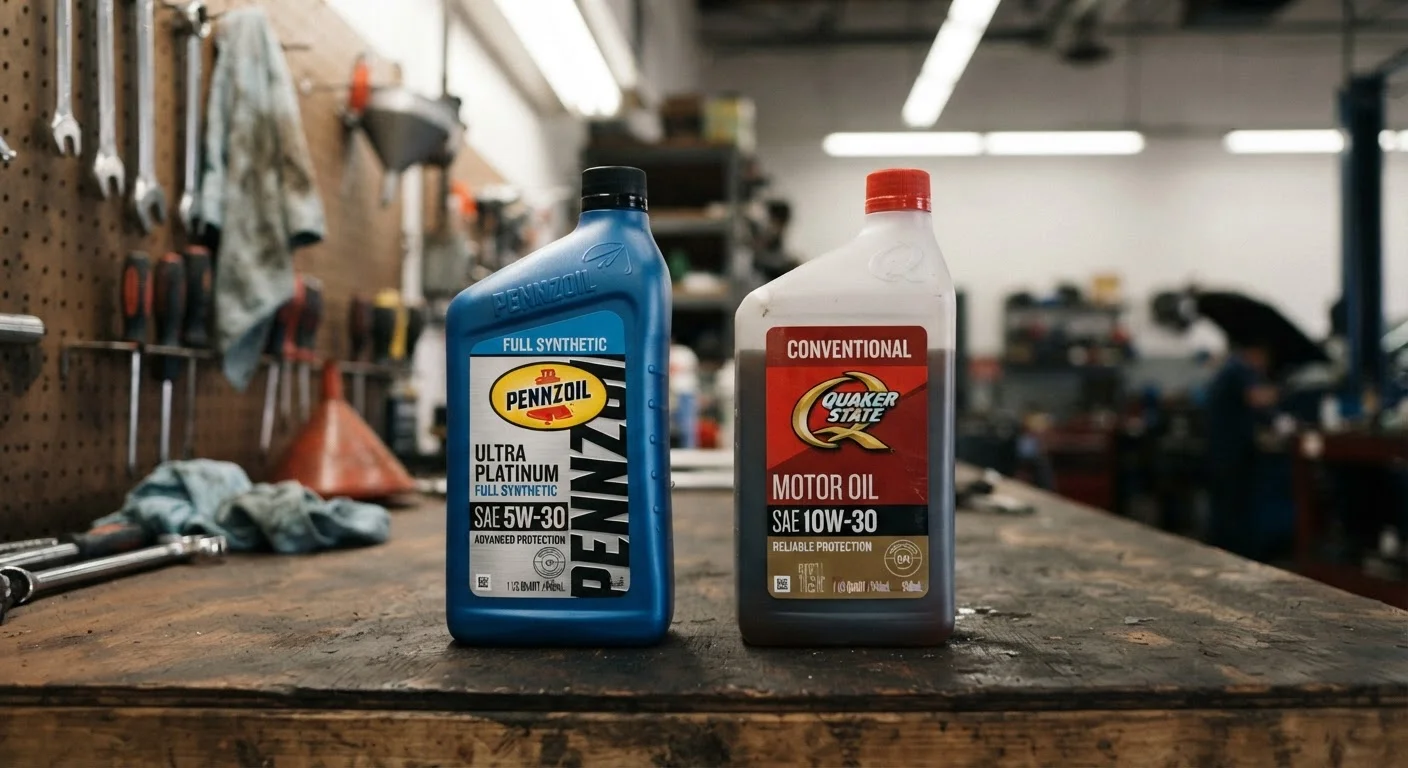
Photo credit: FaqInsider.com
In this article
Synthetic and conventional oils differ in composition, performance range, and cost. Here's what those differences actually mean for your engine.
Key Takeaways
- Synthetic oil is chemically engineered for uniform molecule size, while conventional oil is refined directly from crude petroleum.
- Synthetic oil generally performs better in extreme temperatures and under high engine stress.
- Conventional oil costs less per quart but typically requires more frequent changes.
- Your vehicle's owner's manual is the most reliable guide for which oil type to use.
- Switching from conventional to synthetic is generally safe, but always consult your manual or a qualified mechanic.
What Sets These Two Oils Apart at a Molecular Level
The core difference between synthetic and conventional motor oil comes down to origin and structure. Conventional oil is derived from crude petroleum that is refined and purified to remove impurities. Because it starts as a natural substance, its molecules vary in size and shape, even after refining.
Synthetic oil, by contrast, is chemically engineered in a laboratory. Manufacturers build its molecules to a uniform size and structure, which gives the finished product more predictable and consistent physical properties. Some synthetics use a base of highly refined petroleum combined with chemical additives; others use entirely non-petroleum base stocks such as polyalphaolefins (PAOs).
This difference in molecular uniformity is what drives most of the performance distinctions you'll read about - it isn't marketing language. It reflects genuine chemistry.
| Criterion | Synthetic Motor Oil | Conventional Motor Oil |
|---|---|---|
| Origin | Chemically engineered base stocks | Refined from crude petroleum |
| Molecular consistency | Uniform, precisely structured | Variable, naturally occurring |
| Cold-weather flow | Faster circulation at startup | Can thicken in extreme cold |
| Heat resistance | Higher oxidation resistance | Breaks down faster at high temps |
| Typical change interval | Often longer (per manufacturer spec) | Generally shorter intervals |
| Cost per quart | Higher upfront cost | Lower upfront cost |
| Engine compatibility | Required by many modern engines | Suited to many older, simpler engines |
How Each Oil Performs Under Real Driving Conditions
Temperature is where the two oils diverge most noticeably. In cold weather, conventional oil can thicken, making it slower to circulate through the engine on startup - the moment when most engine wear actually occurs. Synthetic oil, engineered for consistent flow, circulates more quickly in cold conditions, forming a protective film faster.
At high temperatures - from stop-and-go city traffic, towing, or turbocharged operation - conventional oil breaks down and oxidizes more readily. This degradation reduces its ability to lubricate and can leave deposits on engine components. Synthetic oil resists oxidation longer, maintaining its viscosity (resistance to flow) across a wider temperature range.
Under normal conditions and moderate driving - consistent highway miles, moderate climates, older naturally aspirated engines - the practical gap narrows. Conventional oil still does its job effectively when changed at the correct interval.
~30%
Reduction in engine wear at cold startup
Research cited by the American Petroleum Institute suggests synthetic oils can meaningfully reduce wear during the critical cold-start phase compared to conventional oils.
5W-30
Most common viscosity grade in the U.S.
The SAE (Society of Automotive Engineers) viscosity rating system applies to both synthetic and conventional oils; 5W-30 is among the most widely specified grades for passenger vehicles.
For guidance on how often to change either type, see our oil change interval guide, which covers the gap between manufacturer schedules and what shops often recommend.
Cost, Change Intervals, and the True Value Equation
Synthetic oil costs more per quart than conventional oil - often noticeably so. However, it's worth comparing total cost over time rather than just the sticker price per bottle.
Because synthetic oil degrades more slowly, many vehicle manufacturers specify longer change intervals for engines that use it. Fewer service visits over the same mileage can partially offset the higher per-quart price, though the math varies depending on your vehicle, driving habits, and local labor costs. There's no universal answer on which is cheaper over time - your specific situation matters.
Conventional oil, with its lower upfront cost, can still be the economical choice for drivers who change it faithfully at the shorter intervals their manual specifies. The risk is that skipping or delaying changes with conventional oil leads to faster degradation and potential engine harm - a cost far exceeding any savings at the checkout counter.
The bottom line: use whichever type your owner's manual specifies or recommends, and follow the stated interval. No oil - synthetic or conventional - protects an engine indefinitely without being changed.

Author
Cars Editorial Team
Cars Editorial Team is the collective byline for our editorial team and contributor network. Articles published under this byline or an editorial pen name are researched, written, and reviewed according to our editorial standards for clarity, consistency, and independence before publication.
View all articles →