
Savings Rate Explained: What It Means and How to Track Your Own
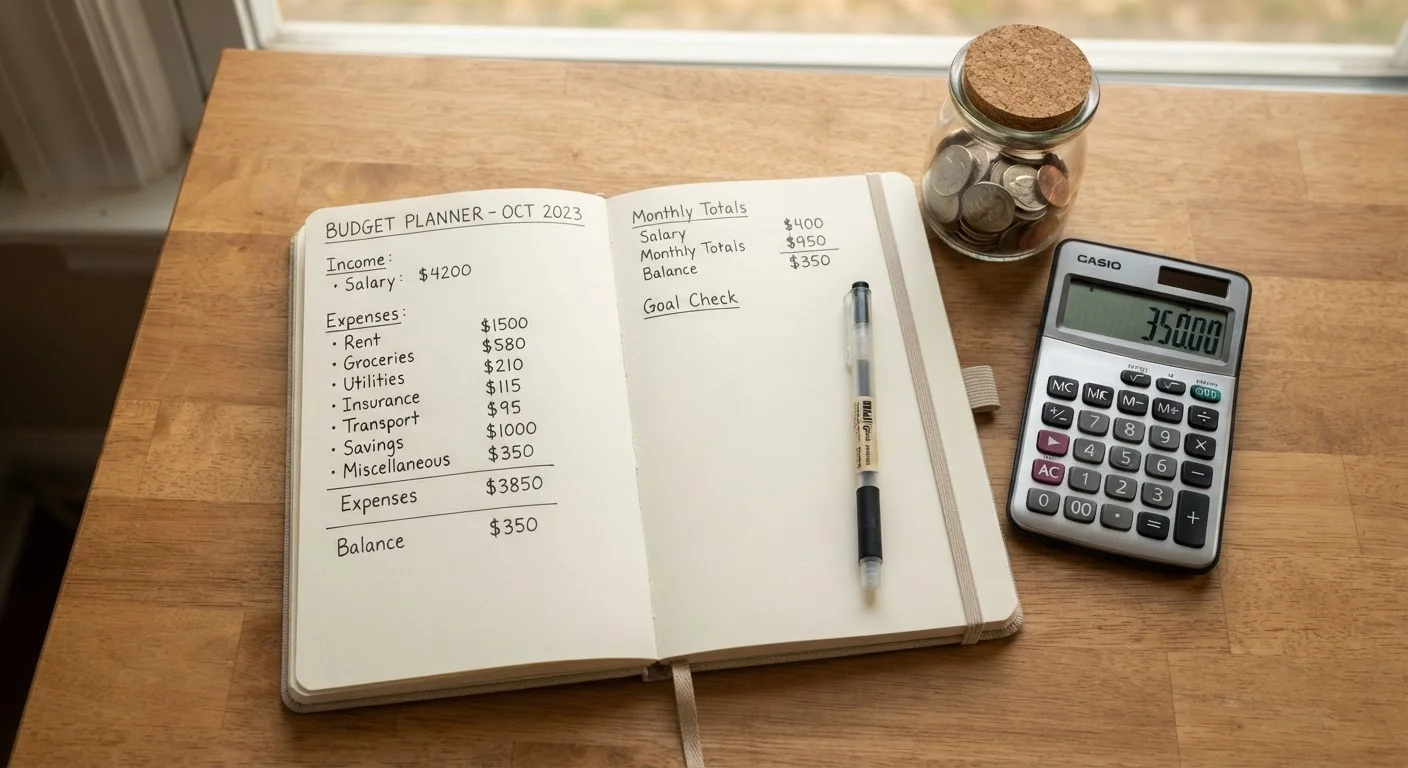
Photo credit: FaqInsider.com
In this article
A clear definition of savings rate, how to calculate it from your own income and expenses, and what a realistic target looks like for different situations.
What Is a Savings Rate?
Your savings rate is the percentage of your income that you set aside rather than spend. It's one of the clearest measures of your financial health - more revealing than your income alone, because it shows how much of what you earn you're actually keeping.
Savings Rate
The percentage of your income set aside for saving rather than spending. Calculated by dividing the amount saved by total income and multiplying by 100.
Gross Income
Your total earnings before taxes and deductions are taken out. Often used as the income base in savings rate calculations.
Net Income
Your take-home pay after taxes and deductions. A practical income base for savings rate calculations because it reflects money you can actually use.
50/30/20 Rule
A popular budgeting guideline that suggests spending 50% of net income on needs, 30% on wants, and saving or investing 20%.
The basic formula is straightforward:
Savings Rate = (Amount Saved ÷ Gross or Net Income) × 100
For example, if you take home $3,500 per month and save $350, your savings rate is 10%. Whether you use gross income (before taxes) or net income (take-home pay) matters less than being consistent - pick one method and stick with it so your tracking is comparable month to month.
Savings rate can include contributions to a 401(k), an emergency fund, a high-yield savings account, or any account where money is being held for future use - not spent in the current period. If you're unsure about related terminology, the Key Terms Every Saver Should Understand guide covers concepts like APY, liquidity, and sinking funds in plain language.
How to Calculate Your Own Savings Rate
Calculating your savings rate takes about five minutes once you have two numbers: what you earn and what you save in a given period.
| Standard savings rate target | 20% of income (50/30/20 budgeting framework) |
| Realistic starting rate for many earners | 3-5% |
| Calculation formula | (Amount Saved ÷ Income) × 100 |
| Income base options | Gross (pre-tax) or Net (take-home) (Use one consistently) |
| Common savings vehicles tracked | 401(k), emergency fund, savings accounts |
- Determine your income base. Use your monthly take-home pay (net income) for a practical starting point. If your income varies, average the last three months.
- Add up everything you saved. Include automatic 401(k) contributions, transfers to savings accounts, and any debt principal payments you're making beyond minimums - these all reduce your future financial burden.
- Divide and multiply. Divide your total saved by your income, then multiply by 100 to get the percentage.
Don't be discouraged if your first calculation reveals a very low number. Many Americans save less than they intend to - partly because spending happens automatically while saving requires deliberate action. Automating your savings can help flip that dynamic by making saving the default.
What Savings Rate Should You Aim For?
The often-cited guideline is to save 20% of your income, drawn from the 50/30/20 budgeting framework. That's a reasonable long-run goal, but it isn't realistic for everyone - especially those managing tight budgets, student loans, or variable income.
~5%
U.S. personal savings rate (recent historical range)
The U.S. Bureau of Economic Analysis tracks the personal saving rate, which has generally hovered in the low-to-mid single digits for much of the past decade.
20%
Recommended savings share under 50/30/20 rule
The 50/30/20 budgeting framework is widely cited by financial educators as a general guideline, not a guaranteed outcome.
A more useful mindset: any positive savings rate is better than zero, and the right target depends on your situation.
- Starting out: A 3-5% rate builds the habit and a small cushion. It's a foundation, not a ceiling.
- Stable earners: Targeting 10-15% is achievable for many households once fixed expenses are managed.
- Catching up: If you're behind on retirement savings or have no emergency fund, aiming higher - 20% or more - makes sense if cash flow allows.
If 20% feels out of reach right now, that's not a moral failing - it's a math problem. Saving on a tight budget explores realistic strategies for average earners who don't have a lot of margin to work with. And if you've told yourself you need to earn more before you can start, common saving myths may be worth reading.
Even small, consistent amounts compound meaningfully over time. Micro-saving strategies can help you find room you didn't know you had.
This article is for general informational purposes only and does not constitute personalized financial advice. Consult a qualified financial professional for guidance specific to your situation.

Author
Finance Editorial Team
Finance Editorial Team is the collective byline for our editorial team and contributor network. Articles published under this byline or an editorial pen name are researched, written, and reviewed according to our editorial standards for clarity, consistency, and independence before publication.
View all articles →