
Bodyweight Training vs. Free Weights: How Each Approach Shapes Your Fitness
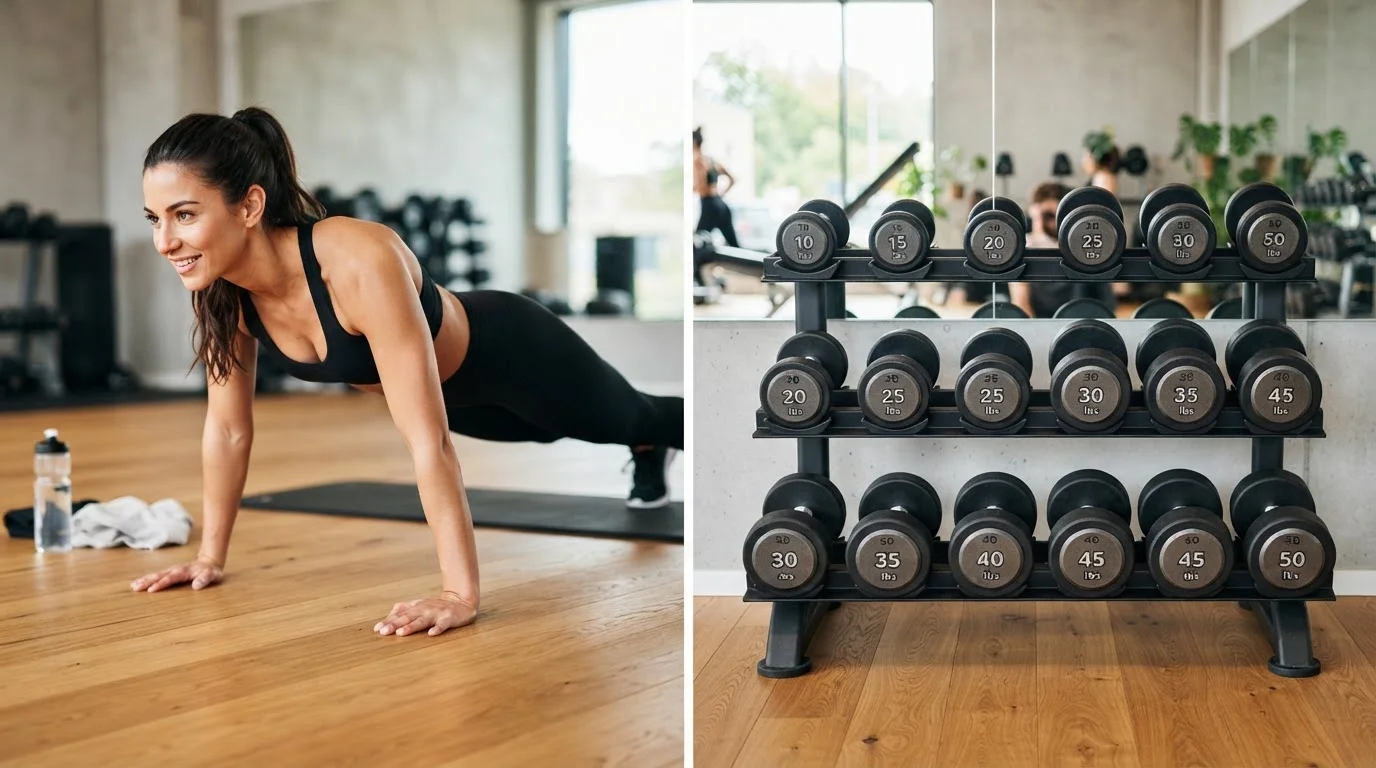
Photo credit: FaqInsider.com
Push-ups or dumbbells? Both build strength, but through different mechanisms. This side-by-side breakdown helps you understand the trade-offs.
Key Takeaways
- Both bodyweight training and free weights are evidence-supported methods for building muscular strength and endurance.
- Bodyweight training excels at convenience and functional movement patterns; free weights allow easier, measurable load progression.
- Neither approach is universally superior - the best choice depends on your goals, access, and current fitness level.
- Combining both methods is a practical strategy many fitness professionals recommend for balanced development.
- Beginners can make substantial strength gains with either approach before needing to specialize.
How Each Method Builds Strength
Strength is built when muscles are challenged beyond their current capacity and then given time to recover and adapt. Both bodyweight training and free weights create this stimulus - they just do it differently.
With bodyweight training, resistance comes from your own mass and the angle or leverage at which you move it. A standard push-up loads the chest and triceps at a fixed percentage of body weight; elevating your feet in a pike push-up shifts more load to the shoulders. Progressions are achieved by changing leverage, adding movement complexity, or increasing volume - more reps, shorter rest, or more demanding variations like single-leg squats or archer push-ups.
With free weights - dumbbells, barbells, and kettlebells - resistance is external and adjustable in precise increments. This makes progressive overload (the gradual increase of training stress over time) straightforward to apply and track. Adding 5 pounds to a dumbbell curl is a concrete, repeatable adjustment that the body must adapt to.
Research in exercise science consistently shows that both approaches produce meaningful improvements in strength and muscle mass, particularly in people who are new to resistance training. The mechanisms overlap significantly; the practical differences emerge when you look at accessibility, progression ceiling, and movement specificity. For a deeper look at how strength concepts apply to beginners, see our beginner's guide to strength training.
| Criterion | Bodyweight Training | Free Weights |
|---|---|---|
| Equipment needed | None | Dumbbells, barbells, or kettlebells |
| Cost to start | Free | Moderate to high upfront cost |
| Location flexibility | Anywhere | Home gym or fitness facility |
| Load progression | Via leverage and complexity | Via direct weight increments |
| Beginner accessibility | Very high | High with proper instruction |
| Long-term progression ceiling | Moderate (skill-limited) | High |
| Functional movement integration | Strong - multi-joint patterns | Variable - depends on exercise selection |
| Muscle isolation potential | Limited | High |
Practical Trade-Offs Worth Knowing
The most meaningful differences between these two approaches are practical rather than physiological.
~80%
Adults who don't meet strength training guidelines
According to CDC data, roughly 80% of U.S. adults do not meet the federal physical activity guidelines for both aerobic and muscle-strengthening activity.
Similar
Strength gains: bodyweight vs. weights in beginners
Multiple peer-reviewed studies indicate comparable strength and hypertrophy gains between bodyweight and free-weight protocols in untrained individuals over short-to-medium training periods.
2x/week
Minimum recommended strength training frequency
U.S. Physical Activity Guidelines for Americans recommend muscle-strengthening activities for all major muscle groups at least two days per week for adults.
Accessibility and cost clearly favor bodyweight training. No equipment, no gym membership, and no dedicated space beyond a small floor area are required. Free weights carry upfront costs and storage requirements - meaningful barriers for some households.
Progression ceiling tilts toward free weights. Advanced bodyweight movements like one-arm push-ups or pistol squats are technically demanding and may take months or years to develop. Free weights allow incremental load increases regardless of skill level, making continued progression more straightforward for a wider range of people.
Joint and connective tissue stress varies with load and technique in both methods. Heavy free-weight training without proper form carries injury risk - a qualified trainer or coach can be valuable, particularly for complex movements like barbell squats or deadlifts. Bodyweight training is not automatically safer; poor mechanics in any movement can cause strain over time.
Bodyweight methods also tend to integrate multiple muscle groups in each movement, which aligns naturally with the principles of functional fitness - training the body for the patterns daily life demands, rather than isolating individual muscles.
It's also worth noting that some popular fitness assumptions don't hold up under scrutiny - including the idea that one training style is categorically superior. Evidence generally supports using the approach you'll adhere to consistently, since regularity is the strongest predictor of long-term results.
This article is for general informational and educational purposes only and does not constitute medical or personal fitness advice. Consult a qualified healthcare professional or certified fitness professional before beginning or significantly changing an exercise program, especially if you have existing health conditions or injuries.

Author
Health & Wellness Editorial Team
Health & Wellness Editorial Team is the collective byline for our editorial team and contributor network. Articles published under this byline or an editorial pen name are researched, written, and reviewed according to our editorial standards for clarity, consistency, and independence before publication.
View all articles →