
Journaling for Emotional Clarity: Approaches Worth Knowing About
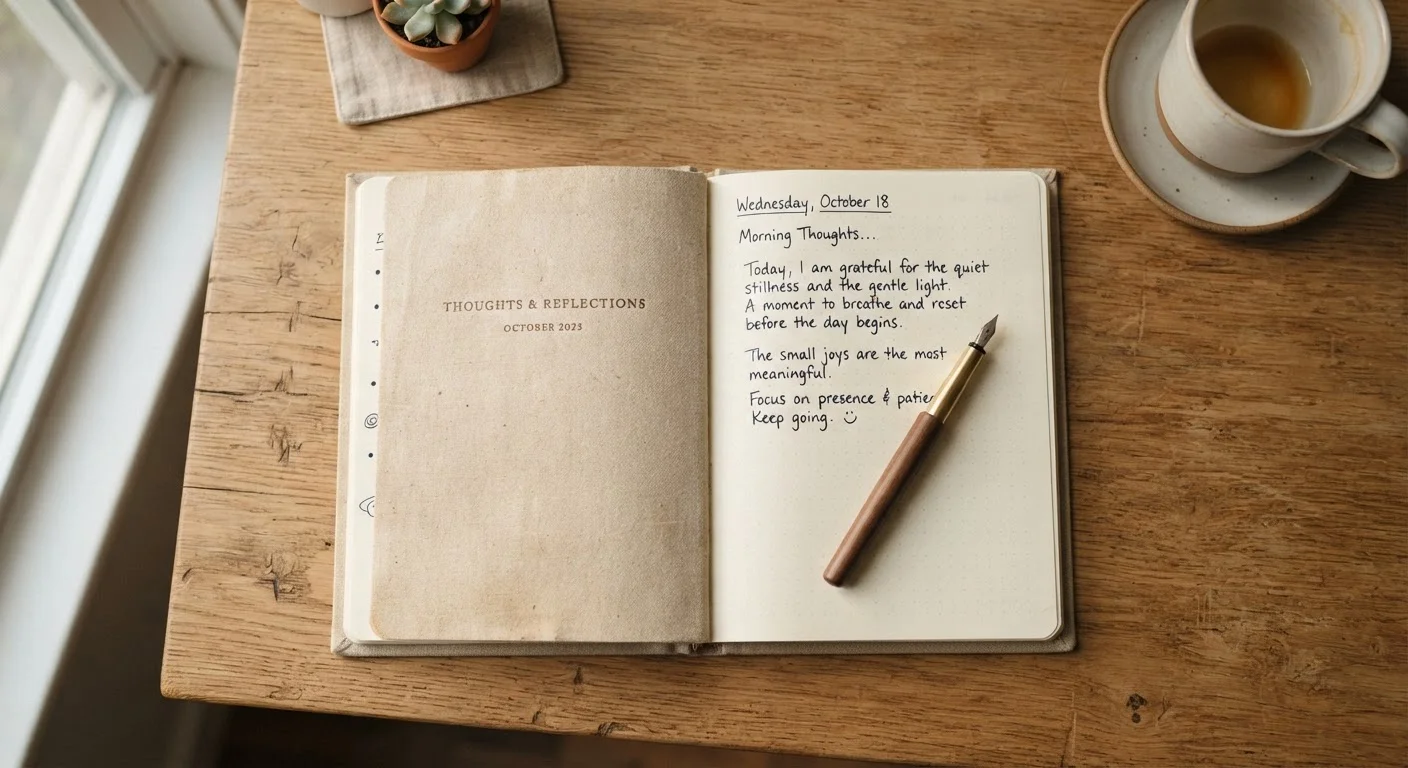
Photo credit: FaqInsider.com
Not all journaling serves the same purpose. From expressive writing to structured prompts, here are different methods and what each tends to support.
Key Takeaways
- Journaling methods vary significantly in structure, purpose, and the emotional outcomes they tend to support.
- Expressive writing and structured prompts address different needs - matching the method to your goal matters.
- Research on journaling is promising but limited; it works best as a complement to other wellness practices.
- Journaling is a self-help tool, not a substitute for professional mental health care when that is needed.
Why the Method You Choose Matters
Journaling is often described as a single practice, but in reality it encompasses a range of approaches with meaningfully different purposes. Some are designed to process difficult emotions through unfiltered expression; others build self-awareness through structure and repetition; still others aim to shift perspective or clear mental clutter. Choosing a method that matches your actual goal - rather than defaulting to whichever format you encountered first - tends to make the practice more useful.
This article outlines six distinct journaling approaches, what each is designed to support, and where the evidence or tradition behind each comes from. For a broader look at what the research does and does not support when it comes to journaling generally, this evidence-based overview provides useful context before diving in.
Journaling Is a Support Tool, Not Treatment
Research on expressive and reflective writing is promising, but journaling is not a clinical intervention for mental health conditions. If you are experiencing significant distress, persistent low mood, anxiety, or other symptoms that affect daily functioning, speaking with a qualified mental health professional is the appropriate step. Journaling can complement professional care - it is not a substitute for it. For more on when self-help approaches are sufficient versus when professional support makes sense, see this overview of therapy and self-help.
Expressive Free Writing
Expressive writing involves putting thoughts and feelings on the page without editing or self-censoring. Pioneered in research by psychologist James Pennebaker, this approach asks writers to explore emotionally significant experiences - including their thoughts and feelings about them - continuously over several sessions. Studies have found associations between this type of writing and reduced psychological distress, though effects vary across individuals. It works best when there is genuine emotional material to process, rather than as a daily habit for neutral days.
Expressive writing asks you to explore feelings honestly, without editing or performance.
Structured Prompt Journaling
Structured prompts guide reflection by posing specific questions, such as "What emotion showed up most today, and where did I feel it in my body?" or "What would I tell a friend in my situation?" This format is particularly useful for people who find a blank page overwhelming or who want to build a consistent reflective practice. Prompts can be drawn from workbooks, therapy frameworks, or self-designed questions. The structure reduces the activation energy to begin, making regular practice more accessible. This approach pairs naturally with concepts like affect labeling, since many prompts ask writers to identify and name specific feelings.
Prompts reduce the friction of starting, making regular reflection more sustainable.
Gratitude Journaling
Gratitude journaling involves regularly noting things - large or small - that felt positive, meaningful, or appreciated. Research suggests that consistent gratitude practice may support mood over time, though it is less clear whether the journal format itself is the active ingredient versus the underlying habit of noticing positives. This method tends to be most effective when entries are specific rather than generic. Writing "My colleague covered for me when I was overwhelmed" is more likely to feel meaningful than a broad statement like "I am grateful for my job." It is worth noting that gratitude journaling is not appropriate as a forced reframe during acute grief or crisis - it works better as a stability-building habit during ordinary times.
Specificity matters - concrete, detailed entries tend to carry more emotional weight.
Cognitive Restructuring Journals
Drawn from cognitive behavioral therapy (CBT), this approach structures entries around identifying a triggering situation, the automatic thought that followed, the emotion it produced, and - with reflection - a more balanced alternative interpretation. Some people use formal templates; others adapt the process informally. This method is not a replacement for working with a therapist trained in CBT, but it can reinforce skills learned in therapy or help individuals begin to notice patterns in their thinking. If you are preparing to explore therapy, understanding these concepts in advance can be useful - see our guide on making the most of a first therapy session for related context.
Cognitive journaling helps identify the link between situations, thoughts, and emotional reactions.
Stream-of-Consciousness Morning Pages
Popularized by author Julia Cameron, morning pages involve writing three longhand pages immediately upon waking - whatever comes to mind, without concern for quality or coherence. The intent is less therapeutic processing and more mental clearing: externalizing the internal noise that can otherwise crowd creative thinking or emotional bandwidth throughout the day. This is a practice grounded more in creative tradition than clinical research, but many people report it supports a sense of mental spaciousness. It pairs well with grounding strategies for those who find morning anxiety a particular challenge.
Morning pages prioritize mental clearing over coherent reflection - output quality is beside the point.
Letters You Don't Send
Writing an unsent letter to a person, a past version of yourself, or even an abstract concept like grief or anger can help articulate feelings that are difficult to express directly. This technique is used informally and within some therapeutic contexts. It tends to be especially useful when interpersonal dynamics make direct communication impossible or unwise - such as after a loss, a relationship ending, or conflict with someone unavailable. The act of writing the letter, not sending it, is where the value lies: it creates distance and perspective on feelings that can otherwise feel formless. For broader context on how relationships and emotional health intersect, this overview of social connection and resilience offers useful background.
Unsent letters give form to feelings that are hard to voice directly or safely.
Finding a Practice That Fits
No single journaling method works for everyone, and consistency matters more than which format you choose. A practice done three times a week in a format that feels natural will likely serve you better than an elaborate system abandoned after a few sessions.
Start With One Method, Not Several
It is tempting to combine multiple journaling formats at once, but switching between approaches before any one has been tried consistently can prevent you from seeing what actually works for you. Try a single method for two to four weeks before evaluating whether it feels useful or whether a different approach might suit your needs better.
It is also worth acknowledging that journaling surfaces difficult feelings for some people - particularly when processing trauma or significant loss. If writing leaves you feeling worse rather than more settled, that is worth paying attention to. A therapist or counselor can help determine whether a different approach, or additional support, would be more appropriate for your situation. This content is general health information and is not a substitute for personalized professional guidance.
This article is for informational and educational purposes only and does not constitute medical or mental health advice. If you are experiencing significant emotional or psychological distress, please consult a qualified mental health professional.

Author
Health & Wellness Editorial Team
Health & Wellness Editorial Team is the collective byline for our editorial team and contributor network. Articles published under this byline or an editorial pen name are researched, written, and reviewed according to our editorial standards for clarity, consistency, and independence before publication.
View all articles →