
What Chronic Stress Actually Does to Your Body Over Time
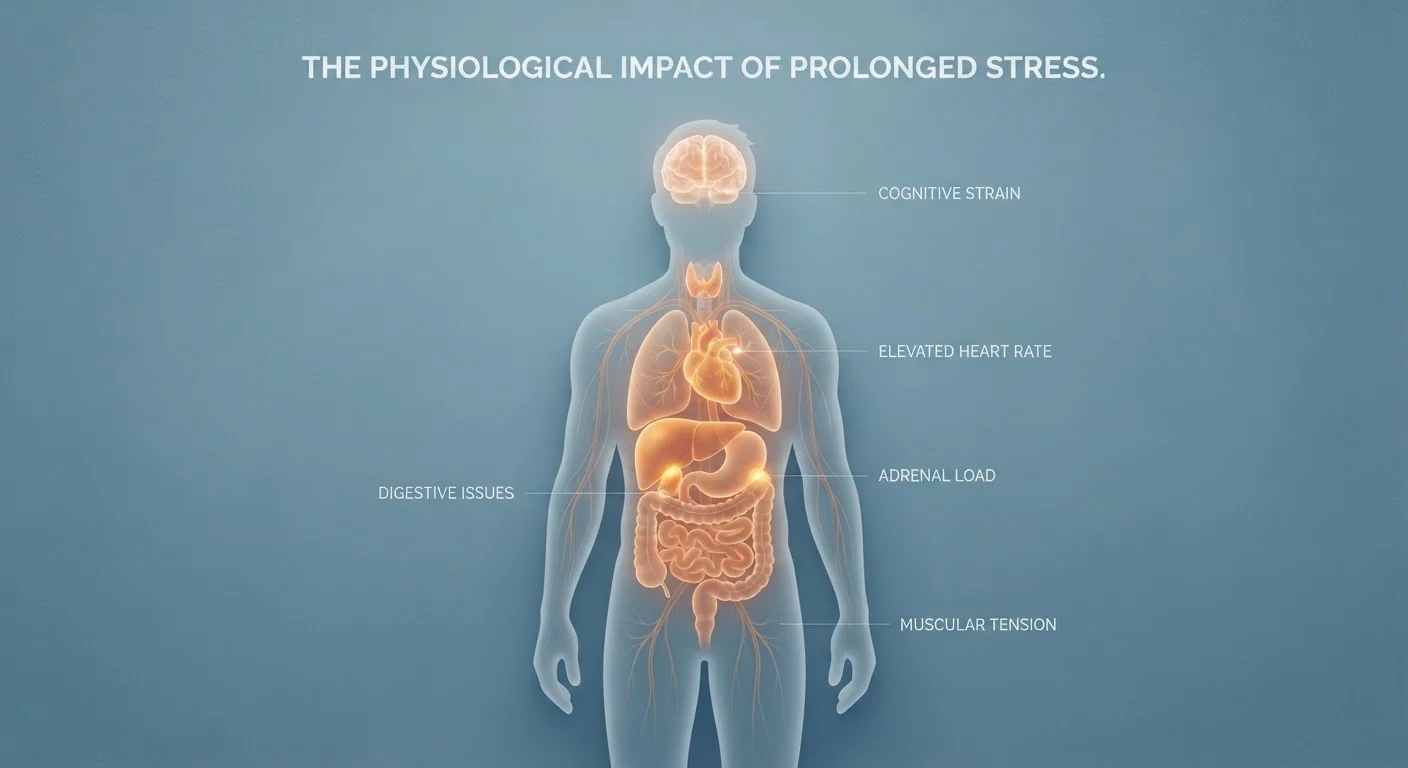
Photo credit: FaqInsider.com
In this article
Beyond tension headaches, prolonged stress affects your heart, immune system, and digestion. Here's what the science says about long-term exposure.
Key Takeaways
- Chronic stress keeps the body's fight-or-flight response activated well beyond its useful purpose.
- Long-term elevated cortisol is linked to increased cardiovascular risk, impaired immunity, and metabolic changes.
- The gut-brain connection means digestive problems are a common and underrecognized symptom of sustained stress.
- Sleep disruption caused by chronic stress can compound every other physical effect.
- Recognizing the physical signs of chronic stress is an important first step toward seeking appropriate support.
Your Body's Alarm System Was Built for Sprints, Not Marathons
The stress response is one of the body's most sophisticated survival tools. When you perceive a threat, your brain signals the adrenal glands to release cortisol and adrenaline, raising your heart rate, sharpening focus, and mobilizing energy. This is the fight-or-flight response - useful when the threat is real and time-limited.
The problem arises when that threat never fully resolves. Financial pressure, relationship conflict, chronic work demands, or caregiving responsibilities can keep this system activated day after day. The body doesn't distinguish well between a physical danger and an ongoing life stressor. Over time, this sustained arousal shifts from protective to damaging.
77%
Americans reporting physical stress symptoms
According to American Psychological Association survey data, a substantial majority of Americans report experiencing physical symptoms they associate with stress.
2x
Elevated heart disease risk with chronic workplace stress
Research published in peer-reviewed journals has found that chronic work-related stress is associated with roughly double the risk of heart disease compared to lower-stress occupations.
40%
Reduction in immune response efficiency
Studies in psychoneuroimmunology suggest chronic psychological stress can meaningfully suppress key immune markers, though exact figures vary by population and methodology.
What Elevated Cortisol Does to Your Heart and Metabolism
Cortisol plays a central role in energy regulation, but chronically high levels carry significant costs. Research has associated long-term elevated cortisol with higher blood pressure, increased inflammation, and changes in cholesterol levels - all recognized cardiovascular risk factors. The American Heart Association acknowledges psychological stress as a contributing factor in heart disease risk.
Metabolically, sustained cortisol can promote fat storage - particularly in the abdominal area - and affect how the body processes blood sugar. These changes don't happen overnight, but they accumulate with months and years of high-stress living.
“Stress is not merely a psychological phenomenon - it is a whole-body experience with measurable biological consequences that accumulate over time.”
— Robert Sapolsky, Neuroendocrinologist and author of 'Why Zebras Don't Get Ulcers'
The Immune System and the Gut Both Pay a Price
Your immune system operates in close coordination with your stress hormones. In short bursts, cortisol actually modulates immunity appropriately. But chronic exposure suppresses the immune system's ability to mount an effective defense, which is why people under sustained stress often report getting sick more frequently or taking longer to recover from illness.
The digestive system is equally sensitive. The gut has its own extensive nervous system - sometimes called the enteric nervous system - and it communicates constantly with the brain. Chronic stress can disrupt this communication, altering gut motility, increasing gut permeability, and contributing to symptoms like bloating, constipation, diarrhea, or worsened irritable bowel syndrome (IBS).
If you're noticing patterns across mood, energy, and physical symptoms, it may be worth exploring whether your stress levels have crossed into something more serious. See signs that everyday stress may have crossed into burnout for a more detailed look at warning signals.
Sleep, the Brain, and the Cycle That's Hard to Break
Chronic stress and poor sleep reinforce each other in a particularly difficult cycle. Elevated cortisol and a persistently activated nervous system make it harder to fall asleep, stay asleep, and reach restorative sleep stages. At the same time, sleep deprivation itself raises cortisol levels and amplifies stress reactivity - making everyday challenges feel more overwhelming.
Over time, this cycle affects cognitive function, memory consolidation, and emotional regulation. The brain regions responsible for rational decision-making and emotional control - including the prefrontal cortex and hippocampus - are sensitive to chronic cortisol exposure, and sustained stress can affect their structure and function over time, according to neuroscience research.
Understanding how these effects differ from acute stress, and how they may progress toward burnout, can help you recognize where you stand. Our breakdown of stress versus burnout offers a useful framework.
This article is for general informational purposes only and is not a substitute for professional medical advice, diagnosis, or treatment. If you are experiencing persistent physical or mental health symptoms, please consult a qualified healthcare provider.
Frequently Asked Questions

Author
Health & Wellness Editorial Team
Health & Wellness Editorial Team is the collective byline for our editorial team and contributor network. Articles published under this byline or an editorial pen name are researched, written, and reviewed according to our editorial standards for clarity, consistency, and independence before publication.
View all articles →