
Smoke Detectors, CO Alarms, and Fire Extinguishers: A Safety Maintenance Primer
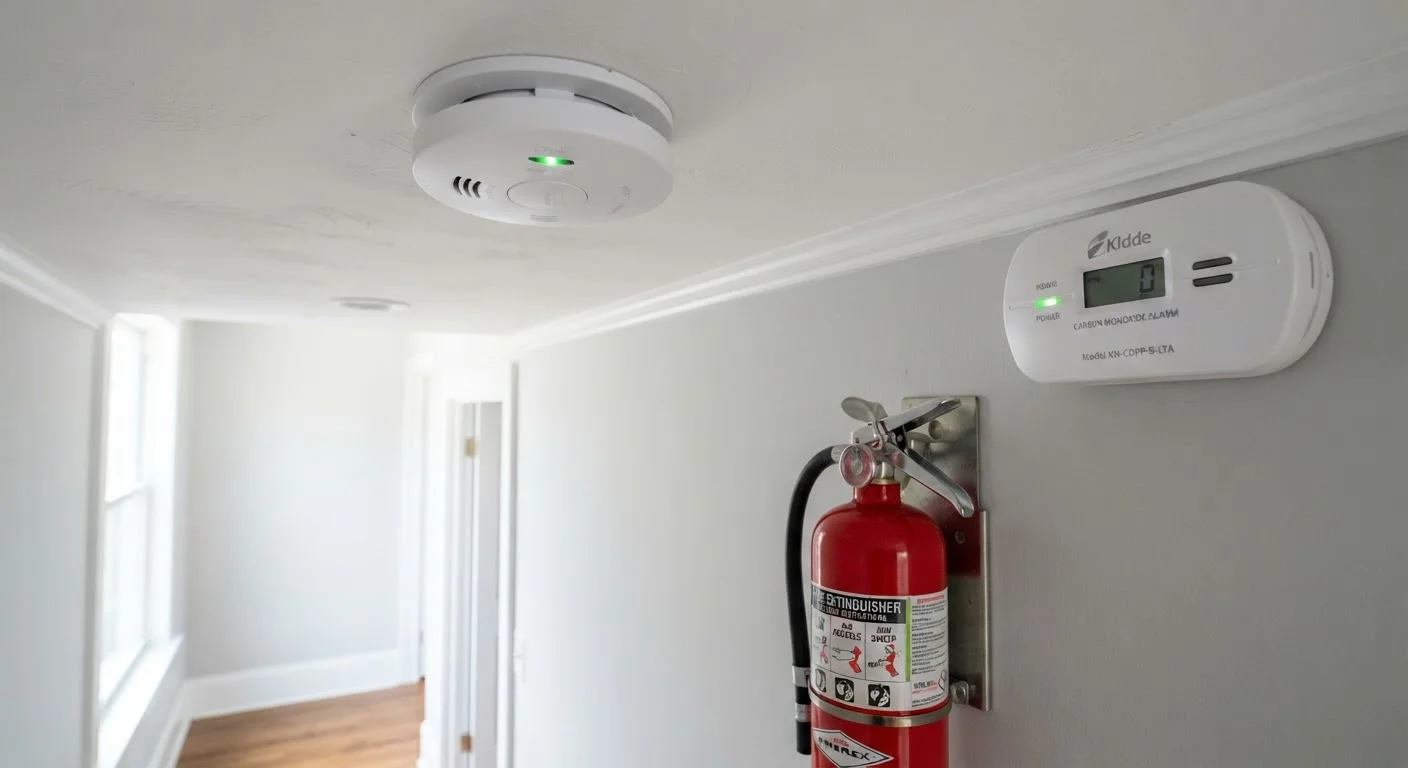
Photo credit: FaqInsider.com
In this article
Life-safety devices only work when properly maintained. Learn testing schedules, placement rules, and replacement timelines for each device.
Why Maintenance Is the Point
A smoke detector sitting untested for three years, a fire extinguisher with a gauge nobody has looked at, a CO alarm past its rated lifespan - these devices create a false sense of security. Life-safety equipment only delivers on its promise when it's in working order. The good news: maintaining these three devices requires very little time and no special skills.
This reference guide covers testing schedules, placement rules, and replacement timelines so you have everything in one place. For a broader view of where safety-device maintenance fits into your year, see the Annual Home Maintenance Calendar.
| Smoke detector test frequency | Monthly (NFPA 72 general recommendation) |
| Smoke detector replacement timeline | Every 10 years from manufacture date (National Fire Protection Association) |
| CO alarm replacement timeline | Every 5-7 years (check model label) (UL standard guidance) |
| CO alarm test frequency | Monthly (General manufacturer guidance) |
| Fire extinguisher visual check | Monthly (gauge in green zone) (NFPA 10) |
| Professional extinguisher inspection | Annually (NFPA 10) |
| Smoke detectors required per home | Every level, inside & outside each sleeping area (NFPA 72 placement requirements) |
Smoke Detectors: Testing, Placement, and Replacement
Testing frequency: Press and hold the test button once a month. A loud, sustained alarm tone means the unit is functioning. A weak chirp or no sound means replace the battery immediately - and if a fresh battery doesn't fix it, replace the unit.
Battery replacement: For battery-only models, swap batteries at least once a year. Many homeowners tie this to a recurring date - a clock change or a birthday - to make it automatic. Sealed 10-year-battery models don't need annual swaps but must still be tested monthly.
Placement rules: Install detectors on every level of the home, inside each bedroom, and outside each sleeping area. Mount units on the ceiling or high on a wall (within 12 inches of the ceiling). Keep them at least 10 feet from cooking appliances to reduce nuisance trips.
Replacement timeline: Replace smoke detectors every 10 years from the manufacture date printed on the back of the unit - not the purchase date.
Ionization smoke detector
A type of smoke alarm that uses a small amount of radioactive material to detect fast-flaming fires. It tends to respond quickly to open flames but may be slower to detect slow, smoldering fires.
Photoelectric smoke detector
A smoke alarm that uses a light beam to detect particles from slow, smoldering fires. It is generally more responsive to this fire type than ionization models and produces fewer cooking-related false alarms.
Carbon monoxide (CO)
A colorless, odorless gas produced by incomplete combustion of fuel. At elevated concentrations it can be life-threatening, making a functioning CO alarm essential in any home with fuel-burning appliances or an attached garage.
End-of-life signal
A distinct chirping pattern emitted by a smoke or CO alarm when the sensor has reached the end of its reliable operating life, distinct from a low-battery chirp. Consult your device manual to tell them apart.
Multipurpose extinguisher (ABC-rated)
A fire extinguisher rated to fight Class A (ordinary combustibles), Class B (flammable liquids), and Class C (electrical) fires. The most versatile option for residential use.
Manufacture date
The date stamped or printed on a safety device that marks when it was made - not when it was purchased or installed. Replacement timelines are calculated from this date.
CO Alarms: The Invisible Threat
Carbon monoxide is odorless and colorless, which is why the alarm is the only reliable warning. CO alarms should be installed on every level of the home and near sleeping areas. They should not be placed directly next to gas appliances or in enclosed utility closets where airflow is restricted.
Testing frequency: Test CO alarms monthly using the test button, the same way you test smoke detectors.
Replacement timeline: CO alarms have a shorter lifespan than smoke detectors - typically 5 to 7 years, depending on the model. Check the manufacture date on the unit or in the manual. When a CO alarm chirps in a pattern that differs from a low-battery signal (consult your manual), the unit itself may have reached end-of-life.
If a CO alarm activates with an alert tone - not just a chirp - leave the home immediately, leave the door open, and call 911 from outside. Do not re-enter until emergency responders confirm it's safe. CO alarms are non-negotiable in homes with attached garages, gas appliances, or fuel-burning heating systems. For guidance on spotting broader warning signs around your home, see Reading Your Home Like a Checklist.
Fire Extinguishers: Inspection and Readiness
A fire extinguisher is only useful if it's charged, accessible, and you know how to operate it. Most households benefit from at least one multipurpose extinguisher - rated for Class A, B, and C fires - mounted in the kitchen and one in the garage or utility area.
Monthly visual check: Confirm the pressure gauge needle is in the green zone. Check that the safety pin is intact and the pull ring is unobstructed. Look for visible damage, corrosion, or a cracked hose.
Annual inspection: Professional inspection is recommended once a year. A licensed fire equipment service company can verify internal pressure, inspect the valve and nozzle, and recharge or replace the unit if needed.
Replacement or recharge: If the gauge reads low, the unit has been partially discharged, or it's over 12 years old, have it professionally evaluated. Some extinguisher types can be recharged; disposable models must be replaced. Never test an extinguisher by discharging it - this depletes the charge and requires immediate reservice.
Understanding which tasks homeowners can handle themselves versus when a professional is warranted is a useful broader skill - the guide on DIY vs. calling a professional covers that distinction well.

Author
Home & Garden Editorial Team
Home & Garden Editorial Team is the collective byline for our editorial team and contributor network. Articles published under this byline or an editorial pen name are researched, written, and reviewed according to our editorial standards for clarity, consistency, and independence before publication.
View all articles →