
Building a Travel First Aid Kit That's Actually Useful
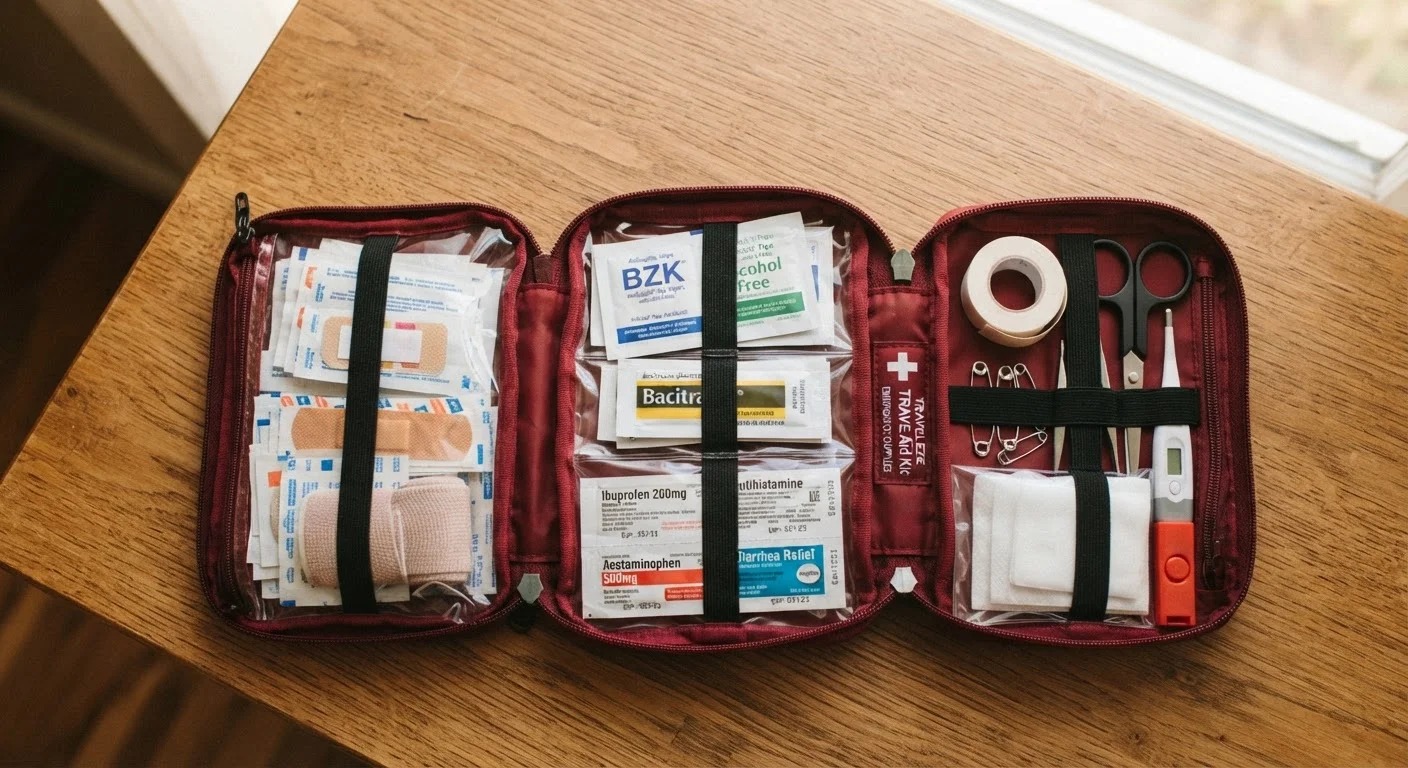
Photo credit: FaqInsider.com
A practical guide to what belongs in a travel first aid kit, tailored to destination type, trip length, and traveler needs.
Key Takeaways
- Customize your kit based on destination type, trip length, and any personal medical needs.
- A core kit covers wound care, pain relief, digestive issues, and allergy response.
- Remote or adventure travel requires additional supplies beyond a standard kit.
- Always consult a healthcare provider before adding prescription items or destination-specific medications.
- Pack your kit in your carry-on so it's accessible during transit, not lost in checked luggage.
Why a Generic Kit Usually Falls Short
Pre-packaged travel first aid kits sold at pharmacies are a fine starting point, but they're built for the average traveler heading somewhere average - which probably isn't you. They tend to over-include items you'll never touch (like a dozen safety pins) and leave out things that actually matter for your specific trip (like oral rehydration salts or blister pads).
A truly useful kit is intentional. It reflects where you're going, how long you'll be there, and what health vulnerabilities you or your travel companions carry. The steps below walk you through building one from the ground up - without overcomplicating it.
What you will need
What to Gather and How to Use It
Before you start assembling, lay out your tools and supplies so you can see what you're working with. The tool list below covers the essential items that belong in virtually every travel kit.
Water-resistant zippered pouch or case
Keeps all supplies organized, dry, and easy to locate quickly.
Adhesive bandages (assorted sizes)
Covers minor cuts and blisters - the most commonly needed item on any trip.
Antiseptic wipes and antibiotic ointment
Cleans wounds to reduce infection risk before bandaging.
Sterile gauze pads and medical tape
Manages larger wounds or abrasions that adhesive bandages can't adequately cover.
Pain reliever and fever reducer (e.g., acetaminophen or ibuprofen)
Addresses headaches, muscle pain, minor fever, and inflammation while traveling.
Oral rehydration salts (ORS packets)
Replaces electrolytes lost from traveler's diarrhea, vomiting, or heat exposure.
Antihistamine tablets
Manages mild allergic reactions, insect stings, and environmental allergies.
Digital thermometer
Helps you track fever, which is important for identifying serious illness early.
Research the health risks of your destination
Before buying a single bandage, spend time understanding what your specific trip may throw at you. A beach resort in the Caribbean carries different risks than a trekking route in Nepal or a backpacking circuit through Southeast Asia. Look up common traveler health concerns for your destination - things like food and waterborne illness, insect-borne disease, altitude sickness, or extreme heat.
The U.S. Centers for Disease Control and Prevention (CDC) and the U.S. Department of State both publish destination-specific health and safety guidance. Use these as starting points, not exhaustive checklists. If you're heading somewhere remote or disease-endemic, consider scheduling a visit with a travel medicine specialist at least four to six weeks before departure.
Build your core wound-care and pain-relief layer
Every kit - regardless of destination - needs a reliable foundation. Gather adhesive bandages in multiple sizes, sterile gauze pads (2x2 and 4x4 inches), medical adhesive tape, antiseptic wipes, and a small tube of antibiotic ointment. Add a pair of non-latex gloves so you can treat others without exposure risk.
For pain and fever, include acetaminophen or ibuprofen in a quantity appropriate for your trip length. A small pair of tweezers helps with splinters or ticks, and blister treatment pads (hydrocolloid-style) are invaluable if you'll be doing significant walking.
Add digestive health and hydration support
Traveler's diarrhea affects a significant portion of international travelers, making digestive support one of the most practical kit additions. Pack oral rehydration salts (ORS), which help restore fluids and electrolytes far more effectively than water alone. An antidiarrheal medication such as loperamide can be helpful for managing symptoms when immediate access to a restroom isn't available.
If your doctor recommends it based on your destination, they may also prescribe an antibiotic for self-treatment of severe traveler's diarrhea - always follow their guidance on if and when to use it. Antacid tablets round out this layer for heartburn or indigestion from unfamiliar food.
Layer in allergy, cold, and environmental items
Include a non-drowsy antihistamine for mild allergic reactions to food, insects, or environment. If you or a travel companion has a known severe allergy, your doctor may prescribe an epinephrine auto-injector - that's a conversation to have well before your trip, not the night before departure.
Decongestant tablets can relieve pressure during flights or help with sinus symptoms from dust or pollution. Throat lozenges, lip balm with SPF, and lubricating eye drops are small additions that address common nuisances. In sunny or high-altitude environments, sunscreen isn't optional - pack a travel-sized supply.
Customize for destination type and trip length
Once your core layers are in place, tailor the kit to your specific context:
- Remote or adventure travel: Add a SAM splint, elastic bandage wrap, irrigation syringe for flushing wounds, and a basic wound closure strip kit. A compact wilderness first aid manual is also worth including.
- Tropical or insect-heavy destinations: Pack DEET-based insect repellent (at least 20-30% concentration), permethrin-treated clothing if appropriate, and any malaria prophylaxis your doctor has prescribed.
- High-altitude destinations: Ask your doctor about acetazolamide (Diamox) for altitude sickness prevention if you're ascending quickly. Know the symptoms of altitude sickness before you go.
- Travel with children: Adjust medication types and dosages to be age-appropriate and consult your pediatrician. Add a pediatric thermometer and any child-specific supplies.
Longer trips also mean more of everything - scale quantities accordingly and check expiration dates before packing.
Pack smart and know your kit's limits
Store your kit in a compact, water-resistant case that fits in your carry-on bag. TSA allows most first aid supplies through security; liquids follow standard 3.4-ounce rules. Keep a written list of kit contents in the pouch - this helps at customs and helps you restock on the road.
Most importantly, understand what your kit is and isn't: it's designed to manage minor issues and buy time until professional care is available, not replace it. Know the emergency number for your destination (not all countries use 911), and keep your travel insurance information accessible.
Your Kit Has Limits - Know Them
A travel first aid kit is designed to manage minor injuries and buy time until professional care is available. It is not a substitute for medical treatment. If you or a travel companion experiences symptoms that seem serious - chest pain, difficulty breathing, signs of severe allergic reaction, or high fever with confusion - seek emergency medical care immediately. Research emergency services and the nearest medical facilities at your destination before you arrive.
Once your kit is assembled, do a quick run-through: open each item, confirm it's not expired, and mentally rehearse when you'd use it. A kit you understand is far more useful in a stressful moment than one you've never opened.
This article is for general informational purposes only and does not constitute medical advice. Consult a qualified healthcare professional or travel medicine specialist to determine what medical supplies and medications are appropriate for your specific health needs and travel destination.

Author
Travel Editorial Team
Travel Editorial Team is the collective byline for our editorial team and contributor network. Articles published under this byline or an editorial pen name are researched, written, and reviewed according to our editorial standards for clarity, consistency, and independence before publication.
View all articles →