
Reading a Mechanic's Estimate Without Getting Lost
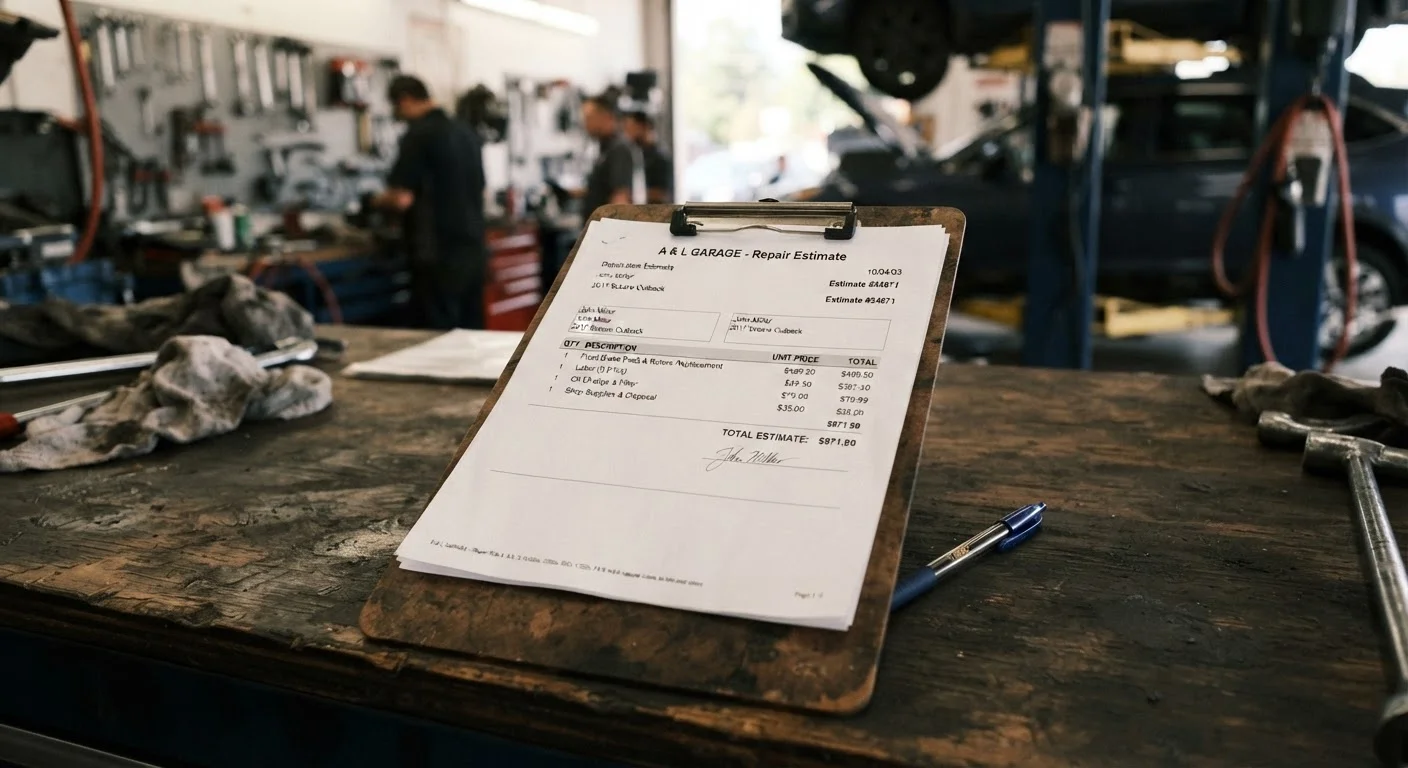
Photo credit: FaqInsider.com
In this article
Repair estimates can be confusing and easy to over-trust. Learn what each line item means, what questions to ask, and how to evaluate what you're told.
Key Takeaways
- Every repair estimate should clearly separate labor costs from parts costs.
- You have the right to request a written estimate and approve each repair before work begins.
- Parts listed as OEM, OE-equivalent, or aftermarket carry different quality and warranty implications.
- A high total doesn't automatically mean unnecessary work - reviewing each line tells a clearer story.
- Getting a second opinion on large or unexpected estimates is a reasonable, common practice.
Why Repair Estimates Are Easy to Misread
A mechanic's repair estimate is a legally significant document in most states - shops are typically required to provide one in writing before starting work, and they generally cannot charge more than the approved amount without your authorization. Yet most drivers glance at the total, feel uncertain, and either approve everything or nothing. Neither is ideal.
The confusion usually comes from unfamiliar terminology, compressed line items, and the implicit pressure of a car you need back. Understanding the document's structure removes most of that uncertainty. If reading layered technical documents feels familiar, the experience isn't unlike reading a home inspection report - intimidating in bulk, manageable line by line.
Ask Before the Car Goes Into the Bay
Before you drop off your vehicle, ask the shop's policy on estimates: do they charge a diagnostic fee, and is that fee credited toward the repair if you approve the work? Knowing this upfront prevents surprise charges and sets clear expectations on both sides.
Before you drop off your vehicle, ask the shop's policy on estimates: do they charge a diagnostic fee, and is that fee credited toward the repair if you approve the work? Knowing this upfront prevents surprise charges.
Anatomy of a Standard Estimate
Most repair estimates follow a consistent structure, even when the formatting differs between shops.
Labor
Labor is billed by the hour, but shops typically use a flat-rate guide (such as Chilton or Mitchell) that assigns a standard number of hours to each job type - regardless of how long the actual technician takes. The hourly rate can vary significantly by shop type and region. This line should list the specific job performed, the flat-rate hours assigned, and the cost per hour.
Parts
Each part used should be listed with its description, part number (when applicable), quantity, unit cost, and extended cost. Pay attention to whether parts are labeled OEM (Original Equipment Manufacturer - made to factory spec), OE-equivalent (aftermarket parts meeting OEM standards), or simply aftermarket. These distinctions affect both quality expectations and warranty coverage.
"Shop Supplies" Lines Can Be Abused
A shop supplies fee is a legitimate charge covering consumables like rags, fluids, and waste disposal. However, some shops calculate this as an open percentage of the total bill, which can add meaningfully to large estimates. Ask for a breakdown if this line seems disproportionate - it should reflect actual consumables used, not a blanket surcharge.
Sublet and Shop Supplies
Some estimates include a line for sublet work - repairs outsourced to a specialist - and a line for shop supplies (rags, fluids, disposal fees). These are legitimate charges, but the shop supplies line should be a modest, itemized amount, not an open-ended percentage of the total.
Tax and Fees
Parts are typically taxable; labor may or may not be depending on your state. Some states also require shops to disclose their labor rate and any document or hazardous-material disposal fees separately.
How to Evaluate Each Line Before Saying Yes
Once you understand the structure, the evaluation becomes methodical. Follow these steps to work through any estimate with confidence.
Request the estimate in writing before approving anything
Most states require shops to provide a written estimate for repairs exceeding a certain dollar threshold (commonly $50-$100). Ask for one regardless of the job size. A written estimate is your authorization record - it defines the scope and cost ceiling of approved work.
Separate the labor lines from the parts lines
Locate each distinct job listed and note its associated labor charge and parts charge separately. Mixing them together makes it impossible to identify where the cost is concentrated. A $900 estimate that is 80% labor deserves different scrutiny than one that is 80% parts.
Identify part types and look up baseline pricing
Note whether each part is OEM, OE-equivalent, or aftermarket. For common parts (brake pads, filters, belts), publicly available parts databases and retailer sites can give you a ballpark on component cost. The shop's markup above cost is normal and expected - a significantly inflated parts price compared to market is worth discussing.
Ask for evidence on any repair you didn't expect
If the estimate includes something you didn't bring the car in for, ask the technician to show you the issue - physically, via photo, or via video inspection footage. Reputable shops welcome this. Understanding what's actually failing helps you prioritize repairs if budget is a constraint.
Cross-reference labor hours against a flat-rate guide
Ask the shop which labor time guide they use (Mitchell, Chilton, or AllData are common). Many public libraries and some online tools provide access to standard flat-rate hours by vehicle make, model, and repair type. If the billed hours substantially exceed the standard, ask why - some situations legitimately require more time, and the shop should be able to explain.
Get a second opinion on large or complex estimates
For estimates in the hundreds to thousands of dollars, a second opinion from a different shop is a sound practice - not an insult to the first shop. Call ahead, describe the issue and the proposed repair, and ask if the second shop can inspect the vehicle. Compare not just price but the recommended scope of work.
For maintenance items specifically - like an oil change upsell or tire service - it helps to know what your manufacturer actually recommends. Our breakdown of oil change intervals and shop recommendations and tire rotation, balancing, and alignment can help you cross-reference what's being proposed against factory guidance.
When to Push Back or Walk Away
Approving or declining repairs is entirely within your rights. A few situations warrant extra scrutiny:
- Vague line items: Any entry that reads only "inspection" or "miscellaneous" without a description should prompt a clarifying question before approval.
- Urgency pressure: A shop insisting a repair must happen today, without time to review or get a second opinion, is a yellow flag. Genuine safety items - brake failure, steering issues - deserve prompt attention, but the shop should be able to explain why specifically.
- Labor hours that seem high: You can look up standard flat-rate times in publicly available guides or ask the shop to show you which guide they're using.
- Unsolicited add-ons: If you came in for one repair and the estimate includes five additional items, ask the technician to show you the worn components or explain the findings. Most reputable shops will do this willingly.
For larger, unexpected repairs - particularly on a used vehicle - a pre-purchase or second-opinion inspection can reframe the decision entirely. Learn more about how those work in our guide to getting a pre-purchase inspection on a used car.
If you're evaluating line items on any major service document, the same analytical mindset applies - similar to reading a contractor bid for home work. Break it into parts, verify each one, and only commit to what you understand.

Author
Cars Editorial Team
Cars Editorial Team is the collective byline for our editorial team and contributor network. Articles published under this byline or an editorial pen name are researched, written, and reviewed according to our editorial standards for clarity, consistency, and independence before publication.
View all articles →