
Tire Pressure and Why Getting It Wrong Costs You More Than You Think
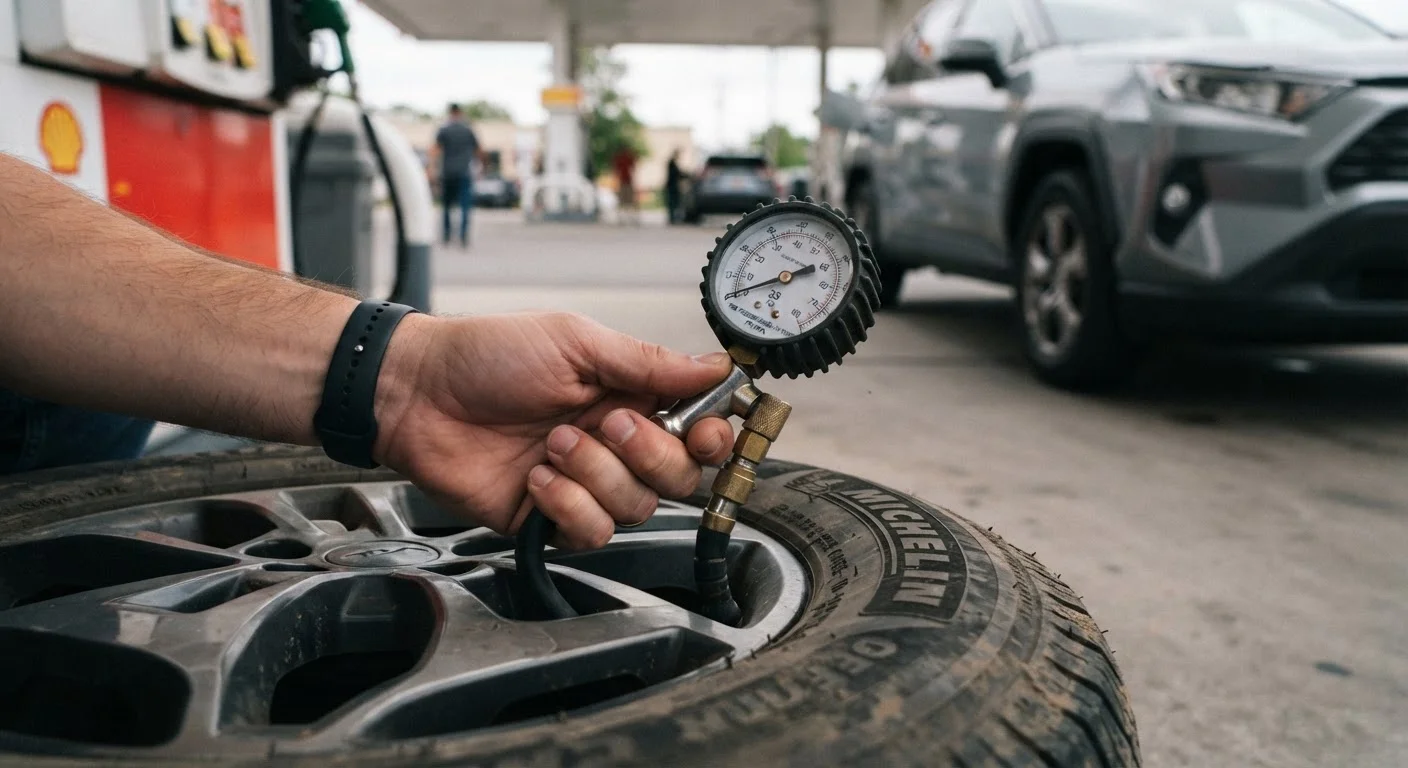
Photo credit: FaqInsider.com
In this article
Under- or over-inflated tires affect your safety, fuel economy, and tire lifespan. Learn what correct pressure means and how to check it properly.
Key Takeaways
- Your vehicle's correct tire pressure is listed on the driver's door jamb sticker, not on the tire sidewall.
- Under-inflation is the leading cause of premature tire wear and blowouts.
- Incorrect tire pressure measurably reduces fuel economy, costing drivers money over time.
- Tire pressure should be checked monthly and always when tires are cold.
- A TPMS warning light means pressure is already significantly low - don't wait for the light to check.
The Hidden Cost of Ignoring Tire Pressure
Most drivers think about tires only when something goes visibly wrong - a flat, a warning light, or an unusual sound. But tire pressure works against you silently long before any obvious sign appears. The U.S. Department of Energy has noted that under-inflated tires can reduce fuel economy, and under-inflation is consistently cited by tire industry organizations as a leading contributor to premature tire failure.
Consider what that means in practice: if your tires wear out thousands of miles early because of chronic under-inflation, you're replacing them sooner and spending more - on top of the fuel you've already burned less efficiently. Correct tire pressure is one of the simplest, cheapest forms of vehicle maintenance, yet it remains routinely overlooked.
~1 PSI
Pressure lost per 10°F temperature drop
Tire pressure fluctuates with ambient temperature; the Rubber Manufacturers Association has long cited this as a reason for seasonal pressure checks.
25%
Below recommended PSI before TPMS activates
Federal TPMS standards require the warning light to trigger at this threshold, meaning the tire is already significantly under-inflated before drivers are alerted.
Up to 0.3%
Fuel economy lost per PSI under-inflated
The U.S. Department of Energy estimates that under-inflated tires can reduce gas mileage by roughly 0.2-0.3% for every 1 PSI drop across all four tires.
Under-Inflation vs. Over-Inflation: Different Problems, Same Risk
Under-inflation is the more common problem. When a tire carries less air than intended, more of its sidewall flexes with each rotation. This generates excess heat - the primary enemy of tire rubber - and causes the outer edges of the tread to wear faster than the center. It also makes the vehicle handle sluggishly and increases stopping distances.
Over-inflation is less common but equally damaging. A tire pumped past its recommended PSI becomes rigid, reducing how much rubber actually contacts the road. The ride becomes harsher, the center of the tread wears faster, and the tire loses its ability to absorb impacts from potholes or road debris. Neither extreme is safe.
For a broader look at safe driving fundamentals, understanding how your tires interact with the road is a foundational piece of the puzzle.
Check Pressure Before You Drive, Not After
Tire pressure readings rise as you drive because friction heats the air inside the tire. Always measure pressure when the vehicle has been stationary for at least three hours to get an accurate cold reading. If you must check after driving, add about 4 PSI to the placard number as a rough working estimate, then recheck when the tires have cooled.
How to Check Tire Pressure Correctly
The process is straightforward, but timing matters. Always check pressure when tires are cold - meaning the vehicle has been parked for at least three hours or driven fewer than one mile. Heat from driving temporarily raises pressure readings, which can lead you to believe your tires are fine when they're not.
- Find your target PSI. Check the driver's door jamb sticker. Front and rear tires may have different recommended values.
- Use a reliable gauge. Stick gauges are inexpensive; digital gauges are easier to read accurately. The gauges at gas stations vary in accuracy.
- Remove the valve cap and press the gauge firmly onto the valve stem until you get a steady reading.
- Compare to the placard. Add air if low, release air (using the small pin inside the valve stem) if over-inflated.
- Replace the valve cap. Caps protect the valve from dirt and moisture that can cause slow leaks.
This whole process takes under five minutes per vehicle. For a fuller picture of which maintenance tasks are reasonable to handle yourself, see which upkeep you can safely do yourself.
What the TPMS Warning Light Is Really Telling You
Since 2008, all new passenger vehicles sold in the U.S. have been required to include a Tire Pressure Monitoring System (TPMS). The dashboard warning light looks like a cross-section of a tire with an exclamation point inside. When it illuminates, pressure in at least one tire has fallen approximately 25% below the vehicle's recommended level.
That threshold is important: 25% low is already well into the range where handling and blowout risk are meaningfully affected. The TPMS light is not an early warning - it's a late one. Relying solely on it means accepting a prolonged period of degraded performance before you act. Monthly manual checks catch the drift before it reaches that point.
If your TPMS light comes on and stays on even after you've corrected the pressure, or if it flashes before staying illuminated, the sensor itself may need attention. Understanding what each dashboard warning light means can help you respond appropriately rather than guessing.
Pressure, Wear, and the Bigger Picture of Tire Health
Correct inflation supports everything else you do for your tires. Rotation, balancing, and alignment all work as intended only when tires are properly inflated. If pressure is chronically low, uneven wear patterns develop quickly - and those patterns can't always be reversed. Tire rotation, balancing, and alignment each play a distinct role in extending tire life, but they're most effective when paired with consistent pressure management.
Maintaining correct pressure is genuinely one of the highest-return habits a driver can develop: low cost, low time investment, and meaningful impact on safety, fuel efficiency, and long-term tire expenditure. A quality gauge costs a few dollars. The habit costs five minutes a month. The payoff - in reduced wear, better fuel economy, and fewer unexpected failures - accumulates steadily over the life of your vehicle.
Frequently Asked Questions

Author
Cars Editorial Team
Cars Editorial Team is the collective byline for our editorial team and contributor network. Articles published under this byline or an editorial pen name are researched, written, and reviewed according to our editorial standards for clarity, consistency, and independence before publication.
View all articles →