
What a Monthly Budget Actually Is (and Why Most People Misunderstand It)
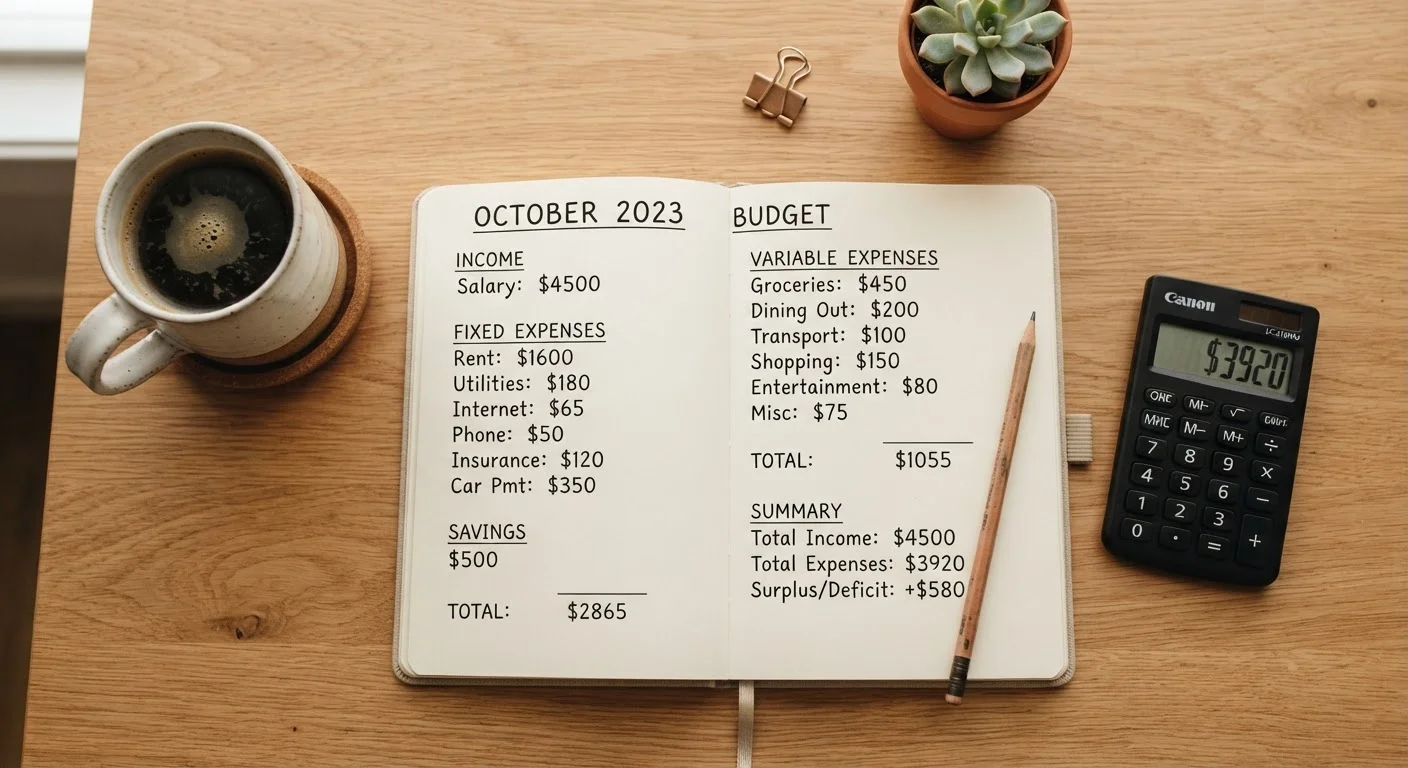
Photo credit: FaqInsider.com
In this article
A monthly budget isn't a spending restriction — it's a plan. Learn what budgeting really means and why the concept trips so many people up.
Key Takeaways
- A monthly budget is a forward-looking plan, not a record of past spending.
- Budgets work by assigning every dollar of income a specific purpose before the month starts.
- Most people misunderstand budgets as restrictions rather than decision-making tools.
- You don't need a high income to benefit from budgeting - the principle scales to any amount.
- A budget is meant to be adjusted, not followed perfectly from day one.
The Biggest Misconception About Budgets
Ask most people what a budget means and they'll say something like: "It means I can't spend money on things I enjoy." That definition is both common and wrong - and it's the reason millions of Americans abandon budgeting before it has a chance to help them.
A budget is not a spending restriction. It is a spending decision. There's a meaningful difference. Restrictions are imposed on you. Decisions are made by you. When you build a monthly budget, you're not being told no - you're choosing where your money goes, including how much goes toward things that matter to you personally.
This framing shift is the single most important thing to internalize before you build your first budget. For more on the beliefs that get in the way, see common budgeting assumptions that derail people's finances.
"Spending Plan" vs. "Budget"
Some financial educators deliberately avoid the word "budget" because of its negative connotations, preferring the term "spending plan" instead. The mechanics are identical - both involve matching income to intentional expense categories. If the word "budget" feels restrictive or discouraging to you, swapping it for "spending plan" in your own thinking is completely valid. What matters is the practice, not the label.
What a Budget Actually Contains
A functional monthly budget has two sides: income and expenses. Income is every dollar coming in - wages, freelance pay, government benefits, side income. Expenses are every dollar going out - rent, groceries, subscriptions, debt payments, and discretionary spending like dining out or entertainment.
The goal is simple: make those two sides balance intentionally. If income exceeds expenses, you decide what happens to the difference - savings, debt paydown, or a specific goal. If expenses exceed income, you see that clearly on paper and can make informed adjustments.
Expenses themselves fall into two broad categories that behave very differently in a budget. Understanding fixed vs. variable expenses is one of the most practical skills a new budgeter can develop, because each type requires a different approach to manage.
If some of this vocabulary feels unfamiliar, a plain-English guide to budgeting terms can help you get grounded before you build your first plan.
~73%
Americans living paycheck to paycheck
Various consumer surveys, including research by PYMNTS and LendingClub, have consistently found that a large majority of U.S. consumers report spending most or all of their monthly income before the next paycheck arrives.
1 in 3
Americans with no written budget
Surveys conducted by the National Foundation for Credit Counseling have found that roughly one-third of U.S. adults do not track their spending or maintain any form of written budget.
Why "Just Track Your Spending" Isn't the Same Thing
Many people are told to "track their spending" as an entry point to better finances. Tracking is genuinely useful - but it's backward-looking. It tells you where money went. A budget is forward-looking: it decides where money will go before you spend it.
Think of it this way. Tracking spending is like reviewing the video footage after a car accident. A budget is like checking your mirrors and planning your route before you leave the driveway. Both matter, but one gives you control and the other gives you information after the fact.
Start With One Month of Real Numbers
Before estimating what you "should" spend in each category, look at one month of actual bank or credit card statements. Real numbers from your own life will always be more accurate than guesses - and they'll reveal habits you may not be consciously aware of. This single step makes your first budget far more realistic and sustainable.
When you have a budget in place, tracking serves it - you compare what actually happened to what you planned and adjust accordingly. Without a budget, tracking can feel like watching a problem unfold with no clear response.
A Budget Is Built to Be Adjusted
One pattern that trips people up early: they build a budget, deviate from it in week two, and conclude that budgeting "doesn't work for them." This misunderstands what a budget is for. A budget is a living document, not a contract you've either kept or broken.
Your first month's budget will almost certainly be imperfect. You'll forget to include a recurring expense. Your grocery spending will come in higher than expected. A car repair will appear from nowhere. None of that means you've failed - it means you've learned something about your real spending patterns, which you can incorporate into next month's plan.
This is why many personal finance educators describe budgeting as a practice, not a one-time event. You get better at it over time. If you want a practical starting point, the monthly budget setup checklist walks through every step from gathering your income figures to scheduling a review. And if you're worried about losing momentum past the first month, it's worth understanding why budgets most often fail in month two before that point arrives.
This article is for general informational and educational purposes only and does not constitute personalized financial advice. Consider consulting a qualified financial professional for guidance specific to your situation.
Frequently Asked Questions

Author
Finance Editorial Team
Finance Editorial Team is the collective byline for our editorial team and contributor network. Articles published under this byline or an editorial pen name are researched, written, and reviewed according to our editorial standards for clarity, consistency, and independence before publication.
View all articles →