
Credit Utilization: The Ratio That Quietly Shapes Your Score
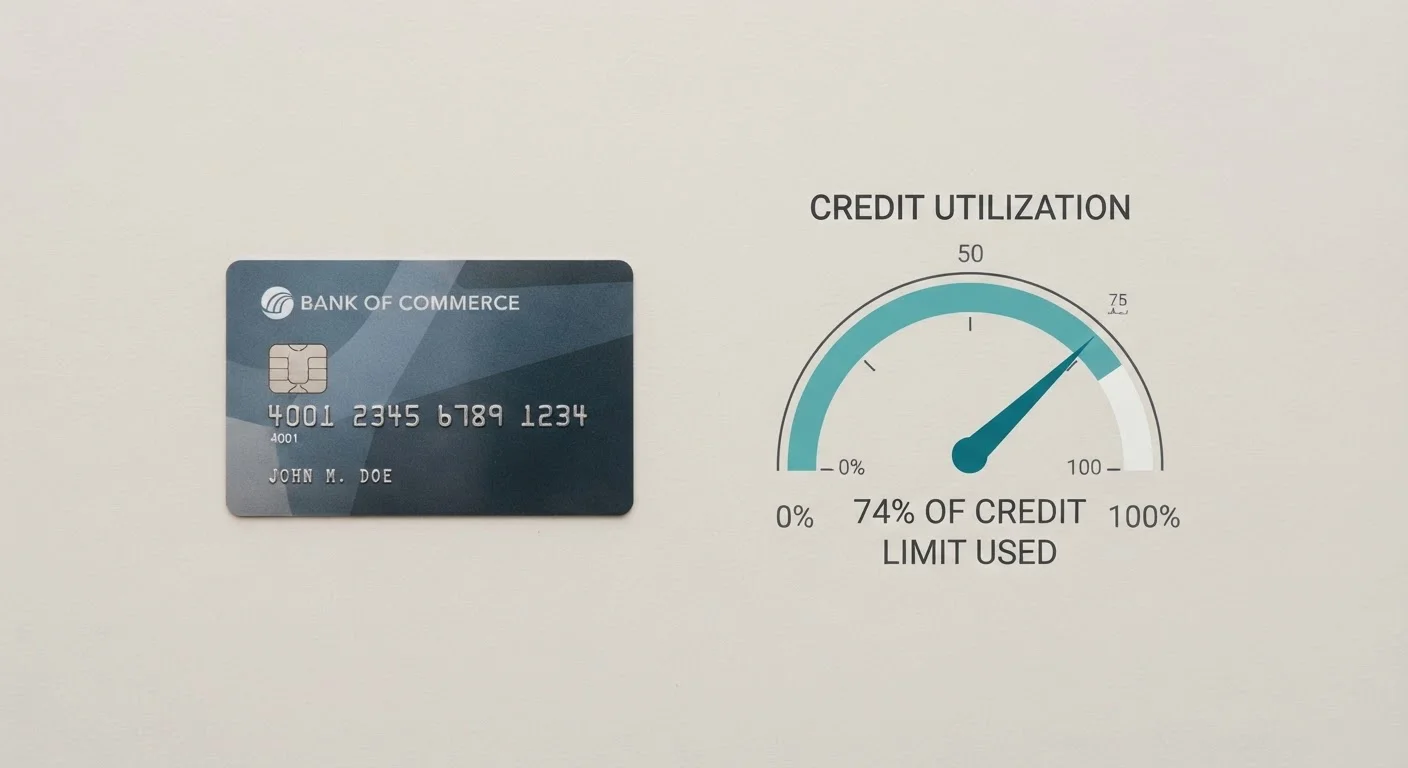
Photo credit: FaqInsider.com
In this article
Credit utilization accounts for roughly 30% of a FICO score. Learn what it measures, how it's calculated, and habits that keep it in a healthy range.
Key Takeaways
- Credit utilization makes up roughly 30% of a FICO score - second only to payment history.
- Most credit experts suggest keeping utilization below 30%, though lower is generally better.
- Paying down balances before your statement closing date can lower the figure lenders and scorers see.
- A credit limit increase can improve your ratio without you spending less - if you don't add new charges.
- Each card's individual utilization matters, not just your combined total.
What Credit Utilization Actually Measures
At its core, credit utilization answers a simple question: of all the revolving credit available to you, how much are you using right now? It's expressed as a percentage, and it's recalculated every time your card issuer sends an updated balance to the credit bureaus - typically once a month.
The calculation works at two levels. The aggregate level adds up all your credit card balances and divides by the sum of all your credit card limits. The per-card level applies the same math to each account individually. Both matter. You could have a perfectly healthy combined ratio while one maxed-out store card quietly drags down your score.
This is why credit utilization is often called a "snapshot" metric. Unlike payment history, which accumulates over years, utilization reflects your situation right now - which means it can move up or down relatively quickly. That's both a vulnerability and an opportunity.
For a fuller picture of how this ratio fits within your overall credit profile, see how all five FICO factors are weighted.
Why the 30% Guideline Exists - and Its Limits
You've probably heard that keeping utilization under 30% is the rule of thumb. That threshold is a reasonable guardrail, but it isn't a hard scoring cutoff. Credit scoring models don't apply a penalty at exactly 31% and stop at 29%. The relationship is more of a gradient: the lower your utilization, the more favorably it tends to be scored.
Research consistently shows that consumers with scores above 800 carry average utilization rates in the single digits. That doesn't mean you need to keep every card at near-zero - that's impractical for most people - but it does mean that aiming for well below 30% is a stronger target than the guideline alone implies.
~30%
Share of FICO score tied to credit utilization
According to FICO, the 'amounts owed' category - dominated by credit utilization - is the second-largest factor in its scoring model, behind only payment history.
<10%
Typical utilization for consumers with 800+ scores
FICO has reported that consumers in its highest score ranges tend to use a very small fraction of their available revolving credit.
2
Levels at which utilization is scored
FICO evaluates utilization both as an aggregate across all cards and individually per account, meaning a single maxed-out card can hurt even if the overall ratio looks healthy.
The 30% figure also applies at the individual card level. A card with a $1,000 limit where you routinely carry an $800 balance is a problem regardless of how low your other cards' balances are. If that pattern describes one of your accounts, it's worth prioritizing that balance for paydown.
Timing and Tactics That Make a Real Difference
Because utilization is reported at your statement closing date rather than your payment due date, one of the most effective - and underused - tactics is paying down your balance before the statement closes. This lowers the number your issuer sends to the bureaus, which is what scoring models actually use.
A few other approaches worth understanding:
- Request a credit limit increase. If your issuer raises your limit and you don't increase spending, your utilization ratio automatically falls. This works as long as the hard inquiry required for the request doesn't outweigh the benefit - worth checking with your issuer whether they can do a soft pull first.
- Spread charges across cards. If you have multiple cards, distributing balances can prevent any single card from reaching a high per-card utilization rate.
- Don't close old accounts carelessly. Canceling a card you no longer use removes its limit from your available credit pool, which can spike your overall ratio if you carry balances elsewhere.
Pay Before Your Statement Closes
Your card issuer typically reports your balance to the credit bureaus on your statement closing date - not your payment due date. Making an extra payment a few days before the statement closes means a lower balance gets reported, which can meaningfully reduce your utilization ratio for that month.
Keep in mind that these are general strategies - the right approach depends on your individual financial situation. A licensed financial professional can help you evaluate what makes sense for your specific circumstances.
If you're managing utilization specifically to qualify for a loan, understanding how lenders interpret your score can sharpen your strategy. See how score tiers translate to real loan terms in auto financing decisions and mortgage terms.
This article is for general informational purposes only and does not constitute personalized financial advice. Consult a qualified financial professional for guidance specific to your situation.
Frequently Asked Questions

Author
Finance Editorial Team
Finance Editorial Team is the collective byline for our editorial team and contributor network. Articles published under this byline or an editorial pen name are researched, written, and reviewed according to our editorial standards for clarity, consistency, and independence before publication.
View all articles →