
Sinking Funds vs. Emergency Funds: Two Different Tools for Two Different Jobs
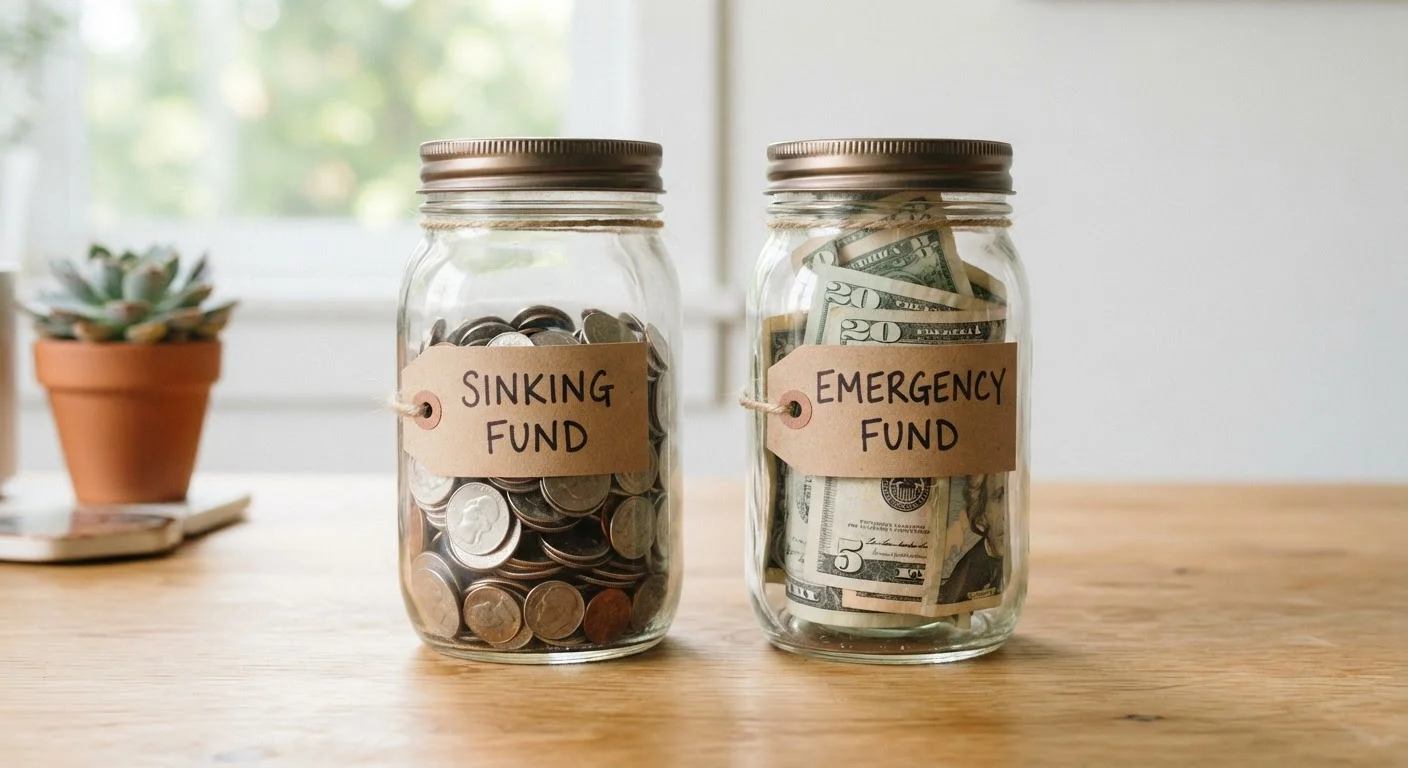
Photo credit: FaqInsider.com
In this article
Sinking funds and emergency funds are both savings categories, but they serve distinct purposes. Understanding the difference helps you allocate money more intentionally.
Key Takeaways
- Sinking funds are for planned expenses; emergency funds are for unplanned financial shocks.
- You can - and should - build both simultaneously, even on a tight budget.
- Raiding your emergency fund for predictable costs undermines its protective purpose.
- Sinking funds reduce the stress of large periodic bills by spreading costs over time.
- Both funds work best in separate, clearly labeled savings accounts to prevent accidental spending.
The Core Difference: Planned vs. Unexpected
Both sinking funds and emergency funds are savings accounts set aside for specific purposes - but that's where the similarity ends. The key distinction comes down to one question: Did you see this expense coming?
A sinking fund is money you intentionally set aside for a future cost you already know is coming. Car registration, holiday gifts, a vacation, an annual subscription renewal - these aren't surprises. By saving a fixed amount each month, you arrive at that expense with the cash ready instead of scrambling at the last minute or reaching for a credit card.
An emergency fund, by contrast, exists for expenses you didn't plan for - a sudden job loss, an unexpected medical bill, a broken water heater, or a car breakdown. Its entire value comes from being untouched until a genuine financial shock hits. Learn more about what qualifies as a true emergency in our article What an Emergency Fund Actually Is (and What It Isn't).
Mixing these two purposes is one of the most common budgeting mistakes. When you use emergency funds to cover predictable costs - even big ones - you're left exposed when a real crisis arrives.
How Each Fund Works in Practice
| Criterion | Sinking Fund | Emergency Fund |
|---|---|---|
| Purpose | Known, planned future expenses | Unexpected financial shocks |
| Target amount | Cost of the specific expense | 3-6 months of essential living costs |
| Timeline | Fixed - tied to a date or event | Ongoing - maintained indefinitely |
| How it's used | Spent down when the expense arrives | Replenished after each use |
| Examples | Vacation, car repair, annual fees | Job loss, ER visit, urgent home repair |
| Risk of not having it | Budget disruption, credit card debt | Financial crisis, high-interest debt |
With a sinking fund, you set a target amount and a deadline, then divide. If new tires will cost roughly $600 and you have six months, you save $100 per month in a dedicated account. When the time comes, the money is there - no stress, no debt, no disruption to your regular budget.
An emergency fund doesn't have a specific purchase in mind. The common guidance is to build it to cover three to six months of essential living expenses - though even a small starter emergency fund of $500-$1,000 provides meaningful protection compared to nothing. The goal is liquidity: the money needs to be accessible quickly, not tied up in investments. For a deeper look at where to keep these funds, see our comparison of high-yield vs. regular savings accounts for emergency funds.
57%
Americans unprepared for a $1,000 emergency
A Bankrate survey found that fewer than half of U.S. adults could cover an unexpected $1,000 expense from savings without borrowing.
3-6 months
Recommended emergency fund coverage
Most mainstream financial guidance suggests covering three to six months of essential living expenses in an accessible emergency reserve.
It's also worth noting that you can - and often should - run multiple sinking funds at once. Many people keep separate sub-accounts (or labeled envelopes within a budgeting app) for categories like auto maintenance, medical costs, home repairs, and travel. Each gets a small monthly contribution, and each handles its own category of planned spending without touching the emergency reserve.
Building Both on a Tight Budget
The most common objection: "I can barely cover my bills. How am I supposed to fund two separate savings categories?" The answer is that small contributions still work - and the order matters.
Start by prioritizing a modest emergency fund first. Even $25-$50 per paycheck directed into a separate savings account builds a buffer over time. Once you have even a small emergency reserve, you can begin layering in sinking funds for near-term planned expenses.
You Don't Have to Fund Everything at Once
If money is limited, focus your sinking funds on the one or two planned expenses closest on your calendar - a car service due in three months, for example - rather than trying to build every category simultaneously. Start small, prove the habit works, then expand. Even $10 a week into a named savings account beats having no separation at all.
The most effective approach is to make both contributions automatic. Treating savings like a bill - an amount that leaves your account before you have a chance to spend it - removes the willpower barrier entirely. Many banks allow you to open multiple savings accounts and nickname them, making it easy to keep funds clearly separated.
For those working through a broader budget framework, our Budgeting Basics hub covers simple strategies for tracking spending and creating space for consistent saving, even when money feels tight. And to understand how emergency savings connect to your other financial goals, see The Complete Picture: How Emergency Funds Fit Into Your Broader Financial Life.
This article is for general informational and educational purposes only and does not constitute personalized financial advice. For guidance specific to your situation, consider speaking with a qualified financial professional.

Author
Finance Editorial Team
Finance Editorial Team is the collective byline for our editorial team and contributor network. Articles published under this byline or an editorial pen name are researched, written, and reviewed according to our editorial standards for clarity, consistency, and independence before publication.
View all articles →