
Building a Plate That Actually Covers Your Nutritional Bases
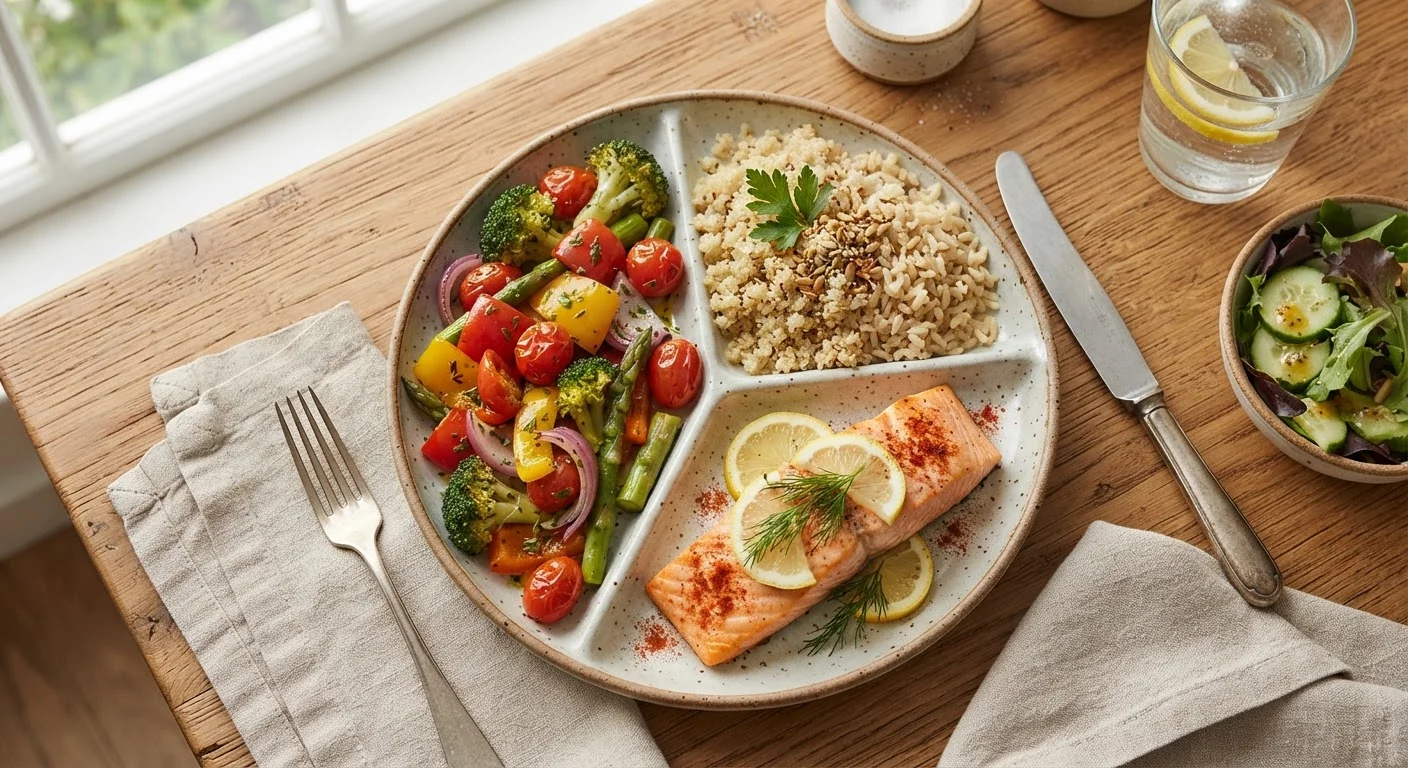
Photo credit: FaqInsider.com
In this article
Practical guidance on proportioning your meals to include the right mix of nutrients without complicated calorie counting.
Key Takeaways
- Dividing your plate visually into food-group sections is a practical, calorie-free way to balance nutrients.
- Vegetables and fruits should cover roughly half your plate at most meals.
- Protein and whole grains each occupy about one quarter of the plate.
- Healthy fats are essential but portion-dense - a small amount goes a long way.
- Hydration and beverage choices meaningfully affect overall nutritional balance.
- Consistency across meals matters more than perfection at any single one.
Why Plate Proportions Work Better Than Calorie Counting for Most People
Calorie counting can be a useful clinical tool, but for everyday eating it introduces friction that often isn't worth it. Research in behavioral nutrition suggests that approaches emphasizing food quality and visual portioning tend to be more sustainable over time than precise numerical tracking for the general population.
The plate method - sometimes referenced in public health frameworks like the USDA's MyPlate - offers a practical visual scaffold that naturally steers choices toward nutrient-dense foods without requiring a food scale or app. It works because it restructures the composition of meals rather than restricting them, making it easier to sustain as a habit.
If you're new to thinking systematically about what you eat, our nutrition fundamentals guide covers the foundational concepts behind food groups, macronutrients, and micronutrients in plain language. And if you want a simpler entry point before applying the steps below, Building a Balanced Plate offers a beginner-friendly companion overview.
What you will need
Step-by-Step: Assembling a Nutritionally Balanced Plate
The steps below translate the plate method into concrete, meal-by-meal actions. Each step is designed to build on the last, so following them in order the first few times will help you internalize the proportions until they become intuitive.
This Is General Nutrition Education
The guidance in this article is intended for general educational purposes and does not constitute personal medical or dietary advice. Individual nutritional needs vary based on age, health status, medications, and other factors. If you have a chronic condition, food allergy, or specific health goal, consult a registered dietitian or your healthcare provider before making significant dietary changes.
Fill Half Your Plate With Vegetables and Fruit
Start by mentally drawing a line down the center of your plate. The entire left half - or any equivalent half - belongs to non-starchy vegetables and, to a lesser extent, fruit. Aim for variety: dark leafy greens, cruciferous vegetables like broccoli or cauliflower, peppers, tomatoes, and root vegetables all contribute different vitamins, minerals, and fiber profiles.
Fruit is nutritious but contains natural sugars, so it typically plays a smaller role than vegetables at main meals. A small serving alongside a meal or as a topping for grains or proteins is a reasonable approach for most people.
Reserve One Quarter for Lean or Plant-Based Protein
Of the remaining half of your plate, fill one section - roughly a quarter of the total plate - with a quality protein source. Protein supports muscle maintenance, immune function, and satiety. Options include fish, poultry, eggs, legumes (beans, lentils, chickpeas), tofu, tempeh, or modest portions of lean red meat.
If you follow a plant-forward approach, legumes and soy-based proteins offer complete or near-complete amino acid profiles. For more on meeting protein needs without animal products, see our article on plant-based nutritional strengths and gaps.
Add a Quarter Serving of Whole Grains or Starchy Vegetables
The final quarter of your plate is where whole grains and starchy vegetables - like brown rice, quinoa, whole-wheat pasta, oats, sweet potatoes, or corn - fit in. These foods provide sustained energy through complex carbohydrates and contribute meaningful fiber, B vitamins, and minerals.
Choosing whole-grain versions over refined ones (white rice, white bread) generally delivers more fiber and a more gradual effect on blood sugar. That said, enriched refined grains are not nutritionally empty; context and overall dietary pattern matter more than any single choice.
Include a Small Amount of Healthy Fat
Dietary fat is essential for absorbing fat-soluble vitamins (A, D, E, and K), supporting brain health, and enabling hormone production. It also improves the palatability of meals, which supports long-term adherence to a healthy eating pattern. Healthy fat sources include olive oil, avocado, nuts, seeds, and fatty fish.
Because fat is calorically dense relative to its volume, portions tend to be small - a drizzle of oil for cooking, a few slices of avocado, or a small handful of nuts is typically sufficient to complement a balanced plate rather than dominate it.
Choose a Beverage That Supports, Not Undermines, the Meal
What you drink alongside your plate is part of the nutritional picture. Water is the default recommendation for most meals. Unsweetened beverages - plain water, sparkling water, unsweetened tea, or black coffee - add no sugar load and support hydration.
Beverages like sugar-sweetened drinks, fruit juices, and alcohol add calories and, in some cases, significant amounts of added sugar, without contributing meaningfully to the plate's nutritional goals. Low-fat or fortified plant-based milk can be reasonable options depending on your broader dietary needs.
Assess and Adjust Across the Day, Not Just One Plate
A single meal rarely needs to be nutritionally perfect. If lunch was heavy on grains and light on vegetables, lean toward vegetable-forward choices at dinner. This flexible, whole-day perspective is more sustainable and evidence-aligned than rigid per-meal perfection.
For structured strategies to maintain this kind of consistency week over week, explore meal planning principles for consistent healthy eating. Planning even a few meals in advance significantly reduces reliance on less-balanced convenience options.
Use Your Hand as a Portion Guide
When a measuring cup isn't handy, your hand offers a practical reference: a cupped palm approximates a serving of grains, a flat palm represents a protein portion, and a closed fist estimates a cup of vegetables. This method scales naturally with body size and requires no tools.
Reading Labels and Evaluating What's On Your Plate
For packaged or processed components of a meal - a canned legume, a store-bought whole-grain bread, or a bottled sauce - knowing how to quickly read a Nutrition Facts panel helps you make informed choices without guesswork. Key things to check include added sugars, sodium content, and fiber per serving. Our guide on reading a Nutrition Facts label without the confusion walks through the panel section by section.
Over time, this skill becomes less effortful - once you have a mental library of reliable foods, you'll spend less time evaluating and more time simply eating well. The goal is informed flexibility, not food anxiety.
Avoid Rigid All-or-Nothing Thinking
No single meal determines your overall nutritional health. Treating one imperfect plate as a failure can undermine long-term eating habits. Aim for a reasonable balance across the whole day and week rather than enforcing exact proportions at every sitting.
This article is for general informational and educational purposes only and does not constitute medical, dietary, or nutritional advice. Individual needs vary. Consult a registered dietitian or qualified healthcare provider for guidance specific to your health situation.

Author
Health & Wellness Editorial Team
Health & Wellness Editorial Team is the collective byline for our editorial team and contributor network. Articles published under this byline or an editorial pen name are researched, written, and reviewed according to our editorial standards for clarity, consistency, and independence before publication.
View all articles →