
Reading a Nutrition Facts Label Without the Confusion
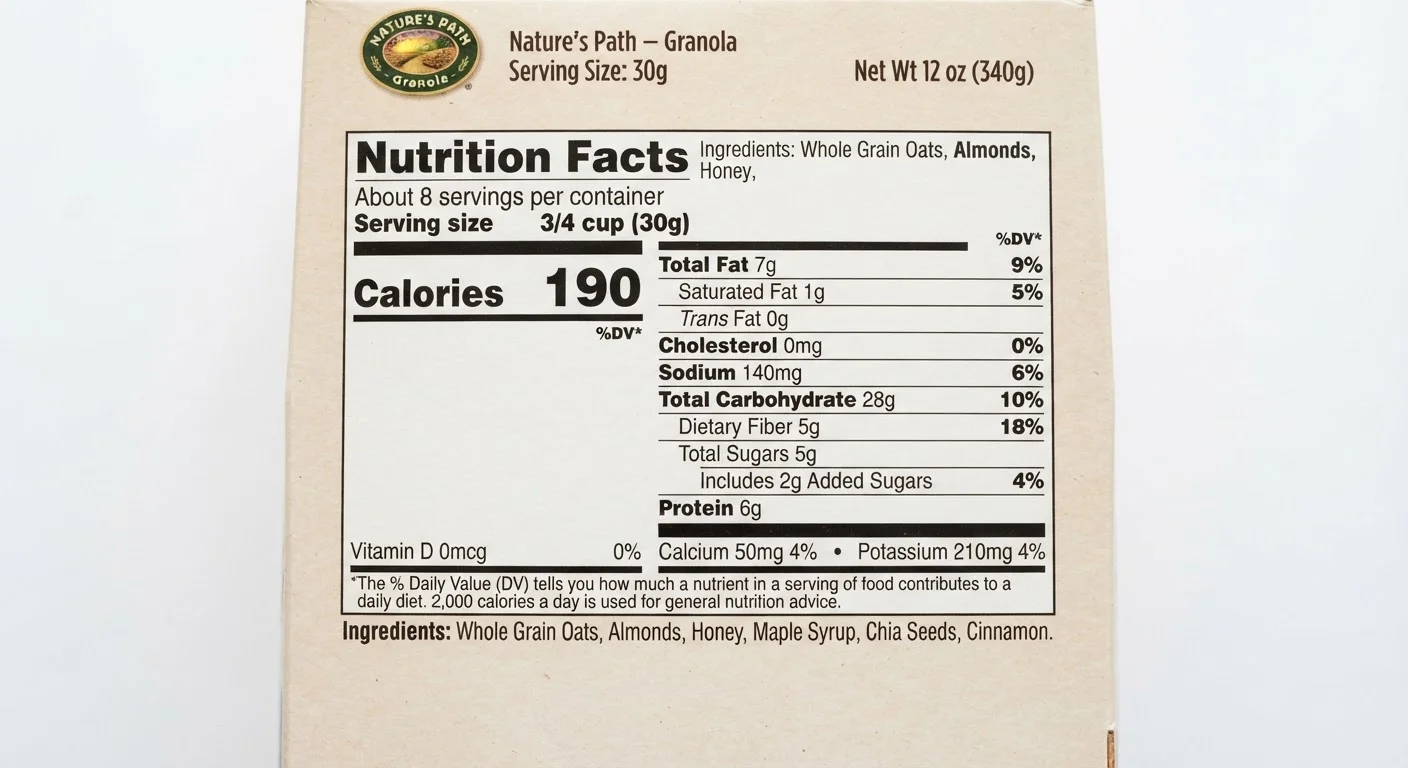
Photo credit: FaqInsider.com
In this article
A practical walkthrough of the Nutrition Facts panel — from serving sizes and daily values to ingredients lists and added sugars.
Key Takeaways
- Serving size is the foundation of the entire label - all numbers flow from it.
- Percent Daily Value (%DV) tells you how much a nutrient contributes to a standard 2,000-calorie diet.
- Added sugars are listed separately from total sugars and deserve special attention.
- The ingredients list is ordered by weight - what appears first is most abundant in the product.
- Sodium, saturated fat, and added sugars are nutrients most Americans benefit from limiting.
- Fiber, vitamins, and minerals are nutrients worth seeking in higher amounts.
Why the Nutrition Facts Label Exists
The Nutrition Facts panel is a federally standardized tool required on most packaged foods sold in the United States, governed by the FDA. Its purpose is straightforward: to give consumers consistent, comparable information about what they're eating, so they can make informed decisions without relying on marketing language or guesswork.
The format was originally introduced in 1994 and underwent a significant update finalized in 2016, with changes designed to reflect current nutrition science and more realistic eating habits. If you're new to thinking about food and nutrients more broadly, our nutrition fundamentals guide is a helpful starting point before diving into label specifics.
Labels Are Information, Not Prescriptions
Nutrition Facts panels provide general population-based reference values, not personalized targets. Individual needs vary based on age, health status, activity level, and medical history. Use this guide to become a more informed reader, and consult a registered dietitian or healthcare provider for guidance tailored to your specific situation.
How to Read the Label Step by Step
The sections below walk through each part of a standard Nutrition Facts label in the order they appear - from the top of the panel to the ingredients list at the bottom. Having a real food package in hand as you read will help you apply each concept immediately.
What you will need
Packaged Food Product
Provides a real Nutrition Facts label to practice reading alongside this guide.
Pen and Paper or Notes App
Helpful for jotting down key numbers while comparing multiple products.
Start With Serving Size and Servings Per Container
The very first section of the label establishes the serving size - a standardized, reference amount set by the FDA based on how much people typically eat in one sitting. Every number on the rest of the label reflects this amount, not the entire package.
Check servings per container immediately below. A bag that appears to contain one portion might list 2.5 servings. If you eat the whole bag, multiply every number on the label by 2.5 to get your actual intake.
Read Calories in Context
Calories represent the total energy in one serving. This number sits prominently near the top for that reason. However, calories alone don't reveal much about the quality or nutritional value of a food - a 200-calorie item packed with fiber, protein, and micronutrients is meaningfully different from a 200-calorie item that's mostly added sugar.
Consider calories alongside the full nutrient profile rather than in isolation.
Identify Nutrients to Limit
The middle section of the label lists nutrients the FDA has identified as ones most Americans consume in excess. Focus on:
- Saturated fat - linked to cardiovascular risk when consumed in large amounts over time
- Sodium - high intake is associated with elevated blood pressure in many people
- Added sugars - listed separately from total sugars since 2016; for more detail, see our guide on where added sugar hides and what guidelines say
Trans fat is also listed; health guidance broadly recommends minimizing it as much as possible.
Seek Out Beneficial Nutrients
Lower on the label, you'll find nutrients many Americans fall short on. These are worth actively seeking in higher amounts:
- Dietary fiber - supports digestive health and satiety
- Vitamin D, calcium, iron, and potassium - listed because deficiencies are common across the general population
A %DV of 20% or higher for these nutrients in a single serving is a meaningful contribution to your daily needs. For a broader look at how nutrients work together, our guide to building a balanced plate offers practical context.
Interpret Percent Daily Value (%DV)
The right-hand column shows % Daily Value for each listed nutrient. This percentage tells you how much one serving contributes toward the recommended daily amount for a person eating roughly 2,000 calories per day.
%DV makes it easy to compare products side by side or quickly assess whether a food is a meaningful source of a given nutrient - or a significant contributor to something you're trying to limit.
Read the Ingredients List
Separate from the Nutrition Facts panel, the ingredients list is required on virtually all packaged foods. Ingredients are listed in descending order by weight - the first ingredient is the most abundant in the product.
Scan for:
- Whole food ingredients near the top (e.g., whole wheat, oats, vegetables)
- Added sugars - which can appear under many names including cane syrup, dextrose, maltose, fruit juice concentrate, and others
- Allergens, which must be declared clearly under U.S. law
A shorter ingredients list isn't automatically better, but familiarity with what's listed helps you make more deliberate choices.
Use %DV as a Quick Benchmark
As a general rule, 5% DV or less is considered low for a nutrient, and 20% DV or more is considered high. This shortcut works whether you're trying to get more of something - like calcium or fiber - or limit something, like sodium or saturated fat.
Putting It All Together
Reading a Nutrition Facts label becomes faster and more intuitive with practice. The goal isn't to scrutinize every number at every meal - it's to build enough familiarity that you can spot meaningful differences between products and recognize when something deserves a closer look.
A food with a high %DV of sodium and added sugars, a short fiber contribution, and a long ingredients list dominated by refined starches tells a different story than one with the inverse profile - even if both carry appealing front-of-package claims.
Don't Stop at the Front of the Package
Terms like 'natural,' 'light,' 'multigrain,' and 'low-fat' on the front of packaging are marketing claims regulated to varying degrees and can be misleading. The Nutrition Facts panel and ingredients list on the back or side of a package provide the standardized, regulated information you actually need to evaluate a product.
For a deeper look at how individual meals can be structured to cover your nutritional bases, see our guide on building a plate that covers your nutritional bases.
This article is for general informational and educational purposes only and does not constitute medical or dietary advice. Consult a qualified healthcare provider or registered dietitian for guidance specific to your health needs.

Author
Health & Wellness Editorial Team
Health & Wellness Editorial Team is the collective byline for our editorial team and contributor network. Articles published under this byline or an editorial pen name are researched, written, and reviewed according to our editorial standards for clarity, consistency, and independence before publication.
View all articles →