
Flooring Options for High-Traffic Areas: What Holds Up Over Time
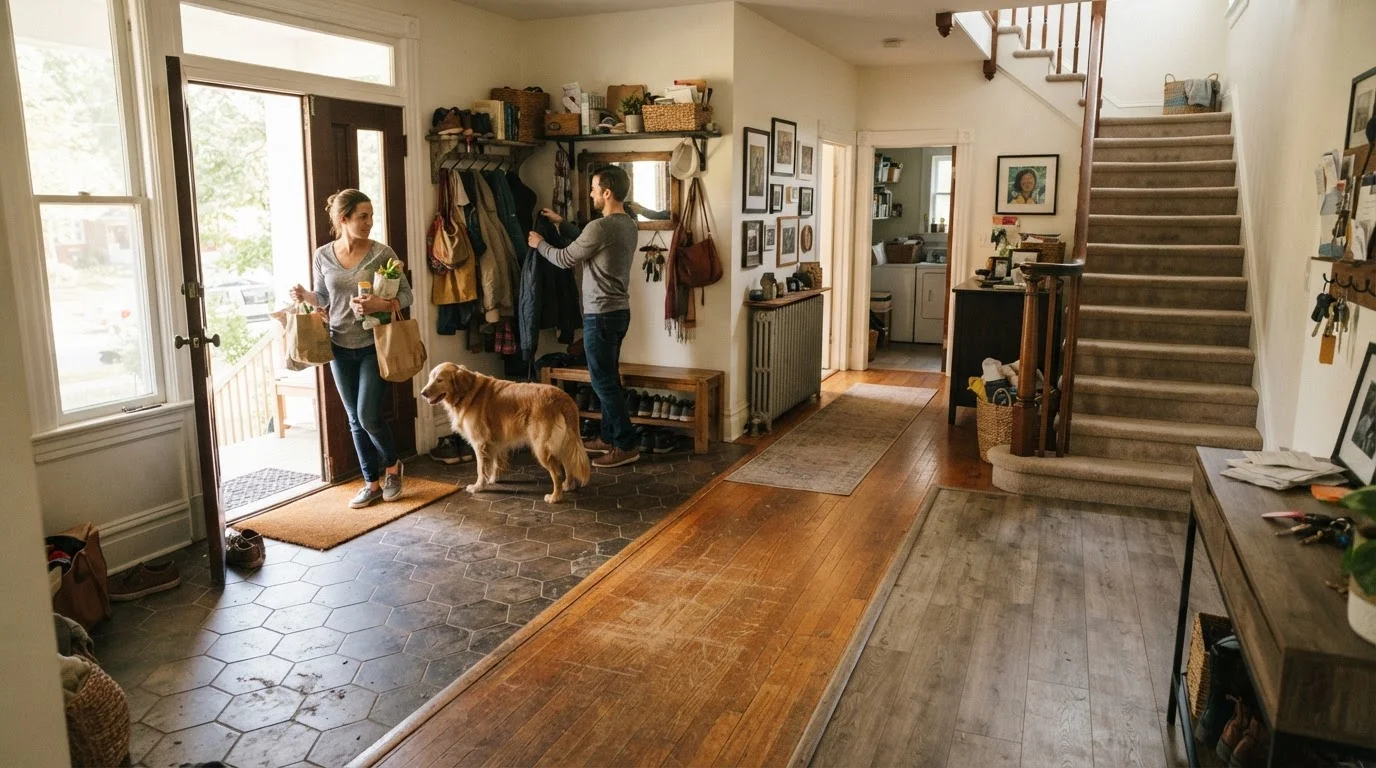
Photo credit: FaqInsider.com
In this article
Hardwood, tile, LVP, laminate — each handles wear differently. A material-by-material breakdown of durability, maintenance, and practical fit.
Key Takeaways
- Porcelain tile is among the hardest-wearing surfaces available for high-traffic floors.
- Luxury vinyl plank offers strong durability and water resistance at a moderate price point.
- Solid hardwood can last decades but requires more maintenance and is vulnerable to moisture.
- Laminate has improved significantly but still carries real limitations in wet or humid spaces.
- Wear layer thickness and installation method both affect long-term performance across material types.
Why Flooring Choice Matters More in High-Traffic Zones
Entryways, kitchens, hallways, and living rooms take a beating. Foot traffic, dropped items, pet claws, moisture tracked in from outside, and daily cleaning routines all add up over years of use. Choosing the wrong material in these zones often means refinishing or replacing it far sooner than expected - and that's an avoidable expense.
The good news is that today's flooring market offers more durable, realistic-looking options than ever before. The challenge is cutting through the marketing language to understand what each material actually delivers under real-world conditions. This breakdown covers the five most common flooring types for high-traffic areas: porcelain tile, luxury vinyl plank (LVP), solid hardwood, engineered hardwood, and laminate - with an honest look at each.
Porcelain Tile
Porcelain tile consistently ranks as one of the most durable flooring surfaces available. It resists scratches, stains, moisture, and heavy foot traffic, making it a strong candidate for entryways, kitchens, and bathrooms. Its hardness - measured on the Mohs scale - means most everyday wear simply doesn't register.
The trade-off is comfort and acoustics. Tile is hard underfoot for long periods and can feel cold in colder climates without radiant heating beneath it. Grout lines also require periodic cleaning and occasional resealing to prevent staining. Cracked tiles, usually caused by impact or subfloor movement, require replacement rather than repair. Installation typically calls for a professional, particularly for large-format tiles where precision matters.
Porcelain tile resists scratches, stains, and moisture better than nearly any other residential flooring option.
Luxury Vinyl Plank (LVP)
Luxury vinyl plank has become one of the most popular flooring choices for high-traffic homes, and for practical reasons. A wear layer on the surface - typically 12 to 20 mils thick for residential use - protects against scratches and scuffs. Most LVP is fully waterproof, which makes it suitable for kitchens, laundry rooms, and basements where hardwood and laminate struggle.
LVP also tends to be comfortable underfoot and quiet, particularly when installed over a quality underlayment. It can replicate the look of wood or stone convincingly. One key consideration: direct, prolonged sunlight can cause some LVP products to fade or become slightly pliable over time, so south-facing rooms with large windows are worth noting when choosing a product. It cannot be refinished - once the wear layer is gone, the floor needs replacing.
A thicker wear layer means longer protection - look for at least 12 mils in genuinely high-traffic areas.
Solid Hardwood
Solid hardwood floors have a well-earned reputation for longevity - a properly maintained floor can last 50 to 100 years. The key advantage over other materials is the ability to sand and refinish the surface multiple times, refreshing its appearance and removing accumulated scratches or worn areas. Species hardness matters significantly here: harder species like hickory, maple, and white oak hold up better in high-traffic conditions than softer ones like pine.
Moisture is hardwood's primary vulnerability. Solid wood expands and contracts with humidity changes, making it a poor choice for basements, bathrooms, or kitchens prone to water exposure. It also tends to carry a higher upfront cost and requires professional installation in most cases. Regular sweeping, occasional damp mopping with approved cleaners, and attention to humidity levels in the home are part of the long-term commitment.
The ability to sand and refinish solid hardwood multiple times is its most underappreciated long-term advantage.
Engineered Hardwood
Engineered hardwood features a real wood veneer bonded over a plywood or high-density fiberboard (HDF) core. This construction makes it significantly more stable in response to moisture and temperature fluctuations than solid wood, while still offering the visual warmth of a natural wood surface. It can be installed in below-grade spaces like finished basements where solid hardwood isn't appropriate.
Whether it can be refinished depends on the veneer thickness - thinner veneers may only allow light sanding once or twice before the core is exposed. Look for a veneer of at least 3mm if refinishing over time is important to you. Engineered hardwood generally sits in a middle price range between solid hardwood and LVP, and it performs well in moderate to high-traffic areas when properly maintained.
Engineered hardwood's layered core resists warping and humidity changes better than solid wood in variable conditions.
Laminate
Modern laminate flooring has improved considerably. A high-density fiberboard core is topped with a photographic layer - usually mimicking wood or stone - and protected by a clear wear layer. Better-quality laminate uses an AC rating (AC3 for residential high-traffic use, AC4 or AC5 for commercial-level wear) to indicate durability, and this is a useful guide when comparing products.
Laminate's core weakness remains moisture. Even water-resistant laminate formulations can swell or warp if water sits on seams for extended periods. For this reason, laminate is generally not recommended for bathrooms or laundry rooms. Like LVP, it cannot be refinished - the wear layer is permanent. When it fails, replacement is the only option. Within its limitations, laminate offers an affordable, visually appealing floor that handles everyday foot traffic reasonably well. For more on how surface materials compare in outdoor contexts, see our companion flooring guide.
Check the AC rating before buying laminate - AC3 is the minimum recommended for genuinely high-traffic residential areas.
Making the Right Call for Your Home
No single flooring material wins across every category. Porcelain tile offers unmatched hardness but can feel cold and unforgiving underfoot. LVP balances durability with comfort and is increasingly the practical choice for busy households. Solid hardwood brings warmth and long-term value but demands more care and should stay out of moisture-prone rooms. Engineered hardwood splits the difference. Laminate rounds out the options for budget-conscious spaces where moisture isn't a factor.
Ask About Installation Before You Commit
Some flooring failures have less to do with the material itself and more to do with improper installation - particularly subfloor preparation. Before purchasing, ask a flooring professional to assess your subfloor's condition. An uneven or moisture-compromised subfloor can undermine even the most durable surface material above it.
When comparing options, look beyond initial price per square foot. Factor in expected lifespan, refinishing potential, and the maintenance routine you're realistically willing to maintain. A floor you can't keep up with will look worse faster than a slightly less durable one you care for properly. If you're weighing similar trade-offs for outdoor spaces, the same material-versus-maintenance logic applies - see our guide to deck materials for a parallel breakdown.

Author
Home & Garden Editorial Team
Home & Garden Editorial Team is the collective byline for our editorial team and contributor network. Articles published under this byline or an editorial pen name are researched, written, and reviewed according to our editorial standards for clarity, consistency, and independence before publication.
View all articles →