
Deck Materials Compared: Pressure-Treated Wood, Composite, and PVC
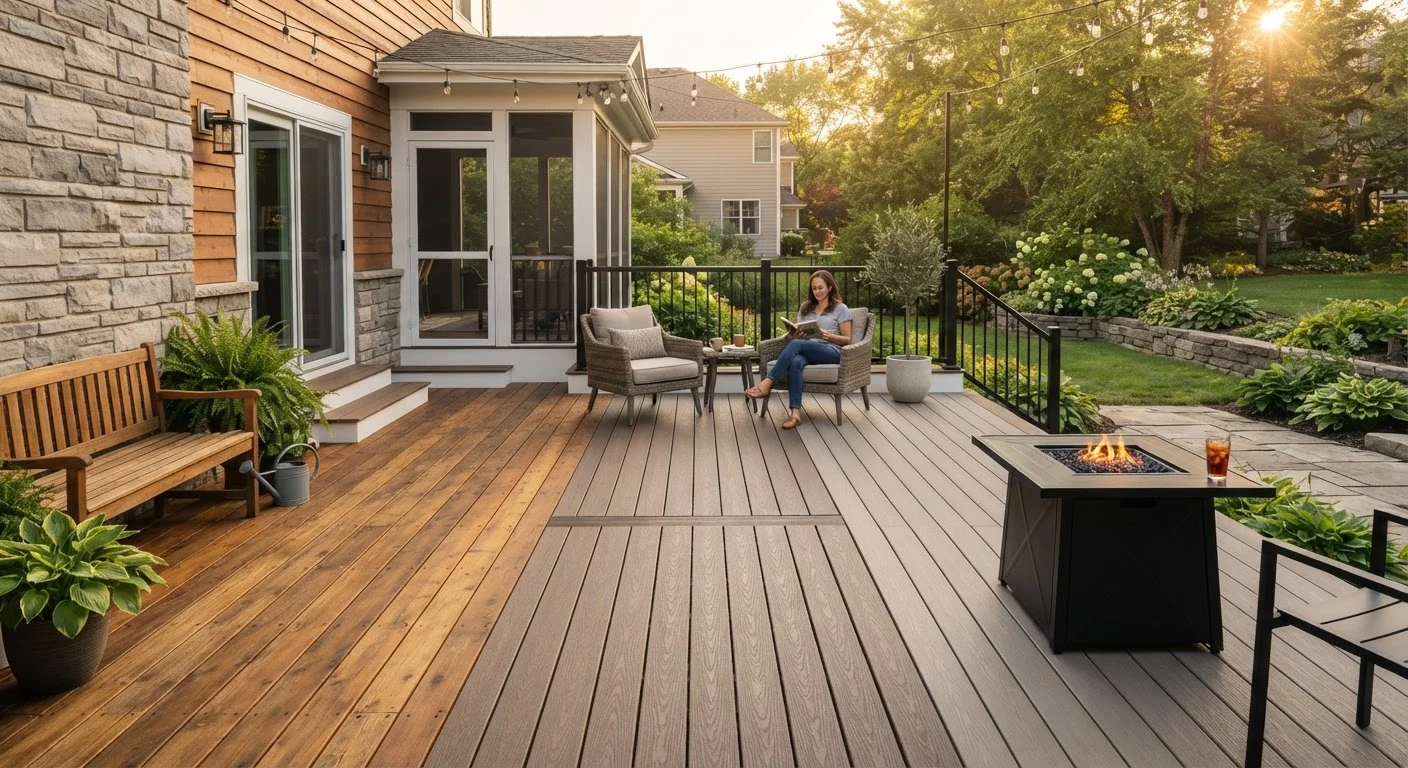
Photo credit: FaqInsider.com
In this article
Three dominant deck materials, each with distinct trade-offs in cost, maintenance, durability, and appearance. Here's what to weigh before you build.
Key Takeaways
- Pressure-treated wood costs the least upfront but requires annual maintenance to stay in good shape.
- Composite decking offers a middle ground - lower maintenance than wood but higher initial investment.
- PVC decking resists moisture and insects best, making it ideal for humid or wet climates.
- All three materials vary significantly in lifespan, feel underfoot, and environmental footprint.
- Your climate, budget, and how much maintenance you're willing to do should drive the final decision.
Pressure-Treated Wood: The Familiar Starting Point
Pressure-treated (PT) lumber is the most widely used deck material in the United States, and for good reason - it's accessible, affordable, and has a proven track record. The wood is infused with chemical preservatives under pressure, making it resistant to rot and insect damage compared to untreated lumber.
Cost: PT wood typically costs significantly less per square foot than composite or PVC, making it the go-to for homeowners watching their initial budget. Material costs vary by region and board grade, but the savings at purchase are real.
Maintenance: This is where PT wood demands its dues. Without regular care - cleaning, sanding, and applying a water-repellent sealer or stain every one to three years - the boards will gray, crack, and splinter over time. Left entirely untreated, a PT wood deck can deteriorate within a decade.
Lifespan: With consistent upkeep, PT decks can last 15-25 years. Neglected ones may need replacing or significant repairs much sooner.
Appearance: PT wood has a genuine, warm look that many homeowners prefer. It can be stained nearly any color and sanded smooth. However, new boards often need to dry out for several months before accepting stain evenly.
Environmental note: Modern PT lumber uses copper-based preservatives (such as ACQ or CA), which are considered safer than older arsenic-based treatments, though disposal still requires care.
Composite Decking: The Low-Maintenance Middle Ground
Composite decking is manufactured from a blend of wood fibers and recycled plastic, engineered to mimic the look of natural wood while reducing the upkeep demands. It's become one of the most popular deck material upgrades over the past two decades.
Cost: Composite typically costs two to four times more per square foot than pressure-treated wood at the material level. However, proponents argue that reduced maintenance costs and longer lifespan can narrow that gap over 10-15 years.
Maintenance: Composite requires no staining or sealing. Periodic cleaning with soap and water - or a composite-safe cleaner for stubborn stains - is generally all it needs. It won't splinter, and it resists fading better than untreated wood. Some lower-grade composites are more prone to staining from grease or mildew, so board quality matters.
| Pressure-Treated Wood | Composite | PVC | |
|---|---|---|---|
| Upfront Material Cost | Lowest | Moderate to high | Highest |
| Maintenance Required | High - seal/stain regularly | Low - occasional cleaning | Very low - soap and water |
| Typical Lifespan | 15-25 years with upkeep | 25-30+ years | 30+ years |
| Moisture & Insect Resistance | Moderate (treated) | Good | Excellent |
| Natural Wood Appearance | Authentic | Close imitation | Reasonable imitation |
| Environmental Impact | Moderate (copper preservatives) | Positive (recycled content) | Higher (petroleum-based) |
| Heat Retention in Sun | Moderate | Moderate | Can run hotter |
Lifespan: Quality composite decks commonly carry manufacturer warranties of 25-30 years, and many perform well beyond that with basic cleaning.
Appearance: Modern composite boards have improved dramatically and now closely replicate wood grain patterns. Color consistency is baked in during manufacturing, so you avoid the uneven tones sometimes found in natural wood.
Environmental note: Composite uses recycled content, which is a genuine sustainability point, though it's not fully biodegradable at end of life. Just like when choosing durable interior flooring, manufactured materials often trade biodegradability for performance longevity.
PVC Decking: Full Synthetic for Maximum Resilience
PVC (polyvinyl chloride) decking contains no wood fiber at all - it's entirely synthetic. This gives it unique advantages in harsh environments, though it comes with its own trade-offs.
Cost: PVC is typically the most expensive of the three options on a per-square-foot basis. For many homeowners, this places it firmly in the premium tier.
Maintenance: Like composite, PVC requires no staining or sealing. Its non-porous surface resists moisture absorption, mold, mildew, and insect damage more effectively than either wood or composite. Cleaning is straightforward - a hose and mild soap handle most situations.
Lifespan: PVC manufacturers often offer warranties of 30 years or more. The material doesn't rot or splinter, and it handles freeze-thaw cycles well, making it a strong contender in northern climates as well as humid southern ones.
Appearance: PVC boards are available in a wide range of colors and embossed wood-grain textures, though some homeowners find the look slightly less natural than high-end composite. PVC can also feel hotter underfoot in direct summer sun compared to wood or composite - worth considering for barefoot use.
Environmental note: PVC is petroleum-derived and not easily recycled at end of life, which is a genuine sustainability drawback. For homeowners prioritizing environmental impact, this is a meaningful consideration alongside performance.
Get Samples Before You Commit
Most suppliers offer sample boards of composite and PVC decking at little or no cost. Bring them home, place them in your yard, and observe how they look in your actual light conditions at different times of day. Color and texture can appear very different on a showroom floor versus an outdoor setting. For wood, ask to see kiln-dried or air-dried boards to get a realistic sense of the final appearance after weathering.
For a broader look at how material choice affects durability in other parts of your home, see our comparison of flooring materials for high-traffic areas.
How to Make the Call: Key Factors to Weigh
Once you understand each material's strengths, narrowing down your choice comes down to four practical questions:
- What's your total budget - upfront and over 10 years? PT wood costs less now but may cost more in maintenance supplies and labor over a decade. Run a rough lifetime cost estimate, not just a materials quote.
- How much time are you willing to spend on maintenance? If an annual weekend of sanding and sealing fits your lifestyle, PT wood is viable. If you'd rather spend that time on the deck itself, composite or PVC earns its higher price.
- What's your climate like? High humidity, heavy rainfall, or a pest-heavy region tilts the scales toward PVC. Drier climates with moderate weather are more forgiving of wood.
- What look and feel matter to you? If authenticity of natural wood is important, PT (or even naturally beautiful redwood or cedar, which carry their own cost and sustainability considerations) may satisfy in a way synthetics don't. If color consistency and splinter-free surfaces matter more, composite or PVC delivers.
Whichever material you choose, verify local building codes and permit requirements before construction begins. Deck framing, ledger attachment to the house, and railing height are all areas where local codes apply - and where using a licensed contractor may be required or strongly advisable.

Author
Home & Garden Editorial Team
Home & Garden Editorial Team is the collective byline for our editorial team and contributor network. Articles published under this byline or an editorial pen name are researched, written, and reviewed according to our editorial standards for clarity, consistency, and independence before publication.
View all articles →