
Pressure Washing: Where It Helps and Where It Can Cause Damage
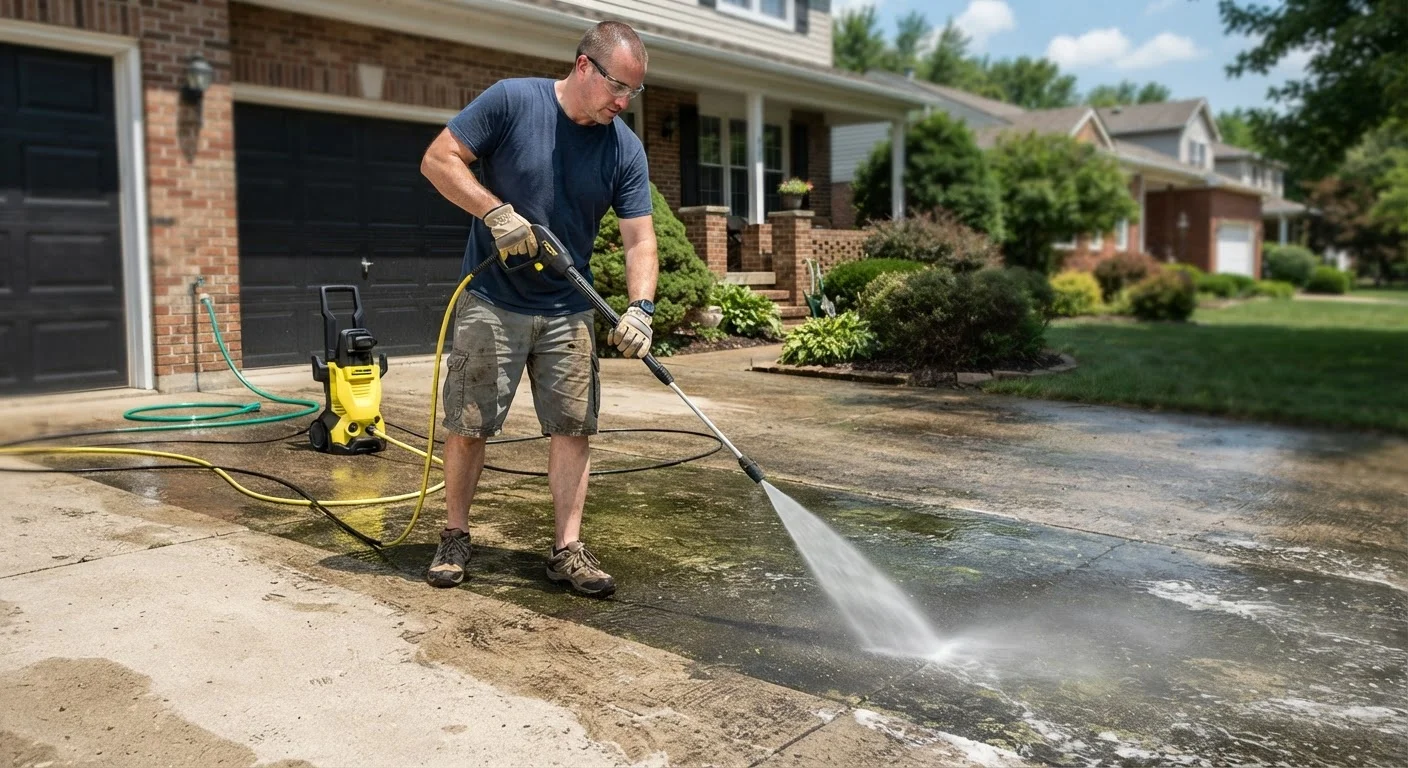
Photo credit: FaqInsider.com
In this article
Pressure washing is a powerful cleaning tool—but wrong pressure settings or surfaces can strip paint, force water inside walls, or crack mortar.
Key Takeaways
- Pressure washing is highly effective on concrete, brick, and composite decking when used correctly.
- Using too much pressure on wood, stucco, or older mortar can cause lasting structural damage.
- Selecting the right nozzle and PSI setting is as important as choosing which surfaces to clean.
- Some surfaces and situations are better handled by a licensed professional than a rental unit.
- Improper technique can force water behind siding and into wall cavities, leading to mold growth.
Removes years of embedded grime quickly
High-velocity water dislodges biological growth, oil stains, and built-up dirt from hard surfaces far more effectively than scrubbing by hand. A single session can restore the appearance of concrete or brick that looks permanently stained.
Prepares surfaces for painting or sealing
A clean, contaminant-free surface allows paint and sealants to bond properly. Pressure washing before repainting exterior trim or resealing a deck removes chalky residue and loose material that would otherwise compromise adhesion.
Reduces mold and mildew health risks
Algae and mold colonies on exterior surfaces can be slippery hazards and, in some cases, can work their way into porous materials. Periodic cleaning limits their spread and helps maintain healthier outdoor living areas.
Extends the life of driveways and walkways
Removing biological growth and debris from concrete and pavers prevents organic acids from degrading the surface over time. Routine cleaning is generally less costly than eventual resurfacing or replacement.
Faster and more water-efficient than hose scrubbing
Despite the high force, pressure washers typically use significantly less water per minute than a standard garden hose running at full flow, while covering more surface area more effectively.
Strips paint and sealants from wood surfaces
High pressure erodes protective coatings on wood decks, fences, and trim. Once a sealant is compromised, moisture can penetrate more readily, accelerating rot and requiring earlier refinishing.
Can force water into wall cavities
Incorrect nozzle angle - particularly when washing vinyl or wood siding - can drive water behind panels and into insulation and framing. Trapped moisture leads to mold growth and can cause structural deterioration over time.
Damages aging mortar and soft masonry
Older mortar joints weaken with age and are vulnerable to high-pressure streams. Once mortar is dislodged, water infiltration accelerates, and repointing - a skilled masonry task - may be required.
Shortens asphalt shingle lifespan
Pressure washing a shingled roof strips the granule coating that protects shingles from UV degradation and weathering. This damage is irreversible and can void roofing warranties.
Creates injury risk without proper handling
High-pressure water is capable of causing serious lacerations. A zero-degree nozzle at close range is particularly dangerous, and proper personal protective equipment - including eye protection and closed-toe shoes - should always be worn.
Overuse can erode concrete surface over time
Even surfaces well-suited to pressure washing can be damaged by repeated high-pressure sessions. Frequent use on the same concrete area can gradually wear down the surface finish and expose aggregate.
What Pressure Washing Actually Does
A pressure washer forces water through a narrow nozzle at high velocity, measured in PSI. Consumer-grade units typically range from 1,300 to 2,800 PSI; professional-grade equipment can exceed 4,000 PSI. That force is powerful enough to dislodge years of embedded grime, algae, and mildew from hard surfaces - but it's also powerful enough to gouge soft wood, blow out mortar joints, or drive water under siding if aimed incorrectly.
The nozzle angle matters as much as the pressure setting. A narrow zero-degree nozzle concentrates water into a pinpoint stream capable of cutting skin or stripping paint. A wide 40-degree nozzle disperses the same pressure into a gentler fan. Most routine cleaning tasks call for a 25- or 40-degree tip at moderate pressure - not the aggressive narrow settings many first-time users default to.
Understanding this relationship between pressure, nozzle angle, and surface material is the foundation of safe, effective pressure washing. It's the difference between a clean driveway and a damaged one.
Where Pressure Washing Genuinely Helps
Removes years of embedded grime quickly
High-velocity water dislodges biological growth, oil stains, and built-up dirt from hard surfaces far more effectively than scrubbing by hand. A single session can restore the appearance of concrete or brick that looks permanently stained.
Prepares surfaces for painting or sealing
A clean, contaminant-free surface allows paint and sealants to bond properly. Pressure washing before repainting exterior trim or resealing a deck removes chalky residue and loose material that would otherwise compromise adhesion.
Reduces mold and mildew health risks
Algae and mold colonies on exterior surfaces can be slippery hazards and, in some cases, can work their way into porous materials. Periodic cleaning limits their spread and helps maintain healthier outdoor living areas.
Extends the life of driveways and walkways
Removing biological growth and debris from concrete and pavers prevents organic acids from degrading the surface over time. Routine cleaning is generally less costly than eventual resurfacing or replacement.
Faster and more water-efficient than hose scrubbing
Despite the high force, pressure washers typically use significantly less water per minute than a standard garden hose running at full flow, while covering more surface area more effectively.
Concrete driveways, sidewalks, and patio slabs are the clearest win. These dense, non-porous surfaces can handle high pressure without surface degradation, and the results - removing oil stains, tire marks, and biological growth - are often dramatic. Similarly, brick walkways and pavers respond well to moderate pressure combined with a sweeping motion.
Composite decking manufactured in the last decade or so is generally safe at lower pressure settings (below 1,500 PSI with a wide-angle nozzle). Before washing any deck, check the manufacturer's care guidelines, as recommendations vary. Gutters and downspouts can also benefit from periodic pressure washing to clear compacted debris - a task that ties directly into preventing the kind of water damage detailed in our guide to gutters, downspouts, and water damage.
Exterior stone foundations, metal patio furniture, and vinyl siding (cleaned carefully at low pressure and aimed downward) are additional surfaces where pressure washing typically delivers results without risk - provided technique is correct.
Where Pressure Washing Causes Damage
Strips paint and sealants from wood surfaces
High pressure erodes protective coatings on wood decks, fences, and trim. Once a sealant is compromised, moisture can penetrate more readily, accelerating rot and requiring earlier refinishing.
Can force water into wall cavities
Incorrect nozzle angle - particularly when washing vinyl or wood siding - can drive water behind panels and into insulation and framing. Trapped moisture leads to mold growth and can cause structural deterioration over time.
Damages aging mortar and soft masonry
Older mortar joints weaken with age and are vulnerable to high-pressure streams. Once mortar is dislodged, water infiltration accelerates, and repointing - a skilled masonry task - may be required.
Shortens asphalt shingle lifespan
Pressure washing a shingled roof strips the granule coating that protects shingles from UV degradation and weathering. This damage is irreversible and can void roofing warranties.
Creates injury risk without proper handling
High-pressure water is capable of causing serious lacerations. A zero-degree nozzle at close range is particularly dangerous, and proper personal protective equipment - including eye protection and closed-toe shoes - should always be worn.
Overuse can erode concrete surface over time
Even surfaces well-suited to pressure washing can be damaged by repeated high-pressure sessions. Frequent use on the same concrete area can gradually wear down the surface finish and expose aggregate.
Older wood decking and natural wood fencing are among the most commonly damaged surfaces. High pressure raises wood grain, splinters boards, and strips protective sealants - leaving wood more vulnerable to moisture penetration than before. If you do wash wood, use the lowest effective pressure and keep the nozzle moving continuously.
Stucco exteriors are another high-risk surface. Stucco is a cement-based coating applied in layers, and aggressive pressure can crack or pit it, opening pathways for water intrusion into the wall assembly. A similar risk applies to aging mortar joints in brick - mortar weakens over time, and a direct pressure stream can dislodge it entirely, a problem that requires professional repointing to fix properly.
Asphalt roof shingles should never be pressure washed. The granules embedded in shingles protect against UV exposure and weathering; high-pressure water strips them away and shortens roof life significantly. And improper angling of the wand against any siding type - vinyl, wood, fiber cement - can force water upward and behind the panels, saturating wall insulation and framing. That trapped moisture can lead to mold growth and paint failure. See our overview on why paint peels for more on how moisture behind surfaces shows up at the finish layer.
Practical Guidelines Before You Start
Permit and Professional Considerations
Most routine pressure washing tasks on your own property don't require permits. However, some municipalities have regulations around water runoff from commercial cleaning chemicals - check local rules if you're using detergents near storm drains. For roof cleaning, multi-story work, or any surface you're uncertain about, consulting a licensed exterior cleaning professional is worth the cost to avoid unintentional damage.
A few consistent habits separate a successful pressure washing session from an expensive repair job:
- Test a small, inconspicuous area first. Before committing to a full surface, test your chosen pressure setting and nozzle in a corner or hidden spot to confirm the surface handles it well.
- Always aim the nozzle downward or parallel to the surface. Angling upward - especially near siding laps, window frames, or roof edges - is how water gets forced into wall cavities.
- Keep the nozzle moving. Holding the stream in one place concentrates damage. A steady sweeping motion distributes pressure evenly.
- Use detergent for biological growth. Mold, mildew, and algae are better treated with appropriate cleaning solutions than with brute pressure alone. Lower pressure plus dwell time often outperforms high pressure without chemical assist.
- Know when to hire a professional. Roof cleaning, multi-story exteriors, and historically significant masonry are tasks where a licensed contractor's experience and equipment typically produce safer outcomes than a rental unit.
For a broader look at how exterior upkeep protects your home's envelope, see our article on exterior maintenance tasks that protect your home's structure.

Author
Home & Garden Editorial Team
Home & Garden Editorial Team is the collective byline for our editorial team and contributor network. Articles published under this byline or an editorial pen name are researched, written, and reviewed according to our editorial standards for clarity, consistency, and independence before publication.
View all articles →