
Organic vs. Synthetic Fertilizers: Understanding the Trade-Offs
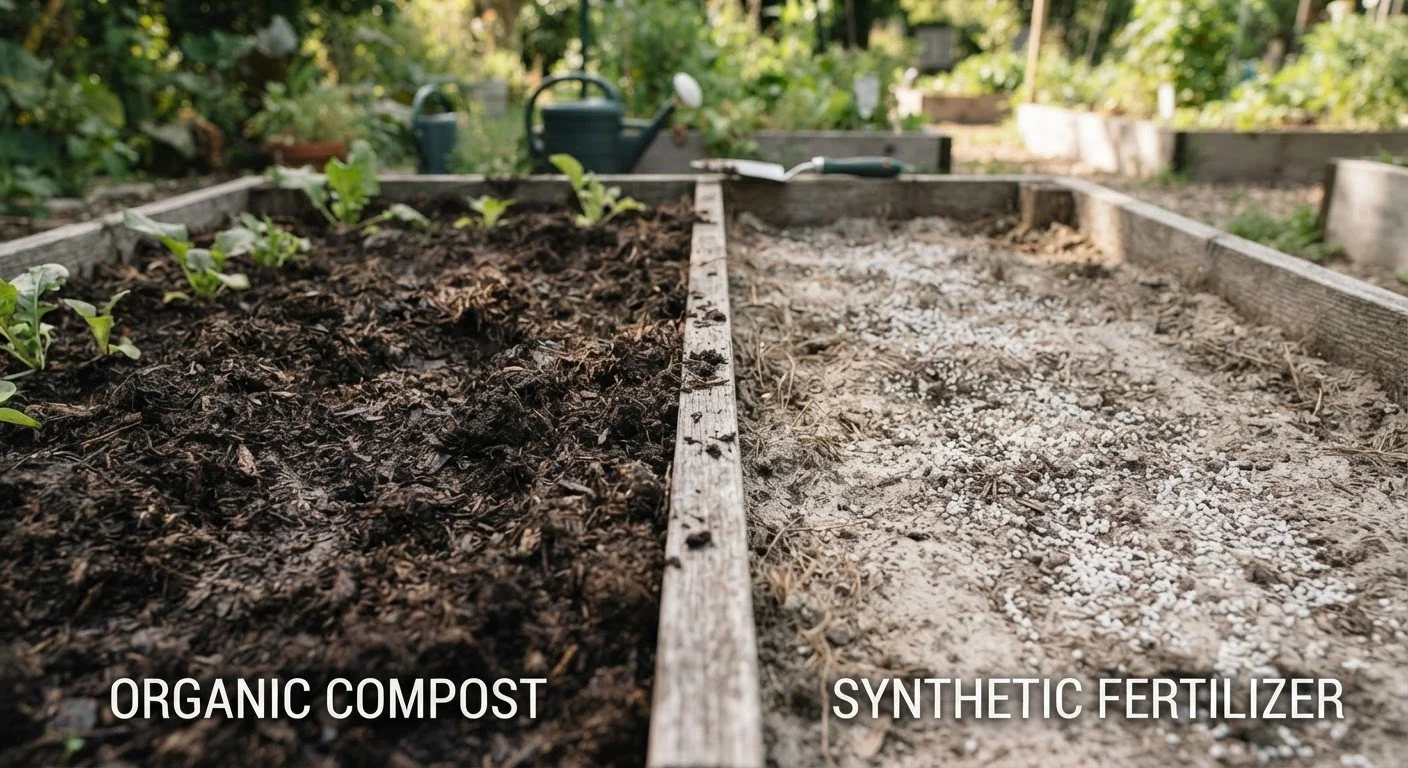
Photo credit: FaqInsider.com
In this article
Organic and synthetic fertilizers work differently and suit different goals. This comparison covers nutrient release, soil impact, and practical use.
Key Takeaways
- Organic fertilizers release nutrients slowly, feeding plants over weeks or months as microbes break them down.
- Synthetic fertilizers deliver nutrients immediately but carry a higher risk of over-application and runoff.
- Organic inputs generally improve soil structure and microbial life over time; synthetics do not.
- Synthetic fertilizers allow precise nutrient ratios, which is useful for correcting diagnosed deficiencies.
- Neither approach is universally superior - the best choice depends on your soil, plants, and goals.
How Each Fertilizer Type Works
The most fundamental difference between organic and synthetic fertilizers is how they deliver nutrients to plants. Synthetic fertilizers are manufactured to contain specific, readily soluble forms of nitrogen, phosphorus, and potassium - the three macronutrients plants need most. Because these nutrients dissolve quickly in soil water, plant roots can absorb them within days of application.
Organic fertilizers - derived from materials like composted manure, bone meal, blood meal, kelp, and worm castings - work through a biological process. Soil microorganisms must first break down these raw materials before the nutrients become plant-available. That process takes time, typically several weeks to months depending on soil temperature and moisture. This is why organic fertilizers are often described as "slow-release" sources.
For a deeper look at how these mechanisms play out in your soil over time, see what organic and synthetic fertilizers actually mean for your soil.
| Criterion | Organic Fertilizers | Synthetic Fertilizers |
|---|---|---|
| Nutrient release speed | Slow (weeks to months) | Fast (days) |
| Soil organic matter | Builds over time | Does not contribute |
| Soil microbial life | Supports and feeds | Neutral to minimal impact |
| Nutrient precision | Variable, harder to control | Exact ratios available |
| Risk of plant burn | Low | Higher if over-applied |
| Runoff risk | Lower | Higher, especially nitrogen |
| Typical cost | Higher per volume | Lower per nutrient unit |
| Application frequency | Less frequent needed | More frequent in season |
Soil Health and Long-Term Impact
One of the most significant trade-offs between these two approaches shows up not in the plant, but in the ground beneath it. Organic amendments consistently add organic matter to soil. Over time, that organic matter improves soil structure - creating better drainage in clay soils and better water retention in sandy ones - while also feeding the beneficial bacteria, fungi, and earthworms that make a garden ecosystem work.
Synthetic fertilizers supply nutrients without contributing organic matter. Used alone over many years, they can leave soil biologically depleted and increasingly dependent on external inputs to sustain plant growth. They also carry a higher risk of nutrient runoff, particularly nitrogen and phosphorus, which can leach into waterways after heavy rain.
~50%
Nitrogen lost to leaching or runoff
Research from the University of California Cooperative Extension estimates that roughly half of applied nitrogen fertilizer can be lost from soil before plants use it, depending on application method and weather.
3-6 months
Typical slow-release cycle for organic inputs
Most organic fertilizers become substantially plant-available over a three-to-six month window under typical warm-season soil conditions, according to general soil science literature.
That said, synthetic fertilizers are not inherently damaging when used carefully and at appropriate rates. The problem is typically over-application or poor timing rather than the chemistry itself. Soil testing before any fertilizer application - organic or synthetic - helps prevent both under-feeding and excess.
Practical Considerations: Cost, Precision, and Application
Synthetic fertilizers are generally less expensive per unit of nutrient and easier to apply uniformly, especially across large areas. Their concentrated formulas mean you're carrying and spreading less material for the same nutrient output. They also allow precise adjustments: if a soil test reveals a phosphorus deficit, a targeted synthetic product can address that specific gap.
Organic fertilizers often cost more upfront and require larger volumes to deliver equivalent nutrient levels. However, their slow-release nature reduces the frequency of application needed across a growing season, and the lower risk of plant burn gives less experienced gardeners more margin for error.
Soil Testing Is the Best First Step
Before choosing between organic and synthetic fertilizers, consider getting a basic soil test through your local cooperative extension office. A soil test reveals your existing nutrient levels and pH, which prevents guesswork and helps you avoid applying nutrients your soil doesn't actually need. Over-fertilizing - with either type - wastes money and can harm plants and nearby waterways.
Many experienced gardeners use both approaches - applying organic matter broadly to build soil health while using targeted synthetic applications to address specific deficiencies identified through soil testing. This integrated strategy is often more effective than a strict either/or approach.

Author
Home & Garden Editorial Team
Home & Garden Editorial Team is the collective byline for our editorial team and contributor network. Articles published under this byline or an editorial pen name are researched, written, and reviewed according to our editorial standards for clarity, consistency, and independence before publication.
View all articles →