
Organic vs. Synthetic Fertilizers: What the Difference Actually Means for Your Soil
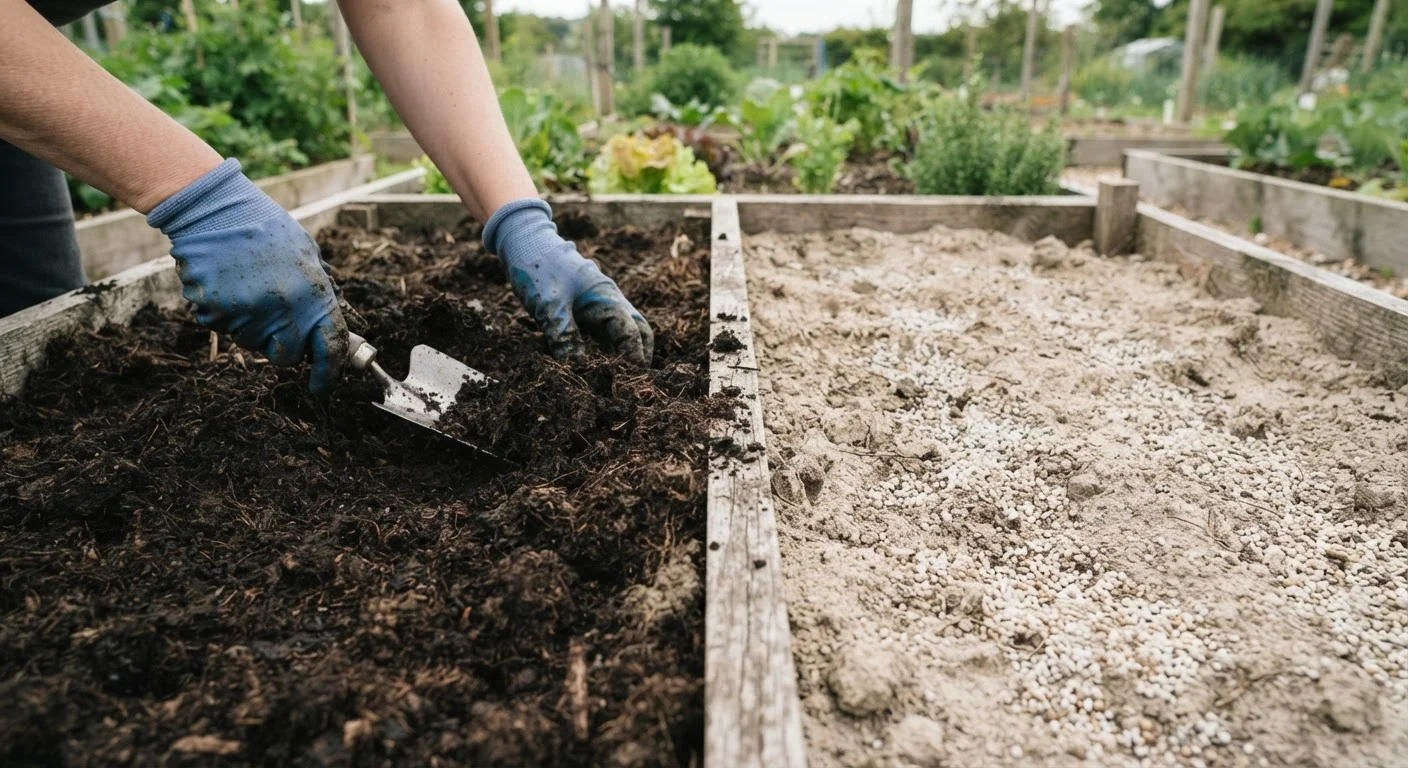
Photo credit: FaqInsider.com
In this article
Break down how organic and synthetic fertilizers work differently in soil, and what that means for plant health, soil biology, and long-term fertility.
Key Takeaways
- Organic fertilizers feed soil biology first; synthetic fertilizers deliver nutrients directly to plant roots.
- Synthetic fertilizers act faster but can degrade soil structure and microbial life with prolonged use.
- Organic options build long-term fertility but release nutrients slowly and unpredictably.
- Neither approach is universally superior - the right choice depends on your soil health and gardening goals.
- Soil testing is the single most reliable starting point before choosing any fertilizer strategy.
How Each Type of Fertilizer Actually Works
The most important distinction between organic and synthetic fertilizers isn't just what's in them - it's how they interact with your soil before nutrients ever reach a plant root.
Synthetic fertilizers are manufactured compounds - typically derived from industrial chemical processes - that contain nutrients in forms plants can absorb almost immediately. Nitrogen, phosphorus, and potassium (the familiar N-P-K ratio on every fertilizer label) are already dissolved or quickly soluble, meaning they bypass the soil food web entirely and go straight to work feeding the plant. That directness is their primary advantage.
Organic fertilizers - which include materials like compost, bone meal, blood meal, fish emulsion, and worm castings - work differently. They contain nutrients locked inside organic matter. Soil microbes, fungi, bacteria, and other organisms must first break these materials down through decomposition before plants can access them. The fertilizer, in a sense, feeds the soil first, and the soil feeds the plant second.
Understanding this distinction helps explain nearly every practical trade-off you'll encounter: speed, reliability, cost, environmental impact, and long-term soil health.
| Organic Fertilizers | Synthetic Fertilizers | |
|---|---|---|
| Nutrient release speed | Slow - weeks to months | Fast - days to weeks |
| Nutrient precision | Variable by source | Exact, consistent ratios |
| Effect on soil biology | Feeds and supports microbes | Minimal direct benefit |
| Soil structure improvement | Yes, over multiple seasons | Little to none |
| Leaching/runoff risk | Lower, but not absent | Higher if over-applied |
| Typical cost per nutrient unit | Higher upfront | Lower upfront |
| Best use case | Long-term soil building | Fast correction of deficiencies |
What Happens to Your Soil Over Time
One of the most underappreciated aspects of fertilizer choice is its cumulative effect on soil structure and biology - the living ecosystem of microorganisms, fungi, and organic matter that makes soil productive over the long run.
Repeated use of synthetic fertilizers, particularly at high rates, has been associated with reduced microbial diversity and declining organic matter content over time. When plants receive nutrients directly from the solution in the soil water, the root-microbe relationships that drive natural nutrient cycling can weaken from disuse. Heavy nitrogen applications can also acidify soil gradually - a problem that compounds slowly and quietly. See our guide to soil pH for a deeper look at how acidity affects nutrient availability.
Organic inputs, by contrast, actively contribute to the soil food web. Decomposing organic matter improves soil structure, increases water-holding capacity, and supports populations of beneficial microbes and earthworms. These effects compound positively over multiple growing seasons, meaning an organically managed garden may become progressively easier to maintain. Our article on soil-building gardening techniques covers complementary practices that work well alongside organic fertilization.
Transition Gradually If You're Switching Methods
If you've relied on synthetic fertilizers for several seasons and want to shift toward organic management, give the transition time. Soil microbial populations that were suppressed don't rebound overnight. Start by adding compost and organic matter each season while gradually reducing synthetic inputs, and expect to see the most meaningful changes in soil structure and plant vigor after two to three growing seasons.
Practical Trade-Offs Every Gardener Should Know
Neither fertilizer type is without drawbacks, and choosing between them - or combining them - requires weighing several real-world factors.
~50%
Soil carbon loss in intensively farmed soils
Research published in soil science literature suggests intensively managed soils can lose roughly half their original organic carbon over decades, reducing water retention and microbial activity.
1 billion+
Microbial organisms per teaspoon of healthy soil
Soil ecology researchers estimate that a single teaspoon of healthy garden soil can host over one billion bacteria alone, underscoring how much life depends on organic matter inputs.
Speed vs. sustainability: If your tomatoes are showing yellowing leaves mid-season, a synthetic nitrogen source can correct the problem within days. An organic amendment applied at the same time may take weeks to release enough nitrogen to make a visible difference. For urgent deficiencies, synthetic options are simply more reliable.
Precision vs. uncertainty: A bag of synthetic fertilizer labeled 10-10-10 delivers exactly that ratio consistently. Organic materials vary in nutrient content based on their source, age, and how they were processed. This makes it harder to apply an exact dose, though for most home gardeners, that level of precision isn't necessary.
Runoff risk: Highly water-soluble synthetic nutrients - especially nitrogen - can leach through the soil and into groundwater or nearby waterways if over-applied or applied before heavy rain. Organic nutrients, bound in organic matter, release more slowly and are generally less prone to rapid leaching, though they are not risk-free.
Cost and availability: Synthetic fertilizers are typically less expensive per unit of nutrient delivered. Quality organic amendments - especially compost or worm castings - can cost more upfront, though making your own compost significantly reduces that barrier over time.
Starting with a Soil Test Changes Everything
Before committing to either approach, a basic soil test is the most useful investment a gardener can make. A test from your local cooperative extension service or a private lab will tell you which nutrients are already present, which are deficient, and what your soil's current pH is. This eliminates guesswork and prevents over-fertilizing - which wastes money, stresses plants, and increases runoff risk regardless of which fertilizer type you use.
If your soil test reveals a specific deficiency - say, low phosphorus ahead of planting - you can address it directly, with either an organic source like bone meal or a targeted synthetic product. If your soil is structurally poor, compacted, or low in organic matter, no amount of synthetic fertilizer will fully compensate for the absence of a healthy soil ecosystem. That's where organic inputs become less optional.
Most gardeners find that a combined strategy works well: use organic matter and amendments consistently to build the soil foundation over time, and reach for targeted synthetics when a plant shows a clear, pressing need. The goal is a productive garden, not loyalty to one camp over the other.

Author
Home & Garden Editorial Team
Home & Garden Editorial Team is the collective byline for our editorial team and contributor network. Articles published under this byline or an editorial pen name are researched, written, and reviewed according to our editorial standards for clarity, consistency, and independence before publication.
View all articles →