
Seasonal Lawn Care Calendar for American Homeowners
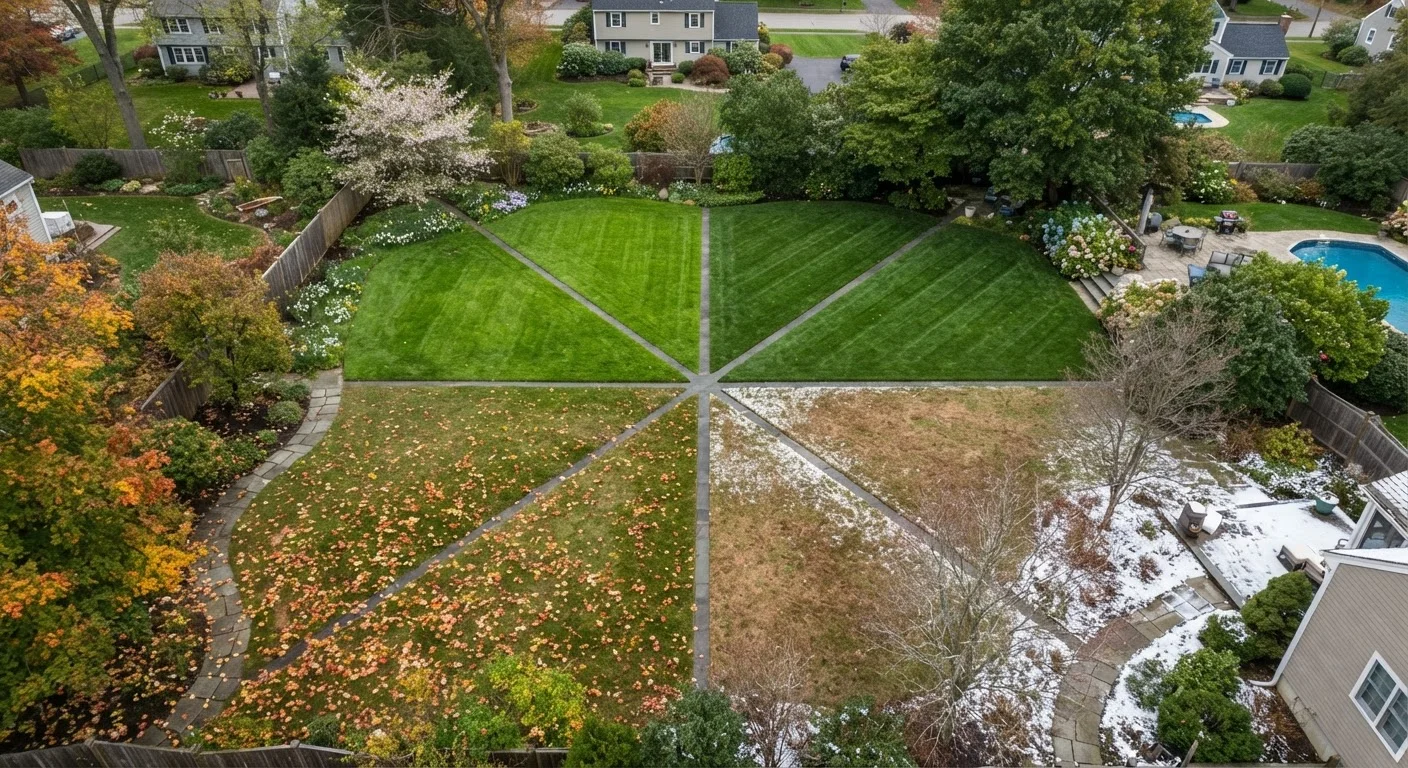
Photo credit: FaqInsider.com
In this article
A month-by-month reference guide covering fertilizing, aeration, overseeding, and mowing tasks across spring, summer, fall, and winter.
How to Use This Calendar
Lawn care isn't one-size-fits-all. Grass types, regional climates, and soil conditions all shape what your yard needs and when. This calendar is organized by season and covers the four core tasks - fertilizing, aeration, overseeding, and mowing - that form the backbone of a healthy lawn program. Think of it as a structured reference you return to each season rather than a rigid checklist.
Because the U.S. spans multiple climate zones, timing windows are given in general seasonal terms rather than specific calendar dates. Cool-season grasses (Kentucky bluegrass, fescues, ryegrass) thrive in northern and transitional regions; warm-season grasses (Bermuda, zoysia, St. Augustine) dominate the South. Where timing differs meaningfully between grass types, both are noted. For full-year property upkeep that goes beyond the lawn, see the month-by-month home maintenance calendar.
| Cool-Season Grass - Best Fertilizing Window | Early fall (late August-October) |
| Warm-Season Grass - Best Fertilizing Window | Late spring through mid-summer |
| Aeration Timing - Cool-Season Lawns | Early fall |
| Aeration Timing - Warm-Season Lawns | Late spring to early summer |
| Overseeding - Optimal Soil Temperature | 50-65°F (cool-season); 70-80°F (warm-season) |
| Recommended Mowing Height (general) | 3-4 in. cool-season; 1.5-2.5 in. warm-season |
| Weekly Water Requirement | Approximately 1 inch (rain + irrigation combined) |
Spring: Waking Up the Lawn
Mowing: Resume mowing when grass actively grows and is dry enough to cut cleanly. Set blade height slightly higher than your summer setting - scalping early-spring turf stresses roots. For cool-season grasses, aim for 3-4 inches; warm-season varieties typically prefer 1.5-2.5 inches depending on the species.
Fertilizing: For cool-season grasses, hold off on heavy nitrogen fertilization in early spring - a light feeding is fine, but the main application belongs in fall. Warm-season grasses, by contrast, benefit from their first feeding once soil temperatures consistently reach about 65°F, typically late spring.
Aeration: Spring is the right time to core-aerate warm-season lawns when they're entering active growth. Cool-season lawns are generally better aerated in early fall. Aeration - the process of pulling small plugs of soil from the lawn - relieves compaction and improves water and nutrient penetration.
Overseeding: Spring overseeding works best for warm-season grasses to fill bare patches. For cool-season lawns, overseeding is primarily a fall task when soil stays warm but air cools, creating ideal germination conditions.
Aeration
The process of mechanically removing small plugs of soil (core aeration) to relieve compaction, improve drainage, and allow air, water, and nutrients to reach grass roots more effectively.
Overseeding
Spreading grass seed directly over an existing lawn to thicken thin areas, fill bare patches, or introduce a more resilient grass variety without fully tearing up the turf.
Cool-Season Grass
Grass varieties - such as Kentucky bluegrass, tall fescue, and perennial ryegrass - that grow most actively in spring and fall and go semi-dormant in summer heat. Common in northern and transitional U.S. regions.
Warm-Season Grass
Grass varieties - such as Bermudagrass, zoysia, and St. Augustine - that thrive in summer heat and go dormant (often turning brown) during winter. Common in southern U.S. regions.
Winterizer
A fertilizer application made in late fall designed to supply nutrients that grass stores over winter and draws on for early spring growth and green-up.
One-Third Rule
A widely followed mowing principle stating that no more than one-third of the grass blade should be removed in a single mowing session, reducing stress on the plant.
Summer: Maintain and Protect
Mowing: Raise your mowing height in summer. Taller grass shades the soil, reducing moisture loss and inhibiting weed germination. Never remove more than one-third of the blade in a single mow - a principle called the one-third rule - as cutting too aggressively weakens the plant and exposes it to heat stress.
Watering cadence: Though not a core calendar task, summer watering strategy directly affects whether your other efforts stick. Deep, infrequent watering (roughly 1 inch per week from rain or irrigation) encourages roots to grow downward rather than staying shallow and vulnerable.
Fertilizing: Avoid nitrogen-heavy feeding during summer heat for both grass types. For warm-season turf, a moderate mid-summer application can support active growth, but heavy fertilization during drought or heat stress can burn the lawn. When in doubt, wait for cooler conditions.
Pest and weed monitoring: Summer is peak season for grubs, chinch bugs, and broadleaf weeds. Early identification matters - examine thinning patches closely before applying any treatment.
Fall: The Most Important Season
Fall is arguably the highest-leverage season for cool-season lawns. Roots continue growing even as top growth slows, making it the ideal window for renovation work.
Aeration: Core-aerate cool-season lawns in early fall, ideally 4-6 weeks before the first hard frost. This loosens compacted soil and creates pockets where seed-to-soil contact improves.
Overseeding: Overseed immediately after aeration while soil is warm. Spread seed evenly, keep the area consistently moist until germination, and avoid heavy foot traffic. New seedlings need 4-6 weeks of establishment before frost.
Fertilizing: Fall is the primary fertilizing window for cool-season grass. A late-fall application - sometimes called a winterizer - delivers nutrients the lawn stores to fuel early spring green-up. Use a fertilizer product calibrated to your soil test results; applying without knowing your soil's current nutrient levels can lead to over-application and runoff. A broader seasonal home maintenance plan can help you coordinate this work with other fall property tasks.
Mowing: Gradually lower mowing height in late fall to reduce the risk of snow mold on cool-season lawns, but don't drop below the grass's minimum recommended height.
Winter: Rest and Prepare
For most American homeowners, winter is the lawn's dormant period - and that's intentional. Both cool-season and warm-season grasses naturally slow or stop growth in cold weather, conserving energy for spring.
What to avoid: Traffic on a frozen or frost-covered lawn can damage crowns (the growth point at soil level), leaving dead patches that don't recover until summer. Keep foot traffic minimal and redirect play areas where possible.
Equipment maintenance: Winter is the right time to sharpen mower blades, change the oil, and inspect your spreader and aerator for wear. Sharp blades make a measurable difference - dull blades tear grass rather than cutting cleanly, creating ragged edges that invite disease.
Planning: Pull your soil test results and review what amendments or overseeding projects you want to tackle in the coming year. Ordering supplies before the spring rush can also save time, though availability and pricing vary by retailer and season. Just as seasonal preparation keeps vehicles running smoothly - see our seasonal car maintenance guide for a useful parallel - methodical off-season prep sets your lawn up for a strong start.

Author
Home & Garden Editorial Team
Home & Garden Editorial Team is the collective byline for our editorial team and contributor network. Articles published under this byline or an editorial pen name are researched, written, and reviewed according to our editorial standards for clarity, consistency, and independence before publication.
View all articles →