
Buyer's Market vs. Seller's Market: What the Difference Looks Like on the Ground
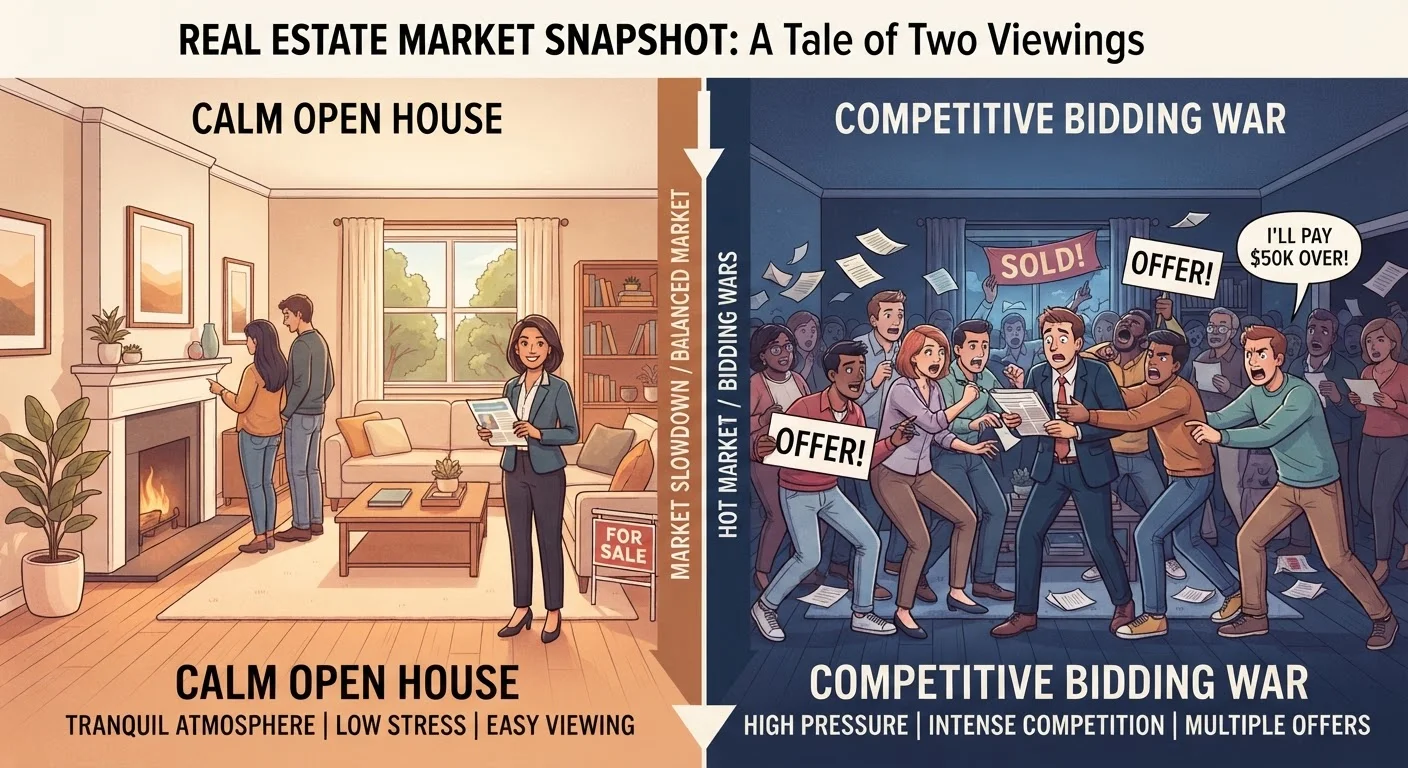
Photo credit: FaqInsider.com
In this article
Understand the real-world dynamics that shift power between buyers and sellers, and what each market type means for your timeline and offer strategy.
Key Takeaways
- A buyer's market features more homes for sale than active buyers, giving purchasers negotiating power.
- A seller's market means inventory is tight, competition is fierce, and homes often sell above list price.
- Days on market and months of supply are two of the clearest indicators of which market you're in.
- Offer strategy, contingency use, and timeline expectations all shift significantly between the two conditions.
- Neither market type is permanent - local conditions can change faster than national headlines suggest.
What Each Market Actually Means
A buyer's market exists when the supply of homes for sale exceeds the number of active buyers. Listings sit longer, prices soften, and sellers often make concessions to close a deal. A seller's market is the inverse: fewer homes than buyers, properties move fast, and sellers frequently receive multiple competing offers within days of listing.
The standard benchmark used by real estate economists is months of supply - a measure of how long it would take to sell all current inventory at the current pace of sales. Broadly speaking, six months of supply is considered a balanced market. Below that threshold signals seller advantage; above it favors buyers. In practice, many markets fluctuate between three and nine months depending on local conditions, interest rates, and seasonal patterns.
To understand the underlying data behind these conditions, our guide on reading a housing market report explains what metrics like days on market and inventory levels actually signal.
| Criterion | Buyer's Market | Seller's Market |
|---|---|---|
| Months of Supply | Above 6 months | Below 6 months |
| Days on Market | Longer (30+ days typical) | Shorter (often under 14 days) |
| Offer Dynamics | Single offers, below asking common | Multiple offers, above asking common |
| Contingencies | Expected and accepted | Often waived by buyers |
| Price Negotiation | Buyer holds leverage | Seller holds leverage |
| Closing Cost Help | Sellers frequently contribute | Sellers rarely contribute |
| Time Pressure | Low - buyers can deliberate | High - decisions made quickly |
How Each Market Feels on the Ground
The difference between these two conditions isn't just theoretical - it changes almost every step of the transaction.
In a buyer's market, open houses are quiet. Sellers respond to offers within the standard window, and a well-prepared buyer can negotiate price reductions, seller-paid closing costs, and repair credits after inspection. Contingencies - financing, appraisal, inspection - are expected and rarely contested. Buyers set the pace.
In a seller's market, the experience can feel jarring for unprepared buyers. Homes go under contract in days, sometimes hours. Offers routinely come in above asking price. Buyers may face pressure to waive contingencies or escalate their bids automatically. Sellers often choose the cleanest offer over the highest one. Understanding how an agent navigates this environment matters - our article on what buyer's agents actually do walks through how representation works and why it differs between market types.
~3 months
Median months of supply in a hot seller's market
The National Association of Realtors tracks months of supply as a primary indicator of market conditions, with readings below 5 months generally indicating seller advantage.
17 days
Median days on market during peak seller's conditions
NAR data from recent high-demand periods showed median days on market dropping to historic lows, reflecting the speed buyers had to move to compete.
~105%
Typical sale-to-list price ratio in competitive markets
In tight inventory markets, sale prices frequently exceed list prices, a pattern tracked regularly by Redfin and Zillow across major U.S. metros.
Adapting Your Strategy to the Market You're In
Knowing which market you're in is only useful if you adjust your approach accordingly. Here's what that looks like in practice.
Buying in a Buyer's Market
- Take time to get a thorough home inspection - sellers are generally less likely to walk away from a deal over repair requests. Our guide on navigating a home inspection covers what to watch for and how findings affect negotiation.
- Use comparable sales (comps) to support offers below list price.
- Request seller concessions on closing costs as a standard negotiating point.
Buying in a Seller's Market
- Get fully pre-approved - not just pre-qualified - before making any offer.
- Work with your agent to understand which contingencies carry the most risk if waived. Waiving an appraisal contingency, for example, means you cover any gap between the purchase price and the appraised value out of pocket.
- Set a firm budget ceiling before bidding begins to avoid overextending in a competitive moment.
For a broader look at how these two conditions change your overall position, see how each market type changes your position. For those earlier in the process, the homebuying hub covers the full arc from search to closing.
National Headlines Don't Always Reflect Local Reality
Broad characterizations of the housing market - "it's a seller's market" - are often drawn from national aggregates that may not reflect conditions in your specific metro, neighborhood, or price tier. A city can have a competitive seller's market in entry-level homes while higher-priced segments sit with excess inventory. Always examine local data - zip-code level days on market, price reductions, and active listings - before drawing conclusions about your own transaction.

Author
Real Estate Editorial Team
Real Estate Editorial Team is the collective byline for our editorial team and contributor network. Articles published under this byline or an editorial pen name are researched, written, and reviewed according to our editorial standards for clarity, consistency, and independence before publication.
View all articles →