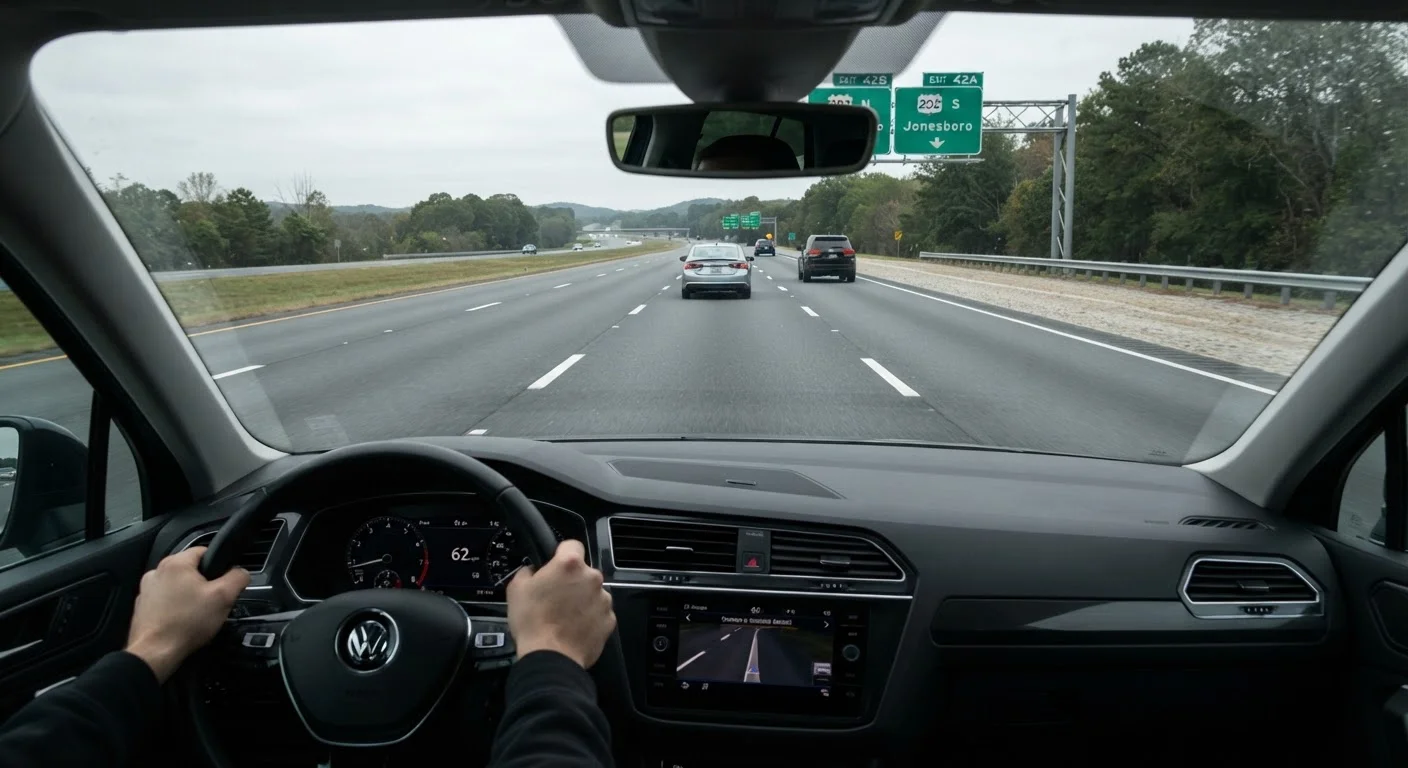
Phone in Hand vs. Hands-Free: Are You Actually Safer?
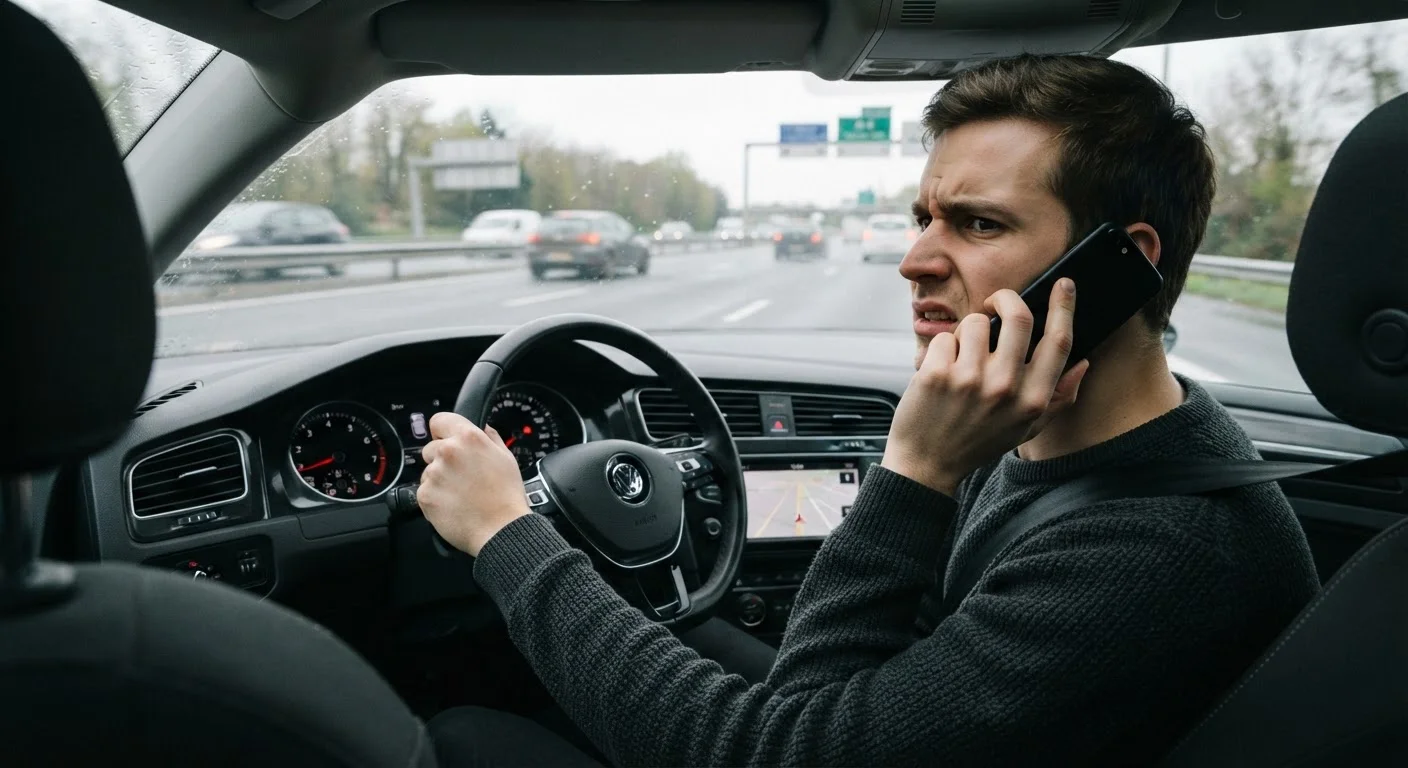
Photo credit: FaqInsider.com
In this article
Many drivers assume hands-free calling is safe. Traffic safety research paints a more complicated picture. Here's what the evidence shows.
Key Takeaways
- Handheld phone use impairs driving through three simultaneous distraction types: visual, manual, and cognitive.
- Hands-free calling eliminates visual and manual distractions but still causes significant cognitive impairment.
- Research from the National Safety Council suggests hands-free calling can still increase crash risk substantially.
- Voice-to-text and navigation apps carry their own cognitive load and are not risk-free alternatives.
- Laws vary widely by state, but legality does not equal safety - especially for hands-free use.
- The safest habit is putting the phone in Do Not Disturb mode before every drive.
Two Types of Distraction - or Three?
Distracted driving researchers typically categorize impairment into three types: visual (eyes off the road), manual (hands off the wheel), and cognitive (mind off the task of driving). Handheld phone use triggers all three simultaneously. You glance at the screen, grip the device, and mentally engage with a conversation or message - all while navigating a moving vehicle.
Hands-free calling removes the first two categories. Your eyes stay forward and both hands stay on the wheel. That's a real improvement - but it leaves cognitive distraction entirely intact. Your brain is still processing a conversation, formulating responses, and managing social cues, which are all mental tasks competing directly with driving. Research published by the APA and others has demonstrated that the human brain doesn't truly multitask - it switches rapidly between tasks, and each switch carries a cost. While driving, that cost can show up as delayed braking, missed signals, or narrowed field of attention.
This matters because most drivers dramatically underestimate cognitive distraction. If your eyes are on the road, it's easy to feel fully present - even when your attention is significantly elsewhere. Traffic safety researchers sometimes call this "inattention blindness."
| Criterion | Phone in Hand | Hands-Free Calling |
|---|---|---|
| Visual distraction | High - eyes leave road | Low - eyes stay forward |
| Manual distraction | High - one hand off wheel | None - both hands free |
| Cognitive distraction | High - conversation + navigation | Moderate to high - conversation only |
| Legal status (most U.S. states) | Illegal while driving | Generally legal |
| Crash risk vs. no phone use | Significantly elevated | Still elevated, though lower |
| Texting / reading messages | Extremely high risk | Voice-to-text still cognitively demanding |
What the Research Actually Shows
The National Safety Council (NSC) has published analyses suggesting that hands-free phone use can still be associated with substantially elevated crash risk compared to driving without phone use at all - even though the NSC acknowledges that estimating exact crash risk ratios is methodologically complex. Studies conducted in driving simulators and naturalistic settings have found that hands-free callers show slower reaction times, reduced ability to detect hazards, and impaired lane-keeping compared to undistracted drivers.
5 sec
Average eyes-off-road time when texting at highway speed
Cited in federal traffic safety research by the NHTSA, equating to roughly 360 feet traveled at 55 mph.
~4x
Estimated crash risk increase from handheld phone use
Frequently referenced in traffic safety literature, including analyses by the Insurance Institute for Highway Safety (IIHS).
3,000+
Distraction-related traffic fatalities annually in the U.S.
The NHTSA reports thousands of deaths attributed to distracted driving each year, with phone use as a leading factor.
Handheld use adds further risk layers. Texting while driving, in particular, has been shown in federal traffic safety research to take a driver's eyes off the road for an average of five seconds - long enough to travel the length of a football field at highway speed. That's a different risk profile than a voice call, handheld or otherwise. Both are dangerous; they're dangerous in different ways and to different degrees.
For more on common assumptions drivers make about safety, see Traffic Safety Myths That American Drivers Still Believe.
The Legal Landscape Doesn't Equal a Safety Guarantee
As of recent years, handheld phone use while driving is banned in the majority of U.S. states, and many jurisdictions specifically prohibit it for all drivers - not just commercial or younger drivers. Hands-free use, however, is legal in nearly every state. That legal gap can create a false sense of security: if it's legal, it must be safe enough.
This reasoning doesn't hold up under scrutiny. Laws reflect political and enforcement realities as much as scientific consensus. The NSC and other safety organizations have advocated for stronger restrictions on hands-free use precisely because legality and safety are not the same thing.
State Laws Change - Verify Yours
Phone-use laws vary significantly across U.S. states and are frequently updated. Some states ban all handheld device use; others only restrict texting or apply different rules to novice drivers. Always check your state's current motor vehicle laws directly - your state's DMV website is the most reliable starting point. Legality, as noted throughout this article, does not determine safety.
Voice-activated systems - including built-in infotainment controls and phone assistants - are also subject to cognitive distraction, and some studies have found certain voice interfaces more mentally demanding than a simple phone call. The takeaway: "hands-free" is a spectrum, not a uniform safety standard.
For a broader look at evidence-backed driving habits, the Safe Driving Habits That Protect You Over a Lifetime Behind the Wheel covers the full picture - from new drivers to experienced ones.
Practical Steps That Actually Reduce Risk
Understanding the research is useful; changing behavior is the goal. A few habits, consistently applied, can meaningfully reduce phone-related crash risk:
- Enable Do Not Disturb while driving. Both Android and iOS offer driving modes that suppress notifications and auto-reply to callers and texters. Use them as a default.
- Pre-set navigation before you move. Programming a destination while parked eliminates mid-route interaction with maps apps.
- Pull over for complex calls. If a conversation requires real attention - a difficult discussion, a work problem - park first.
- Keep hands-free calls brief and low-stakes. If you do take a call while driving, a short, logistical exchange is lower-risk than a long or emotionally charged one.
- Recognize high-demand conditions. Heavy traffic, bad weather, unfamiliar roads, and nighttime driving all require more cognitive bandwidth. These are the moments to hang up, not push through.
Many of the same attention-management principles that help with phone use apply more broadly to following distance and situational awareness. See Why Your Following Distance Matters More Than Your Speed for related guidance.
This article is for informational and educational purposes only. Always comply with applicable local and state traffic laws, and consult official traffic safety resources for the most current regulations in your area.

Author
Cars Editorial Team
Cars Editorial Team is the collective byline for our editorial team and contributor network. Articles published under this byline or an editorial pen name are researched, written, and reviewed according to our editorial standards for clarity, consistency, and independence before publication.
View all articles →