
Why Your Following Distance Matters More Than Your Speed
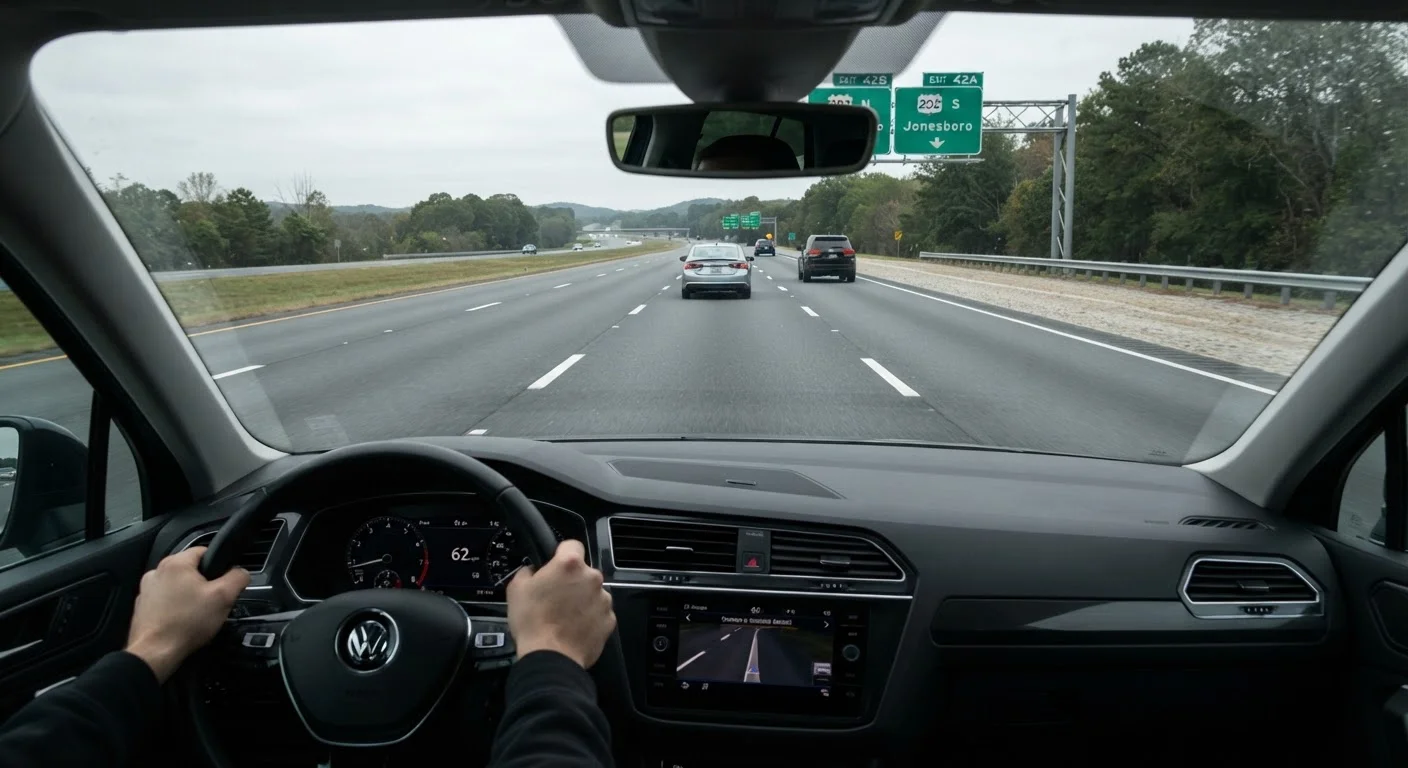
Photo credit: FaqInsider.com
In this article
Research shows tailgating causes more rear-end crashes than speeding. Learn what safe following distance actually looks like at highway speeds.
Key Takeaways
- Following distance determines whether you can stop in time - speed alone does not capture this risk.
- At 65 mph, your vehicle travels roughly 95 feet per second, so even small gaps disappear fast.
- The 3-second rule is a floor, not a ceiling - adverse conditions require significantly more space.
- Rear-end collisions are among the most common crash types on U.S. roads, and tailgating is a primary factor.
- Increasing your following distance costs you almost no travel time but substantially reduces crash risk.
The Real Margin Between You and a Crash
Most drivers think about speed when they think about road safety. Speed matters - but it's following distance that determines whether you can actually stop before hitting the vehicle in front of you. These two factors are connected but not interchangeable, and conflating them leads to a dangerous blind spot.
At 65 mph, your vehicle is covering approximately 95 feet every single second. If you're following three car lengths behind - a gap many drivers consider comfortable - you have less than a second to perceive a hazard, decide to brake, and actually stop. That's not enough time. Research consistently identifies insufficient following distance as a primary factor in rear-end crashes, which make up a substantial share of all U.S. traffic collisions.
Speed amplifies the problem, but distance is what gives you the margin to survive it. Understanding this distinction is what separates instinctive driving from truly defensive driving.
Why Time Beats Distance as Your Measuring Tool
Drivers often think in car lengths when judging their gap, but this approach breaks down quickly. A gap of four car lengths looks very different at 30 mph versus 70 mph. The physics haven't changed - only the perception has.
Traffic safety research points to a time-based method as far more reliable. The widely cited 3-second rule works like this: when the vehicle ahead passes a fixed marker - a highway sign, a lane stripe, a shadow - count to three before your vehicle reaches that same point. If you arrive before three seconds, you're too close.
~29%
Share of U.S. crashes that are rear-end collisions
According to NHTSA crash data, rear-end collisions consistently represent close to 29% of all reported traffic crashes in the United States.
~95 ft
Distance traveled per second at 65 mph
At a typical highway speed of 65 mph, a vehicle covers roughly 95 feet - nearly the length of three school buses - every second.
1.5 sec
Typical driver perception-reaction time
Traffic safety research places average driver reaction time at approximately 1.5 seconds, consuming a large share of any following-distance buffer before braking even begins.
Three seconds is a minimum under ideal conditions - dry pavement, clear visibility, an alert driver. Your reaction time alone typically consumes 1.5 seconds before your foot even reaches the brake. Add braking time on top of that, and you can see why even 3 seconds leaves very little margin. Many safety professionals recommend 4 seconds as a more practical daily target.
When the Standard Gap Isn't Enough
Conditions that reduce traction or visibility demand a longer gap - often significantly longer. Wet pavement can extend stopping distances by 50% or more compared to dry asphalt. Ice and snow can multiply them several times over. Fog reduces the distance at which you can even detect a hazard, which means your buffer needs to compensate for the reduced warning time.
Nighttime driving introduces a related issue: your headlights illuminate only so far ahead, and the hazard you need to stop for may be beyond that range. Following distance effectively becomes a proxy for visibility - the more limited your sightlines, the larger your gap needs to be.
Adjust Your Gap Before Conditions Deteriorate
Don't wait until you're already in heavy rain or fog to increase your following distance. As soon as you notice reduced traction, falling visibility, or increased traffic density, proactively ease back and create additional space. It's far easier to build a buffer before a situation becomes urgent than to recover one after a hazard appears.
Heavy traffic creates its own pressure. When vehicles around you are merging or braking unpredictably, a longer gap also absorbs the ripple effect of sudden collective slowdowns - sometimes called a traffic shockwave - that can travel backward through a highway at highway speeds. For more on how speed choice interacts with road conditions, see our article on speed limits and speed choice.
The Cost of Increasing Your Gap Is Lower Than You Think
A common objection to maintaining a larger following distance is that it lets other drivers cut in - and practically speaking, this does happen. The instinct to close the gap is understandable. But consider the math: adding two or three extra seconds of following distance at highway speeds costs you, at most, a few seconds of travel time over the course of a trip. The protection it buys - a realistic window to avoid a rear-end collision - is not recoverable once it's gone.
Consistently building safe following habits is one of the behaviors that protects you across a lifetime of driving. If another driver merges into your gap, simply ease off the throttle and re-establish your space. Treat your following distance as something you manage actively, not as a fixed gap you defend. That small shift in mindset pays disproportionate dividends in crash avoidance.
Frequently Asked Questions

Author
Cars Editorial Team
Cars Editorial Team is the collective byline for our editorial team and contributor network. Articles published under this byline or an editorial pen name are researched, written, and reviewed according to our editorial standards for clarity, consistency, and independence before publication.
View all articles →