
Credit Scores Decoded: What the Number Actually Measures
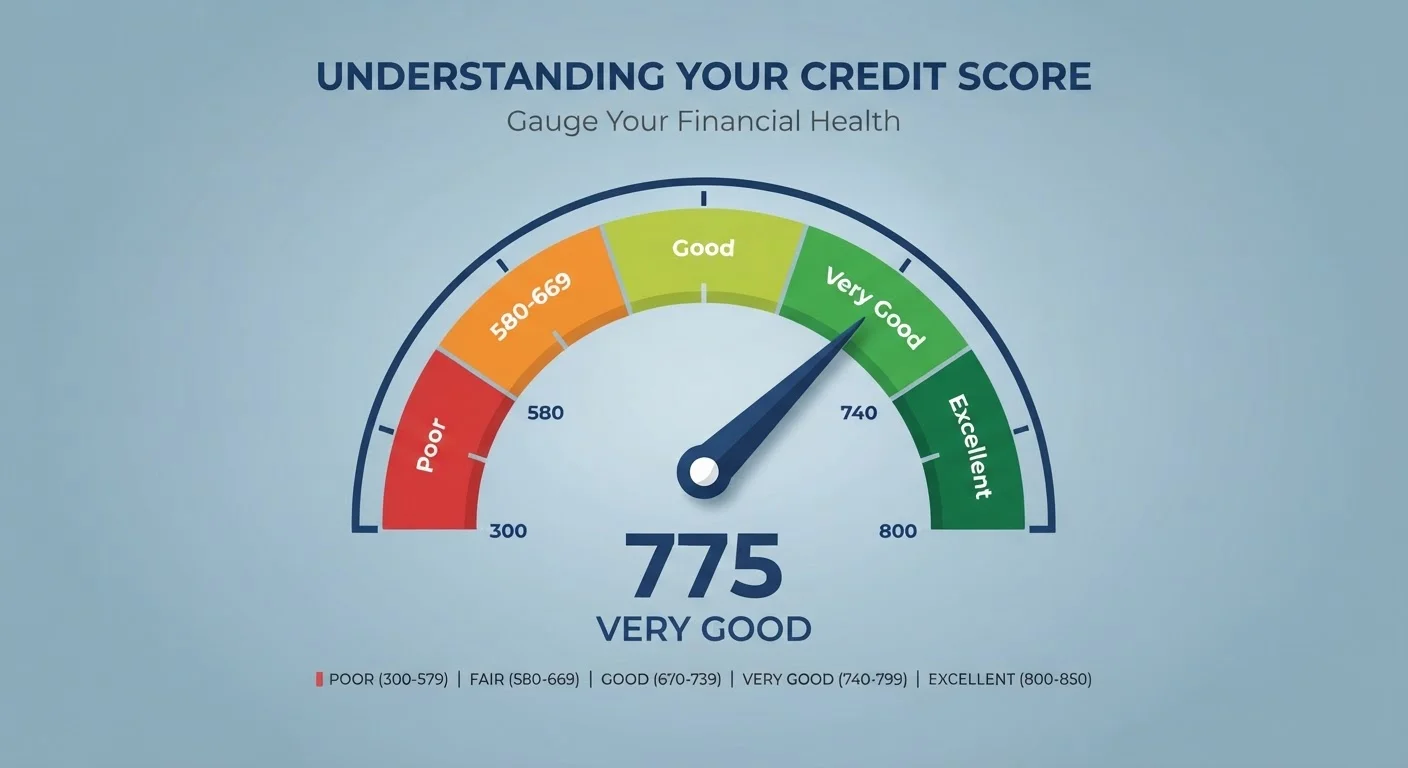
Photo credit: FaqInsider.com
In this article
Learn what goes into a credit score, how each factor is weighted, and why the same person can have different scores across bureaus.
Key Takeaways
- A credit score is calculated from five weighted factors, not a single account or action.
- Payment history carries the most weight - roughly 35% of a FICO score.
- The same person can have different scores across the three major credit bureaus.
- Scores are not permanent; they respond to changes in your credit behavior over time.
- Checking your own score is a soft inquiry and does not lower your number.
The Five Factors Behind the Number
A credit score is not a grade for being a good person with money - it's a statistical prediction based on specific, measurable behaviors. The FICO model breaks that down into five weighted categories:
- Payment history (≈35%): Whether you pay on time is the single largest factor. Even one 30-day late payment can cause a meaningful drop.
- Amounts owed (≈30%): This is largely about credit utilization - how much of your available revolving credit you're using. See our guide on credit utilization for a deeper look at how this ratio works.
- Length of credit history (≈15%): Longer histories give lenders more data to assess patterns. This includes the age of your oldest account, newest account, and the average age of all accounts.
- Credit mix (≈10%): Having a variety of account types - credit cards, auto loans, mortgages - signals experience managing different kinds of debt.
- New credit (≈10%): Each hard inquiry (when a lender checks your credit for an application) can temporarily lower your score slightly. Multiple applications in a short window compound this effect.
These percentages reflect the FICO 8 model; other versions and the VantageScore model weight things somewhat differently. For a broader look at what score ranges mean to lenders, see what credit score ranges signal.
35%
Weight of payment history in FICO score
According to FICO's published score factor breakdown, on-time payment history is the single heaviest factor in a standard FICO Score calculation.
~26%
U.S. adults considered subprime borrowers
The Consumer Financial Protection Bureau has reported that a significant share of Americans have credit scores below 620, limiting their access to mainstream loan products.
300-850
Standard FICO score range
FICO Scores range from 300 (highest risk) to 850 (lowest risk), with most lenders considering 670 and above as the threshold for "good" credit standing.
Why Your Score Differs Across Bureaus
Many people are surprised to find they have three slightly different scores - one from each major credit bureau. This isn't an error; it's a structural feature of how credit reporting works.
Lenders are not required to report account activity to all three bureaus. A credit card issuer might report to Experian and TransUnion but not Equifax. If a key account - say, one with a high limit or strong payment history - is missing from one bureau's file, the resulting score from that bureau will reflect a different picture.
The version of the scoring model applied also varies. Different lenders subscribe to different FICO versions, and some use VantageScore. The same underlying data can produce different numbers depending on the algorithm processing it.
Score Versions Matter More Than You Think
FICO alone has released more than a dozen scoring model versions over the years, including industry-specific models for auto lending and mortgage underwriting. When a lender tells you your score, ask which model and version they used - the answer explains why it may differ from what you see in a consumer credit monitoring app.
For practical purposes, focus on the general trend across all three rather than fixating on any single number. Monitoring your full credit reports (available free from AnnualCreditReport.com) helps you spot discrepancies or errors that might be dragging one score down unfairly.
What a Credit Score Doesn't Measure
Understanding what's excluded from a credit score is just as important as knowing what's included. Scores do not factor in:
- Income or employment status
- Net worth or savings balances
- Age, race, religion, gender, or national origin (prohibited by law)
- Rent payments (unless reported through a rent-reporting service)
- Utility or cell phone payment history (unless in collections)
This is why someone with a modest income but a long, clean borrowing history can have an excellent score, while a high earner who misses payments regularly may have a poor one. The score measures credit behavior, not wealth.
There are also widespread misconceptions worth clearing up - for instance, carrying a small balance does not help your score, and checking your own score never hurts it. Our article on common credit score myths walks through the most persistent ones.
How Scores Influence Real Financial Decisions
Credit scores affect more than credit card approvals. Lenders use them to set interest rates on auto loans, personal loans, and mortgages. A difference of even 40-50 points can shift someone from one rate tier to another, adding thousands of dollars in interest costs over the life of a loan.
Landlords commonly review credit scores as part of rental applications. Some employers in certain industries also check credit as part of background screening, though this practice varies by state and job type.
If you're planning a major purchase, understanding how your score will affect your terms is an essential first step. For homebuyers specifically, how credit scores shape mortgage terms explains the direct relationship between your score and your loan options.
This article is for general informational and educational purposes only and does not constitute personalized financial or credit advice. Consult a qualified financial professional regarding your specific situation.
Frequently Asked Questions

Author
Finance Editorial Team
Finance Editorial Team is the collective byline for our editorial team and contributor network. Articles published under this byline or an editorial pen name are researched, written, and reviewed according to our editorial standards for clarity, consistency, and independence before publication.
View all articles →