
Revolving Credit vs. Installment Loans: Two Very Different Kinds of Debt
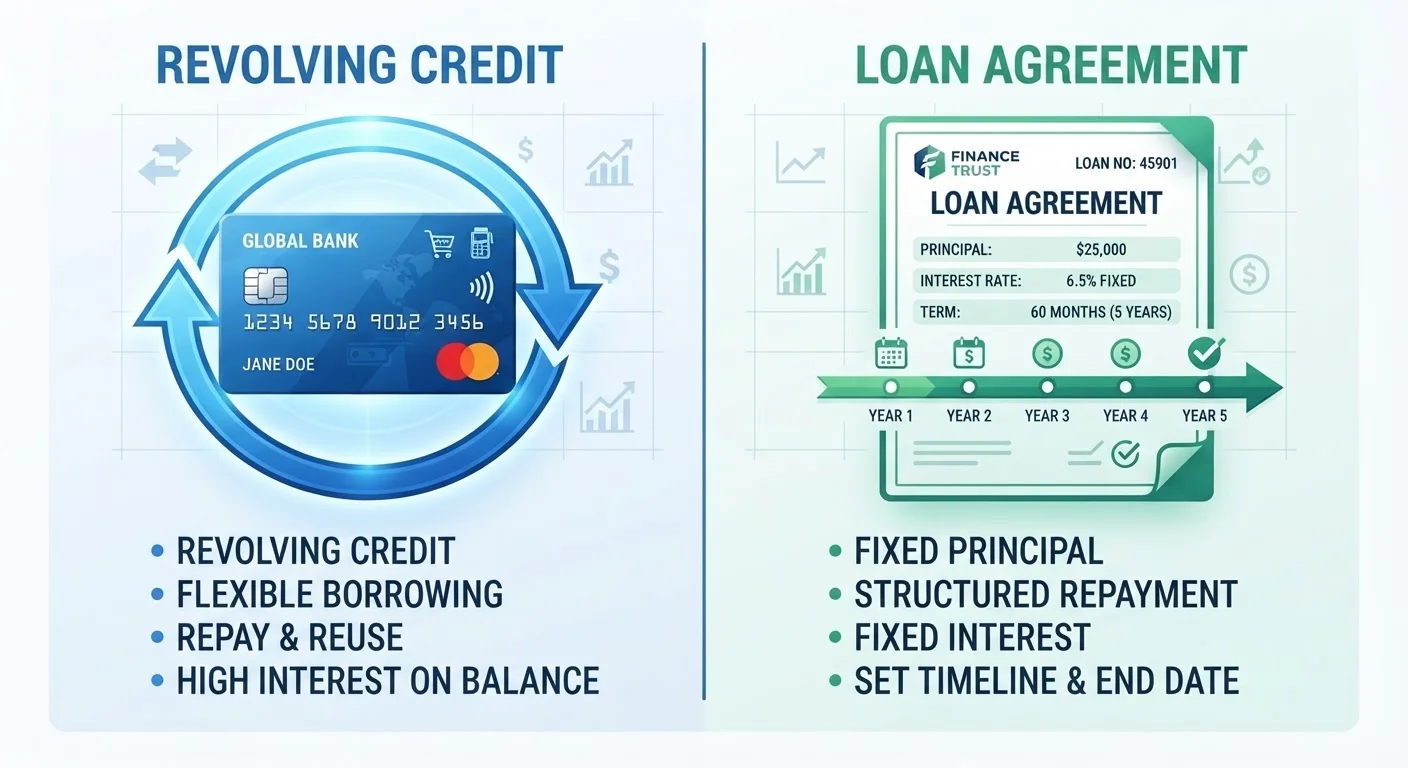
Photo credit: FaqInsider.com
In this article
Revolving credit and installment loans work differently and affect your finances in distinct ways. Here's what sets them apart.
Key Takeaways
- Revolving credit lets you borrow, repay, and borrow again up to a set credit limit repeatedly.
- Installment loans provide a lump sum upfront, repaid in fixed payments over a set term.
- Credit utilization - how much of your revolving limit you use - significantly affects your credit score.
- Both debt types appear on your credit report and influence your score in different ways.
- Carrying a mix of both types can strengthen your credit profile over time.
- Neither type is universally better; the right fit depends on your specific financial need.
What Makes These Two Types of Debt Different
When people talk about debt, they often lump everything together - but not all borrowing works the same way. Two of the most common structures you'll encounter are revolving credit and installment loans, and understanding the difference matters for both day-to-day money management and your long-term credit health.
If you're newer to borrowing, our beginner's guide to loans and credit covers the foundational concepts behind both.
Revolving credit works like a reusable pool of funds. You're approved for a credit limit - say, $5,000 - and you can borrow any amount up to that limit, repay it, and borrow again. Credit cards and home equity lines of credit (HELOCs) are the most common examples. Your minimum payment and interest charges change each month based on what you actually owe.
Installment loans work differently. You receive a lump sum upfront - a mortgage, auto loan, student loan, or personal loan - and repay it through fixed, equal payments over a predetermined term. Once the loan is paid off, the account closes. There is no revolving access to funds.
| Criterion | Revolving Credit | Installment Loans |
|---|---|---|
| How funds are accessed | Draw repeatedly up to a credit limit | Lump sum provided upfront |
| Repayment structure | Variable minimum payments each month | Fixed equal payments on a set schedule |
| Account lifecycle | Stays open; reusable indefinitely | Closes when fully repaid |
| Interest rate type | Typically variable and often higher | Often fixed, generally lower |
| Credit score impact | Heavily influenced by utilization ratio | Primarily driven by payment history |
| Common examples | Credit cards, HELOCs | Mortgages, auto loans, student loans |
| Budgeting predictability | Variable - payments change monthly | High - same payment every period |
How Each Type Affects Your Credit Score
Both debt types show up on your credit report, but they influence your score through different mechanisms.
With revolving credit, the key factor is your credit utilization ratio - the percentage of your available credit limit that you're currently using. For example, carrying a $2,500 balance on a $5,000 limit means 50% utilization. Credit scoring models generally reward keeping utilization below 30%, and lower is typically better. High utilization can drag down your score quickly, even if you pay on time.
Installment loans don't have a utilization ratio in the same sense. What matters most is your payment history - whether you make each fixed payment on time, every month. Consistently paying an installment loan on schedule is one of the most reliable ways to build a positive credit history. Missing payments, on the other hand, causes serious damage.
30%
Credit utilization threshold to target
Credit scoring guidance from organizations like the Consumer Financial Protection Bureau suggests keeping revolving credit utilization below 30% to avoid negative score impacts.
35%
Weight of payment history in FICO scoring
According to FICO, payment history is the single largest factor in standard credit score calculations, making consistent on-time payments critical for both debt types.
Having both types of accounts is often called a good credit mix, one of the factors credit scoring models consider. It signals to lenders that you can manage different kinds of financial obligations responsibly. For a closer look at specific tools designed to build credit from scratch, see our comparison of secured cards, credit-builder loans, and authorized user status.
Practical Tradeoffs to Weigh
Neither structure is objectively superior - what's right depends on what you need the money for and how you manage finances day to day.
Revolving credit offers flexibility, but that flexibility comes with risk. Interest rates on revolving accounts (especially credit cards) are often significantly higher than those on installment loans. Because you can keep borrowing, it's also easy to let balances creep up over time. If you only make minimum payments, the interest cost can far outpace what you originally spent.
Installment loans provide structure. Because payments are fixed and the end date is set from day one, it's easier to budget for them and track progress toward becoming debt-free. However, they're less flexible - if you need more money, you generally have to apply for a new loan rather than drawing from an existing line.
One important note: both types of debt carry risk tied to your ability to repay. Secured versions - like a mortgage or auto loan - put collateral (your home or vehicle) at risk if you default. Unsecured revolving credit and personal loans don't require collateral but typically carry higher interest rates to offset lender risk. Our article on secured vs. unsecured debt explains that distinction in depth.
If you're carrying both types and feeling stretched, debt consolidation is worth understanding - though it's not the right move for everyone.
This article is for general informational purposes only and does not constitute personalized financial or credit advice. For guidance specific to your situation, consider consulting a qualified financial professional.

Author
Finance Editorial Team
Finance Editorial Team is the collective byline for our editorial team and contributor network. Articles published under this byline or an editorial pen name are researched, written, and reviewed according to our editorial standards for clarity, consistency, and independence before publication.
View all articles →