
Secured Cards, Credit-Builder Loans, and Authorized User Status: Credit-Building Tools Compared
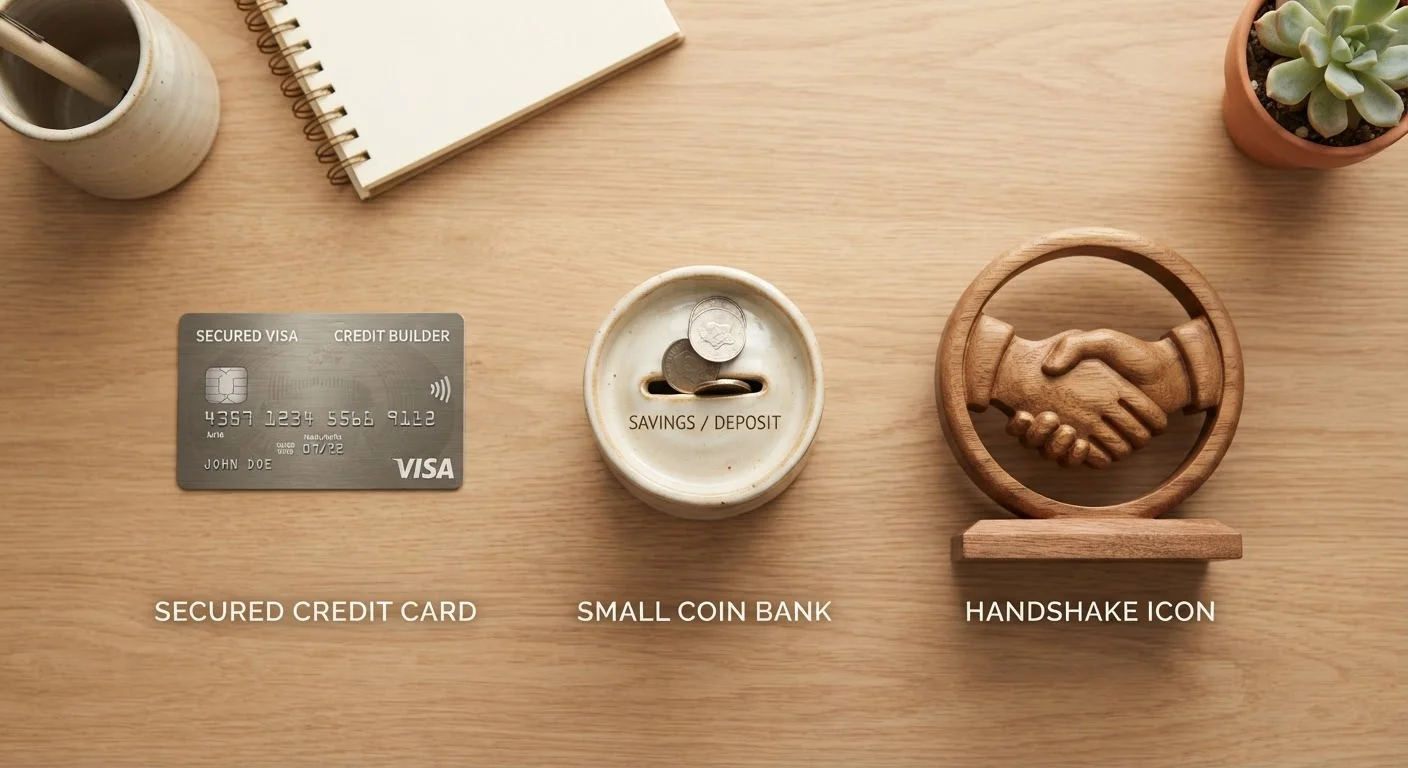
Photo credit: FaqInsider.com
In this article
Secured cards, credit-builder loans, and becoming an authorized user each take a different path to establishing credit. Here's how they differ.
Key Takeaways
- Secured cards require an upfront cash deposit that typically becomes your credit limit.
- Credit-builder loans hold funds in a locked account until you complete all payments.
- Authorized user status lets you benefit from someone else's credit history without an account of your own.
- Each tool reports to credit bureaus differently and suits different starting situations.
- Combining two or more tools can accelerate credit-building by diversifying your credit mix.
Why Credit-Building Tools Exist - and Who Needs Them
Building credit from scratch - or rebuilding after financial setbacks - requires demonstrating responsible borrowing behavior to lenders. The challenge is that most traditional lenders want to see a credit history before extending credit, creating a frustrating catch-22 for people just starting out.
Credit-building tools are specifically designed to break that cycle. Secured cards, credit-builder loans, and authorized user status each create a path to a credit report with positive payment history. But they work through entirely different mechanisms, carry different costs and risks, and fit different personal circumstances. Understanding how each one functions helps you choose the right starting point - or the right combination.
This article is general financial education, not personalized advice. Consider consulting a nonprofit credit counselor or licensed financial adviser for guidance tailored to your situation.
Secured Cards: Revolving Credit With a Cash Deposit
A secured credit card functions almost identically to a standard credit card, with one key difference: you provide a cash deposit upfront - typically ranging from $200 to $500 - which the card issuer holds as collateral. That deposit usually becomes your credit limit.
Each month, your payment behavior is reported to the major credit bureaus. Pay on time and keep your balance well below the limit, and you build a positive payment history. Carry a high balance relative to your limit and your credit utilization ratio - one of the most influential scoring factors - takes a hit.
Secured cards give you hands-on experience managing revolving credit, the same type used by standard credit cards. Over time, responsible use can lead issuers to upgrade your account to an unsecured card and return your deposit. Key considerations include annual fees, interest rates (which are often high), and whether the issuer reports to all three bureaus.
Keep Utilization Low on Secured Cards
With a secured card's typically low credit limit, even a modest balance can push your utilization ratio high. Aim to use no more than 30% of your available limit - and ideally less - to maximize the positive impact on your credit score. Paying in full each month also avoids interest charges, which are often steep on secured products.
Credit-Builder Loans: Savings and Credit in One Step
A credit-builder loan works in reverse from a typical loan. Instead of receiving money upfront, you make fixed monthly payments into a locked savings account. Once all payments are complete - usually over 6 to 24 months - the funds are released to you.
The lender reports your payments to the credit bureaus throughout the term, building a record of on-time installment payments. This adds an installment loan to your credit profile, which can complement a secured card's revolving account. Having both types of credit on your report can positively influence your credit mix, a minor but real scoring factor.
Credit-builder loans are commonly offered by credit unions, community banks, and some online lenders. Loan amounts are typically small - often $300 to $1,000. You'll pay interest over the term, but you also walk away with savings you've accumulated, softening the net cost.
| Secured Card | Credit-Builder Loan | Authorized User | |
|---|---|---|---|
| Upfront cost | Cash deposit required | No upfront deposit | None |
| Credit type added | Revolving credit | Installment loan | Varies (mirrors primary account) |
| Control over outcome | Full control | Full control | Depends on primary cardholder |
| Savings benefit | Deposit returned if upgraded | Savings built over loan term | None |
| Approval difficulty | Low - designed for thin files | Low - credit unions common | None - added by account holder |
| Typical timeline to impact | 3-6 months of use | 6-24 months (full term) | May appear quickly after added |
| Main risk | High utilization or fees | Missing monthly payments | Primary holder's bad habits |
Authorized User Status: Borrowing Someone Else's History
Becoming an authorized user on another person's credit card account means their account - including its payment history and utilization - can appear on your credit report. You don't apply for credit independently; you're added by the primary account holder.
The potential benefit is significant: if the primary cardholder has a long history of on-time payments and low utilization, that positive track record can give your credit score a meaningful lift. Some credit scoring models account for how long the account has been open, which can also help thin or new credit files.
The risk is equally clear. If the primary cardholder misses payments, carries high balances, or the account is closed, those negative signals can also appear on your report. Being added as an authorized user requires trust in both directions - and you should know that you can typically ask to be removed from an account at any time if it begins harming your credit. Be cautious of strangers or paid services offering to add you as an authorized user; such arrangements can carry legal and ethical risks.
For more on behaviors that can quietly undermine your progress, see our guide on moves that can quietly damage your credit score.
Choosing the Right Tool - or Combining Them
Each of these tools has a distinct profile. Secured cards demand a deposit and ongoing spending discipline but offer the most direct credit-building experience. Credit-builder loans require steady monthly payments but reward you with savings at the end. Authorized user status is the lowest-effort option but depends on someone else's behavior.
For many people, using two of these tools simultaneously is a practical strategy. A secured card paired with a credit-builder loan, for example, builds both revolving and installment credit history at the same time. If you also have a trusted family member willing to add you as an authorized user on an established account, that combination can establish a credit foundation more quickly than any single tool alone.
The most important factor with any of these tools is consistent, on-time payment. No credit-building method compensates for missed payments - and understanding the difference between secured and unsecured debt can help you appreciate the stakes involved with each type of account you open.
This article is for general informational purposes only and does not constitute personalized financial or credit advice. Consult a qualified financial professional or nonprofit credit counselor for guidance specific to your circumstances.

Author
Finance Editorial Team
Finance Editorial Team is the collective byline for our editorial team and contributor network. Articles published under this byline or an editorial pen name are researched, written, and reviewed according to our editorial standards for clarity, consistency, and independence before publication.
View all articles →