
Meal Planning That Actually Works: Principles for Consistent Healthy Eating
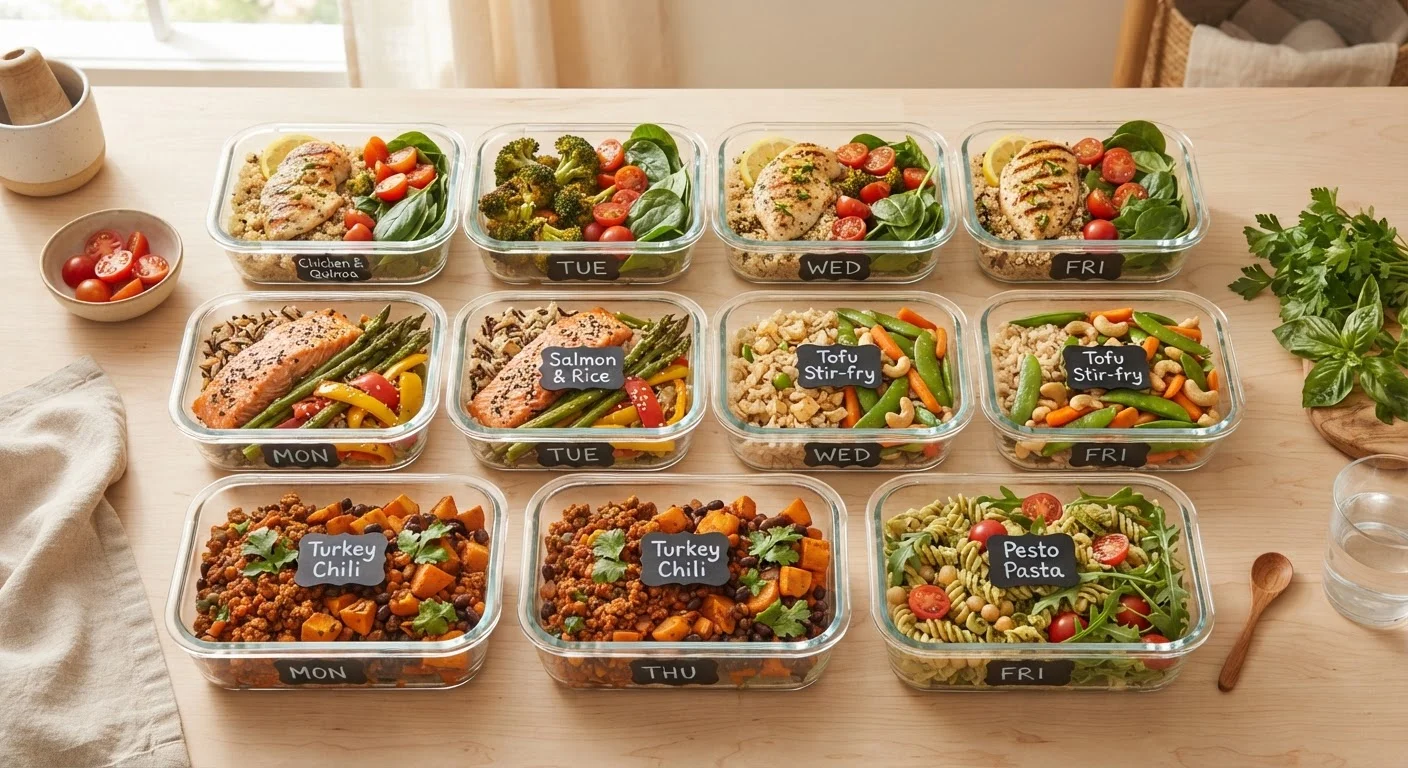
Photo credit: FaqInsider.com
In this article
Evidence-informed approaches to structuring weekly meals that support nutritional balance without rigid rules.
Key Takeaways
- Effective meal planning focuses on flexible structure rather than rigid rules or strict calorie targets.
- Batch-cooking foundational ingredients saves time and reduces reliance on less nutritious convenience foods.
- Nutritional variety across the week matters more than achieving a perfect plate at every single meal.
- Planning for realistic schedules - including busy nights - makes healthy eating sustainable long term.
- Small, consistent habits compound over time and are more effective than periodic overhauls.
Why Most Meal Plans Fall Apart
Most meal planning attempts fail not because people lack motivation, but because the plans themselves are built for ideal conditions. They assume ample prep time, consistent schedules, and uniform family preferences - conditions that rarely hold throughout a real week. When Monday's elaborate recipe doesn't happen, the whole plan often collapses.
Evidence on behavior change consistently points to the same lesson: sustainable habits need to be flexible enough to absorb disruption. A practical meal plan isn't a rigid script - it's a decision-making framework that reduces the number of choices you need to make under pressure. That shift in framing is where lasting change begins.
For a broader look at how eating patterns compound over time, see nutrition habits worth building early.
Core Principles for a Plan That Holds
The following practices reflect what nutrition research and behavioral science suggest actually works for consistent healthy eating - not as prescriptions, but as adaptable principles to apply to your own household and schedule.
Plan around ingredient categories, not just specific recipes
Committing to a specific recipe for every meal creates brittleness - if one ingredient isn't available or you're short on time, the plan breaks down. Planning by category (a leafy green, a whole grain, a protein source) keeps your week on track even when the specifics shift. This approach also naturally encourages nutritional variety.
Batch-cook two or three foundational ingredients each week
Having cooked grains, roasted vegetables, or pre-portioned proteins already in the refrigerator dramatically lowers the effort required to assemble a nutritious meal on a busy evening. Research on food environment design consistently shows that making healthy options the easiest option increases how frequently people choose them.
Designate at least one intentionally simple meal per day
Decision fatigue is real, and cooking elaborate meals every night is unsustainable for most households. Pre-authorizing a simple, repeatable option - a grain bowl, a hearty salad, eggs with toast - removes the pressure to be creative and dramatically reduces the temptation to skip cooking altogether.
Audit your week before planning, not after
A meal plan that ignores a Wednesday evening commitment or a Friday work event will fail predictably. Reviewing your schedule before you plan - identifying which nights you'll have more versus less time - lets you match meal complexity to available energy. This is one of the most overlooked but impactful planning behaviors.
Use a rotating repertoire of familiar meals rather than novelty-driven plans
Variety in nutrition doesn't require trying a new recipe every week. Rotating a core set of 10-15 meals your household reliably enjoys reduces cognitive load, simplifies grocery shopping, and makes nutritional coverage more predictable. New recipes can be introduced deliberately, not as the primary strategy.
For practical guidance on structuring each individual meal within your plan, the balanced plate framework offers a useful starting point that requires no calorie counting.
Quick Actions You Can Take This Week
You don't need a complete system overhaul to start eating more consistently. A few targeted actions - taken before your next grocery run - can meaningfully reduce the friction that derails most plans.
If you want a step-by-step structure to formalize these habits, a weekly meal-planning checklist can help you cover nutritional variety while streamlining your grocery trips.
Nutrition Balance Over the Week, Not Just the Plate
A common misconception is that every meal must be nutritionally complete on its own. In practice, registered dietitians and nutrition researchers generally support thinking about balance across the week as a whole. A lunch of leftover grains and roasted vegetables paired with a lighter dinner still contributes to overall dietary quality.
~35%
Reduction in fast food spending linked to meal planning
A study published in the International Journal of Behavioral Nutrition and Physical Activity found that meal planning was associated with greater dietary variety and lower obesity rates among French adults.
5-6 meals
Typical rotating repertoire in consistent home cooks
Behavioral nutrition research suggests most households rely on a small core set of familiar meals rather than varied recipes, a pattern that supports consistency over novelty.
Exploring more ways to build variety into your meals? building a plate that covers your nutritional bases goes deeper on proportioning without complicated formulas. If you're curious about incorporating more vegetables and legumes, plant-based eating options are worth understanding alongside their practical trade-offs.
This article is for general informational and educational purposes only and does not constitute medical or dietary advice. Consult a qualified healthcare professional or registered dietitian for guidance tailored to your individual health needs.

Author
Health & Wellness Editorial Team
Health & Wellness Editorial Team is the collective byline for our editorial team and contributor network. Articles published under this byline or an editorial pen name are researched, written, and reviewed according to our editorial standards for clarity, consistency, and independence before publication.
View all articles →