
Basement and Crawl Space Moisture: Causes, Risks, and Prevention
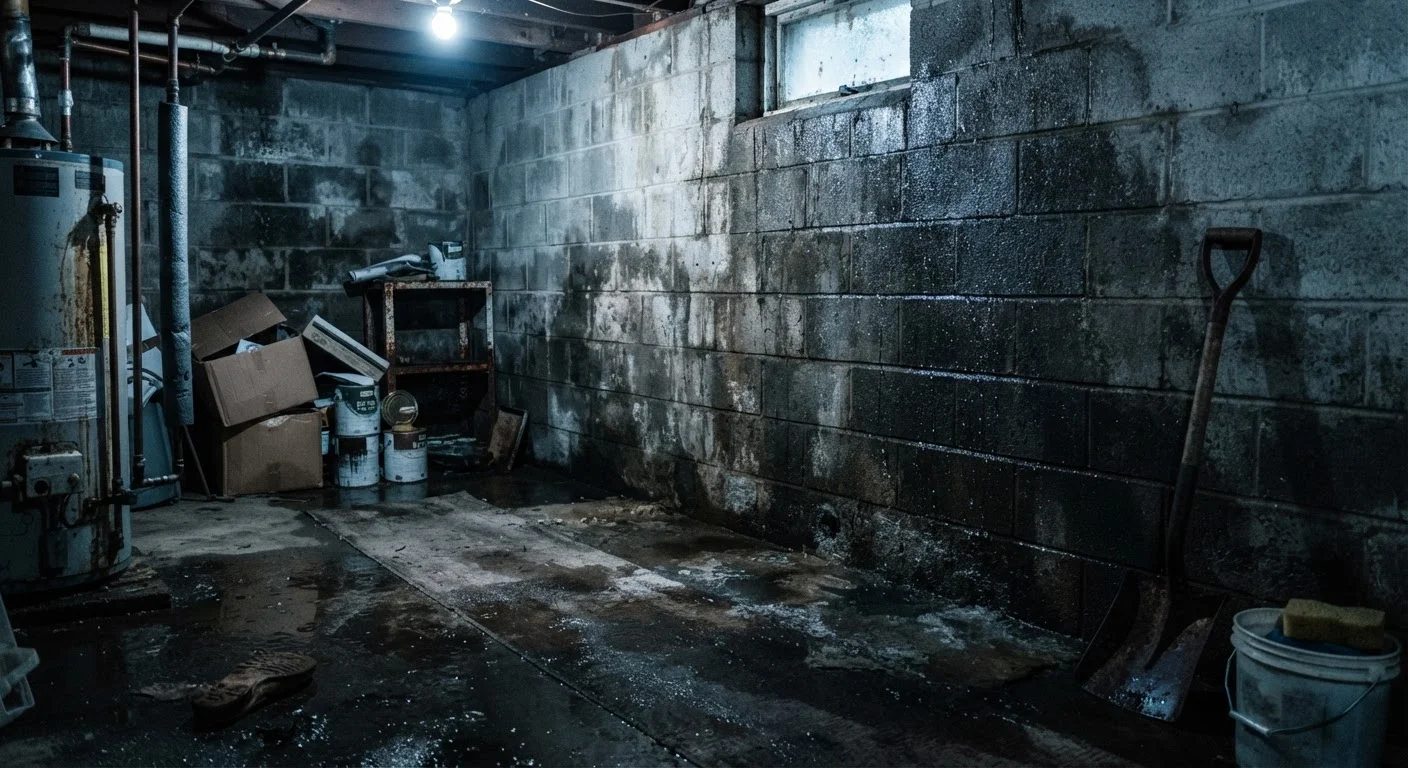
Photo credit: FaqInsider.com
In this article
Moisture below your home can compromise structure, air quality, and insulation. This guide explains sources, warning signs, and control strategies.
Key Takeaways
- Moisture enters basements and crawl spaces through three main pathways: liquid water intrusion, condensation, and vapor diffusion.
- Early warning signs include musty odors, efflorescence on walls, and visible mold or rust stains.
- Chronic dampness can weaken structural wood, degrade insulation, and worsen indoor air quality throughout the home.
- Grading, gutters, vapor barriers, and ventilation are the foundation of effective moisture control.
- Significant water intrusion or mold growth typically requires a licensed professional assessment.
Where Basement and Crawl Space Moisture Comes From
Understanding how moisture gets in is the first step toward keeping it out. There are three distinct pathways, and homes often deal with more than one simultaneously.
Liquid Water Intrusion
This is the most visible source - water physically entering through cracks in foundation walls or floors, gaps around pipes, or window wells that drain poorly. Heavy rain and snowmelt saturate the soil around your foundation, and hydrostatic pressure (the force exerted by water-saturated earth) pushes water inward through even hairline cracks.
Condensation
Warm, humid air from the living space or outdoors meets cooler concrete surfaces and condenses into liquid water - much like a cold glass on a summer day. Crawl spaces are especially prone to this in warm months when humid exterior air flows in through vents and contacts cooler soil and framing.
Vapor Diffusion
Moisture moves through porous materials like concrete and block walls as water vapor, even without visible cracks. The ground beneath a crawl space is a constant source of vapor that will rise into the framing unless a proper vapor barrier is installed.
~60%
Homes with below-grade moisture problems
The American Society of Home Inspectors has estimated that a majority of homes with basements experience some form of below-grade moisture issue.
24-48 hrs
Time for mold to begin growing after water exposure
The U.S. Environmental Protection Agency notes that mold can begin to develop on wet building materials within one to two days under favorable temperature conditions.
Up to 20 gal
Daily moisture from exposed crawl space soil
Building science research indicates that bare soil in an unencapsulated crawl space can release substantial amounts of water vapor into the structure each day, depending on soil conditions and climate.
Warning Signs You Shouldn't Ignore
Moisture problems usually announce themselves well before serious damage sets in. Knowing what to look for lets you act early and keep repairs manageable. Our guide on reading your home like a checklist covers many of these indicators in broader context.
- Musty or earthy odor: A persistent smell is often the first sign of mold or mildew, even before it's visible.
- Efflorescence: White, chalky mineral deposits on concrete walls indicate water has been moving through the material and evaporating, leaving minerals behind.
- Rust stains: Discoloration around anchor bolts, steel posts, or appliances signals chronic dampness.
- Peeling paint or damp insulation: Insulation that feels wet or has fallen away from the crawl space ceiling has lost its effectiveness and may harbor mold.
- Wood rot or soft floor joists: Press a screwdriver gently against exposed wood joists - soft or spongy wood indicates decay from sustained moisture exposure.
- Standing water or wet spots on the floor: Any pooling water after rain requires prompt investigation.
After a heavy rainstorm, walk your basement perimeter within an hour and look for damp spots or seepage - catching the exact entry point while water is actively moving makes diagnosis far easier than inspecting dry walls days later.
Water stains can appear in locations distant from the actual entry point due to how water travels along framing or across floors, so real-time observation is the most reliable diagnostic method.
Before investing in interior waterproofing systems, check that gutters are clean and downspouts discharge well away from the foundation - in many cases, improving exterior drainage alone dramatically reduces or eliminates water entry.
Interior drainage manages water after it enters; correcting exterior drainage reduces the volume of water pressing against your foundation in the first place, which is always the more durable long-term solution.
Risks to Your Home and Health
Left unaddressed, moisture below your home creates a cascade of problems that extend well beyond the basement or crawl space itself.
Structural Damage
Wood framing, floor joists, and sill plates are all vulnerable to rot when persistently damp. Over time, weakened structural members can cause floors to sag, doors and windows to stick, and in severe cases, compromise the load-bearing capacity of your home's frame. For a detailed look at how hidden moisture spreads through wall assemblies, see our article on what happens inside your walls when moisture goes unchecked.
Mold and Air Quality
Mold requires moisture to grow, and it can establish itself on wood, insulation, and drywall within 24-48 hours of water exposure under warm conditions. Because air naturally moves upward through a home (a phenomenon called the stack effect), mold spores and musty odors from a damp basement or crawl space routinely migrate into living areas, affecting the air your household breathes every day.
Insulation and Energy Loss
Wet insulation loses much of its ability to resist heat flow. Crawl space insulation that becomes saturated - whether from condensation or vapor - provides little thermal benefit while adding weight that can cause it to fall and leave gaps in your home's thermal envelope.
Prevention and Control Strategies
Effective moisture management is layered - no single fix addresses every pathway. Work through these strategies from the outside in.
Exterior Grading and Gutters
The soil around your foundation should slope away from the house at a rate of roughly six inches over the first ten feet. Flat or inward-sloping grade directs rainwater toward your foundation. Equally important: keep gutters clean and extend downspouts at least four to six feet from the foundation to discharge water well away from the structure.
Vapor Barriers in Crawl Spaces
A ground-cover vapor barrier - typically 6-mil or heavier polyethylene sheeting - placed over the soil floor of a crawl space significantly reduces moisture vapor rising from the earth. Seams should overlap by at least 12 inches and be taped or weighted. Many building professionals now recommend fully encapsulating crawl spaces (sealing walls and the ground completely) in humid climates.
Interior Drainage and Sump Systems
In basements that experience liquid water intrusion, an interior drainage channel (also called a French drain or perimeter drain) installed at the base of the foundation wall can collect and direct water to a sump pump, which ejects it away from the home. This approach manages water that enters rather than stopping it at the source, but it is highly effective for chronic intrusion.
Dehumidification and Ventilation
A properly sized dehumidifier can help control condensation in a basement. In crawl spaces, the debate between ventilated and sealed (conditioned) designs has evolved - many building science experts now favor sealed crawl spaces in humid regions over traditional passive venting, which can actually introduce more humid air than it removes in summer months. Consult a qualified professional familiar with your local climate when deciding which approach is right for your home.
When to Call a Professional
Some moisture issues are manageable with DIY effort; others require professional assessment and licensed trade work.
Contact a qualified contractor or waterproofing specialist if you observe:
- Cracks in the foundation wall wider than a hairline, especially horizontal cracks in block walls (which can signal lateral soil pressure)
- Any standing water that recurs after rain
- Visible mold covering more than a small, isolated area - remediation of significant mold growth is typically handled by certified mold remediation professionals
- Sagging or soft floor joists that suggest structural rot
For guidance on recognizing when a problem has crossed from maintenance into emergency territory, reading your home's warning signs before they get worse can help you triage what you're seeing.
Always verify whether permits or inspections are required in your municipality before undertaking drainage system installations or major crawl space encapsulation work. Requirements vary by location, and unpermitted work can create complications when you sell your home.
This article is for general informational and educational purposes only. It does not constitute professional engineering, construction, or mold remediation advice. Consult licensed professionals for assessments and work specific to your home and local code requirements.

Author
Home & Garden Editorial Team
Home & Garden Editorial Team is the collective byline for our editorial team and contributor network. Articles published under this byline or an editorial pen name are researched, written, and reviewed according to our editorial standards for clarity, consistency, and independence before publication.
View all articles →