
Flooring Options for High-Traffic Areas: What Holds Up Over Time
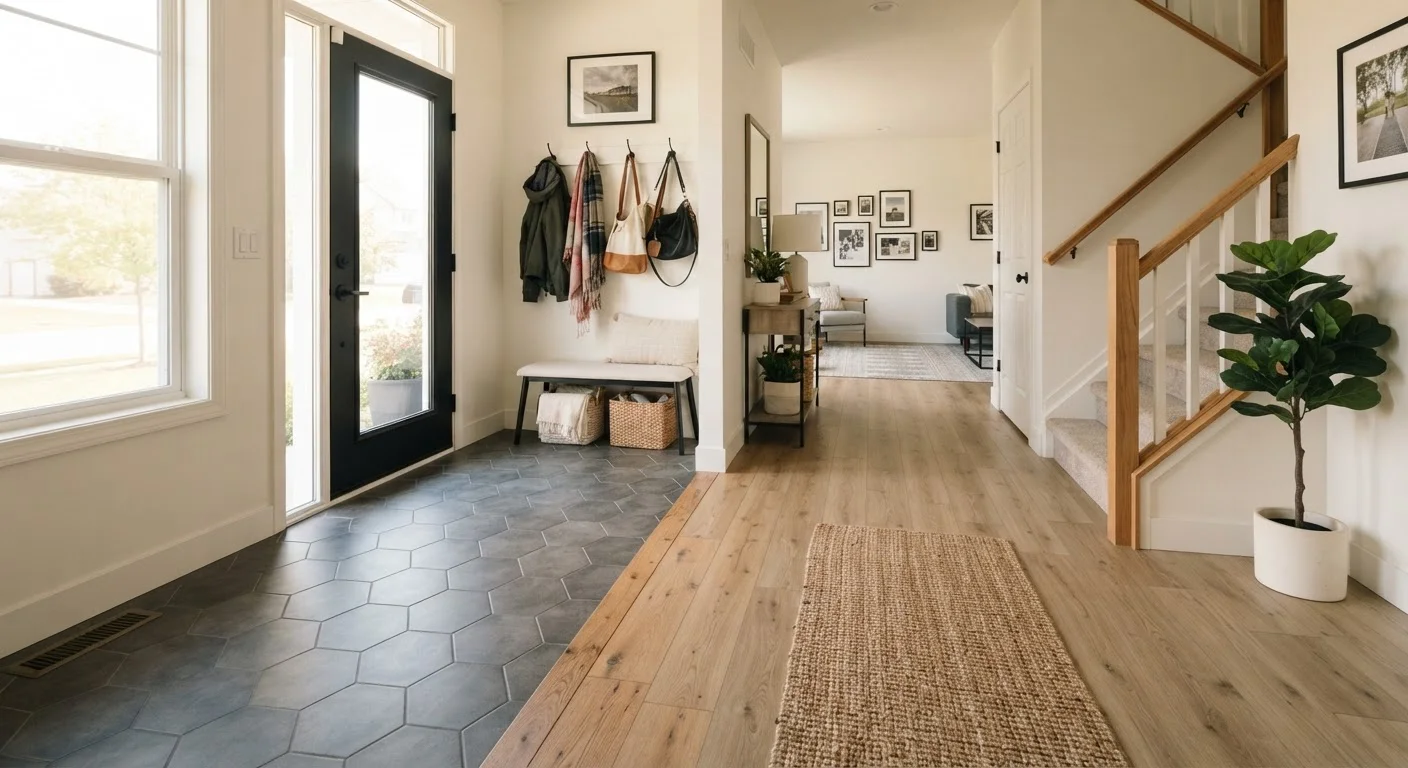
Photo credit: FaqInsider.com
In this article
Hardwood, luxury vinyl, tile, and laminate each perform differently under daily wear. Here's an honest comparison of durability, maintenance, and practical fit.
Key Takeaways
- Luxury vinyl plank (LVP) consistently handles moisture and daily foot traffic with minimal upkeep.
- Porcelain tile is the hardest and most water-resistant option, but grout lines require regular cleaning.
- Solid hardwood can last decades but is vulnerable to scratches, dents, and humidity changes.
- Laminate offers a wood-look aesthetic at a lower price point but cannot be refinished once worn.
- Your household's specific patterns - pets, kids, moisture - should drive the final material choice.
How We're Evaluating These Materials
High-traffic flooring gets judged on four core factors: scratch and dent resistance, moisture tolerance, maintenance demands, and longevity. Each material below is rated across all four, so you can match it to the specific rooms and routines in your home - not just a generic square footage number.
The four contenders covered here are solid hardwood, luxury vinyl plank (LVP), porcelain tile, and laminate. They represent the most common choices American homeowners face today, each with genuine strengths and real trade-offs.
| Hardwood | Luxury Vinyl Plank | Porcelain Tile | Laminate | |
|---|---|---|---|---|
| Scratch Resistance | Moderate (species-dependent) | High (thick wear layer) | Very High | Moderate to High |
| Water/Moisture Tolerance | Low to Moderate | Excellent (100% waterproof) | Excellent | Poor (seams vulnerable) |
| Maintenance Demand | Moderate (refinishing needed) | Low (damp mop only) | Moderate (grout sealing) | Low to Moderate |
| Refinishable | Yes (multiple times) | No | No | No |
| Typical Lifespan (heavy use) | 25-100 years | 15-25 years | 20-50 years | 10-20 years |
| Comfort Underfoot | Warm and solid | Moderate (can feel hollow) | Cold and hard | Moderate |
| Best Room Fit | Living areas, bedrooms | Whole home, wet areas | Kitchens, baths, entries | Living areas, hallways |
Solid and Engineered Hardwood
Hardwood's appeal is understandable: it's timeless, adds warmth, and - when properly maintained - can be refinished multiple times over decades. Engineered hardwood (a real wood veneer over a plywood core) handles humidity swings better than solid planks, making it a smarter pick for ground-floor installations.
The vulnerability is surface hardness. Even harder species like hickory and white oak dent under dropped cast iron or the repeated scrape of chair legs. In a busy entryway or kitchen, expect visible wear within a few years without rugs and felt pads. Refinishing restores the surface, but it's a cost and disruption to plan for - typically every 7-10 years under heavy use.
Protect Hardwood in High-Traffic Zones
Place area rugs at entryways and under dining tables to absorb the majority of foot impact and furniture wear. Apply felt pads to all chair and furniture legs before moving them onto wood floors. Controlling indoor humidity between 35-55% significantly reduces the expansion and contraction that leads to gaps and warping over time.
Luxury Vinyl Plank (LVP)
LVP has become a dominant choice in high-traffic remodels for good reason. Its wear layer - measured in mils, with 12 mil or higher recommended for busy households - resists scratches from pet claws and furniture far better than wood. It's 100% waterproof, installs as a floating floor without adhesive in most cases, and requires only damp mopping to clean.
The trade-off is feel underfoot and heat sensitivity. Cheap LVP can feel hollow and flex noticeably. In rooms with significant direct sunlight, some products may expand or discolor over time - check manufacturer specs for UV ratings before buying. LVP cannot be refinished; once the wear layer is gone, the floor needs replacing. For more on how material longevity compares across surface types, see our material-by-material flooring breakdown.
Porcelain Tile
In terms of raw hardness and water resistance, porcelain tile tops this list. It won't scratch, dent, or absorb moisture - properties that make it ideal for mudrooms, laundry rooms, kitchens, and bathrooms. Glazed porcelain with a PEI rating of 4 or 5 handles the heaviest residential foot traffic comfortably.
The challenge is the grout lines. Unsealed grout traps dirt and stains quickly in high-traffic areas. Sealing grout annually and using darker grout colors are practical strategies to reduce visible soiling. Tile is also cold and hard underfoot, and cracked tiles - from subfloor flex or heavy impacts - require professional repair rather than a simple swap.
Laminate: The Budget-Friendly Wood Look
Laminate's photographic top layer convincingly mimics hardwood or stone at a significantly lower installed cost. Modern laminate with an AC3 or AC4 abrasion rating handles everyday scuffs and foot traffic well in living areas and hallways.
Its critical weakness is moisture. Water that seeps into seams causes swelling and warping that cannot be repaired - only replaced. This makes laminate a poor fit for kitchens, bathrooms, or below-grade installations. It also cannot be refinished, so once the surface layer degrades, replacement is the only option.
If you're weighing similar trade-offs for exterior surfaces, the comparison logic mirrors what you'll find in our deck materials guide - where cost, durability, and maintenance each pull in different directions depending on the environment.
Never Install Laminate in Wet Areas
Laminate flooring is not rated for rooms with standing water risk, including bathrooms, laundry rooms, or below-grade basements. Even small, repeated moisture exposures at seams can cause irreversible swelling. Once laminate warps from water damage, the affected planks must be fully replaced - there is no repair option.

Author
Home & Garden Editorial Team
Home & Garden Editorial Team is the collective byline for our editorial team and contributor network. Articles published under this byline or an editorial pen name are researched, written, and reviewed according to our editorial standards for clarity, consistency, and independence before publication.
View all articles →