
The Real Difference Between Contractor-Grade and DIY-Grade Materials
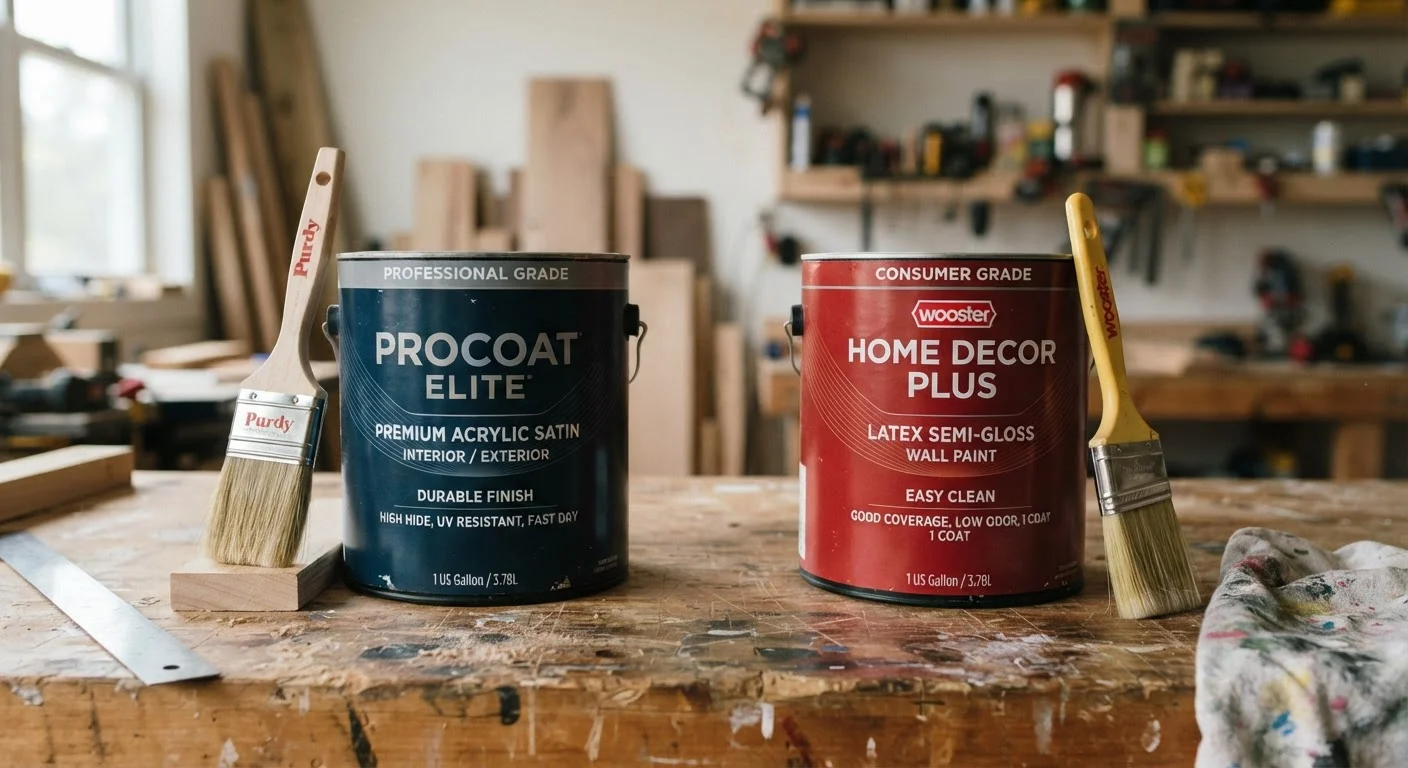
Photo credit: FaqInsider.com
In this article
Material quality affects longevity, finish, and safety. Understand what separates professional-specification products from consumer versions before your next project.
Key Takeaways
- Contractor-grade materials typically have higher concentrations of active ingredients, making them more durable but sometimes harder to apply correctly.
- DIY-grade products trade peak performance for forgiveness - they're easier to use but may require more frequent maintenance or replacement.
- The right choice depends on the scope, location, and expected lifespan of your project, not just upfront cost.
- For structural, electrical, or code-governed work, using specified materials is a safety and legal requirement - not a preference.
- Mixing grades within a single project can undermine the performance of the higher-quality component.
What Actually Separates the Two Categories
Walk down any home improvement store aisle and you'll find products aimed at weekenders alongside those used by professional crews daily. The difference isn't always obvious from the packaging, but it runs deeper than branding.
Contractor-grade materials are engineered to perform under sustained, demanding conditions - repeated use, varied weather exposure, and compatibility with professional application equipment. DIY-grade products are formulated to be forgiving: easier to spread, quicker to set, and tolerant of the small inconsistencies that come with infrequent use.
Key technical differences often include:
- Solids content: Professional paints and coatings typically contain a higher percentage of solids, meaning more actual pigment and resin deposited per coat, resulting in better coverage and durability.
- Fiber and filler density: In patching compounds, joint compounds, and adhesives, professional formulations often carry higher-density additives that resist cracking under stress.
- Cure characteristics: Contractor-grade products may require specific temperature ranges or curing times to perform correctly - conditions a professional controls but a homeowner may not.
- Dimensional tolerances: Lumber graded for structural use carries tighter tolerances for straightness, moisture content, and load-bearing specs than boards pulled from a standard retail stack.
30-50%
Higher solids content typical in professional paints
Paint manufacturers' technical data sheets commonly show professional-grade interior paints carrying 45-55% solids by volume versus 30-40% in many consumer-grade equivalents.
2-3x
Longer rated service life for professional sealants
Contractor-specification caulks and sealants are often rated for 25-50 year service life, compared to 10-15 years for standard consumer products in the same application category.
~40%
Of DIY projects involve a material-related rework
Industry surveys of home improvement professionals suggest a significant share of remediation calls involve consumer-grade materials used in applications that warranted a higher specification.
Where the Gap Matters Most
For a decorative weekend project - painting an accent wall, patching a small drywall nick - the grade gap is narrow and often irrelevant. But in several categories, it becomes a genuine concern.
Exterior and Weatherproofing Applications
Decking materials, exterior coatings, roofing underlayments, and waterproofing membranes are subjected to years of UV exposure, freeze-thaw cycles, and moisture. Contractor-grade products in these categories are typically tested to longer durability benchmarks. See our guide to deck materials for a concrete example of how specification grade affects long-term performance and maintenance requirements.
Structural and Load-Bearing Work
Fasteners, structural lumber, concrete mix, and framing hardware all carry strength ratings. Using a consumer-grade equivalent in a structural context isn't just a performance question - it can be a code violation and a safety issue. For work involving structural elements, electrical systems, or gas lines, local building codes commonly specify minimum material grades, and inspectors will check. Our article on DIY repairs vs. licensed contractors covers where homeowners typically hit that regulatory boundary.
Adhesives, Caulks, and Sealants
Professional-specification caulks often have higher elongation ratings - meaning they flex more without cracking as a house moves seasonally. A consumer caulk that looks identical on the shelf may fail significantly sooner around windows, doors, or plumbing penetrations.
Ask for the Product Data Sheet
Before purchasing any material for a significant project, download or request the manufacturer's technical data sheet (TDS). This document lists actual performance metrics - solids content, elongation, compressive strength, or load ratings - rather than marketing language. Comparing TDS values between products is the most reliable way to understand what you're actually buying.
Making the Right Call for Your Project
The goal isn't to always use the most expensive material - it's to match material specification to project demand. A useful mental framework:
- Determine the exposure and lifespan expectation. A painted garden bench tolerates a different spec than exterior trim on a house. The longer you need it to last and the harsher the conditions, the more the grade gap matters.
- Check whether the application is code-governed. Any project requiring a permit - decks, additions, electrical, roofing - will have material specifications built into the code. Don't guess; verify with your local building department.
- Honestly assess your application skill. Some contractor-grade products are genuinely harder to apply correctly. An imperfectly applied professional product can underperform a properly applied consumer one. Our skill assessment guide helps you think through this honestly before committing to a project approach.
- Read the product data sheet, not just the label. Manufacturers publish technical data sheets (TDS) with actual performance specs. These are more reliable than marketing language for making grade comparisons.
Understanding material grades is one part of a larger picture. A balanced look at when DIY makes sense can help you weigh the full picture - tools, time, skill, and material costs - before you start.
Frequently Asked Questions

Author
Home & Garden Editorial Team
Home & Garden Editorial Team is the collective byline for our editorial team and contributor network. Articles published under this byline or an editorial pen name are researched, written, and reviewed according to our editorial standards for clarity, consistency, and independence before publication.
View all articles →