
The Real Costs of Deferred Home Maintenance
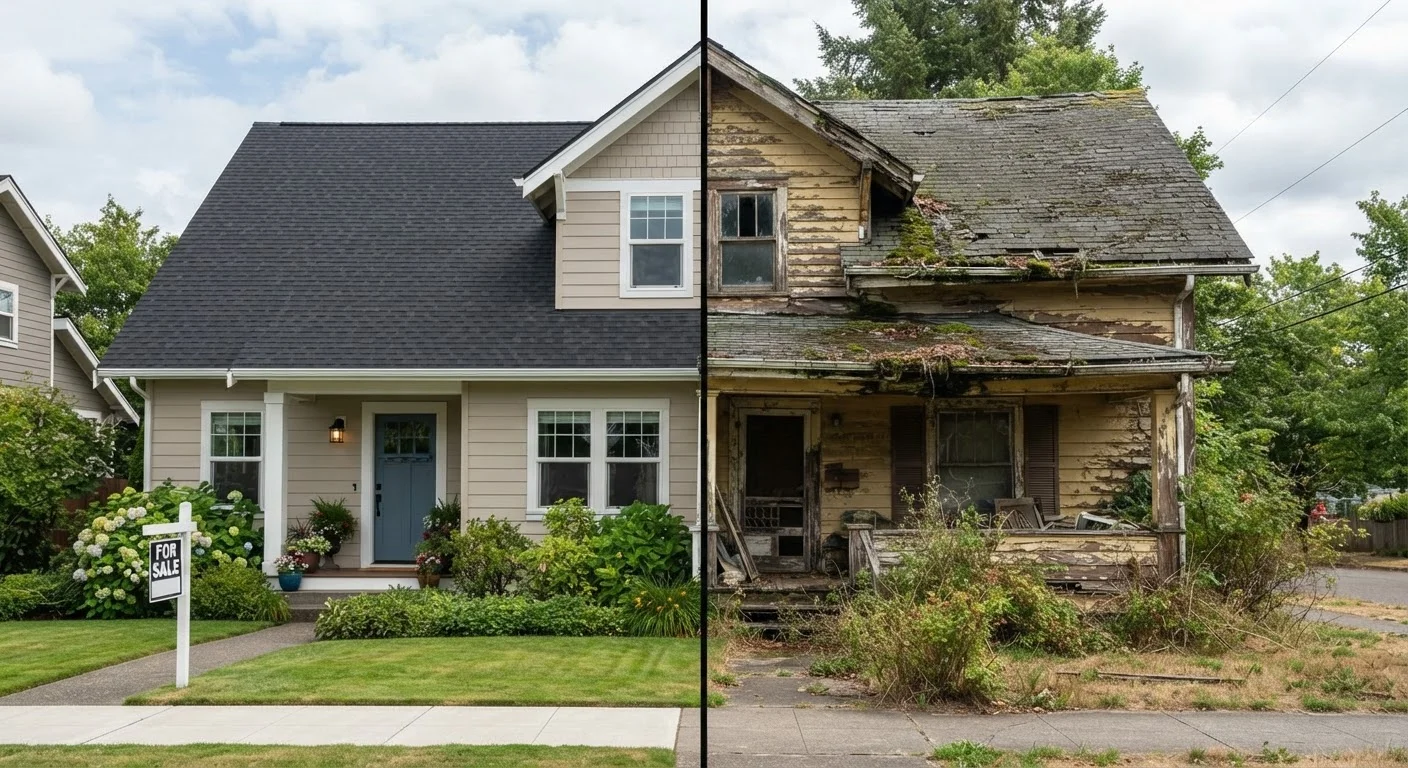
Photo credit: FaqInsider.com
In this article
Skipping routine upkeep rarely saves money. Explore how delayed maintenance compounds into far more expensive repairs over time.
Key Takeaways
- Deferred maintenance rarely saves money - it typically multiplies repair costs over time.
- Water intrusion from neglected roofs or gutters is one of the most destructive and preventable home problems.
- A structured maintenance schedule helps homeowners catch problems while they are still inexpensive to fix.
- Some deferred maintenance can affect home resale value and homeowner's insurance coverage.
- Budgeting roughly 1-2% of your home's value annually for upkeep is a commonly cited general guideline.
Frees up cash for immediate financial priorities
When money is genuinely tight, postponing a non-urgent repair allows a household to address more pressing expenses without taking on debt. This can be a reasonable short-term trade-off when the deferred task carries low immediate risk.
Allows time to research and plan repairs properly
Rushing a repair to avoid a perceived deadline can lead to poor contractor choices or cutting corners on materials. A brief delay sometimes allows for better vetting and more informed decision-making.
Bundling work can reduce overall labor costs
Scheduling several related repairs together - such as roof work alongside gutter replacement - often costs less than hiring separately for each project. Strategic delay can make financial sense in these situations.
Minor issues escalate into major structural damage
A small roof leak or cracked caulk around a window can allow water to infiltrate walls, insulation, and framing over time. What begins as a modest repair can become a multi-thousand-dollar remediation project.
Mold and moisture damage compound quickly
Mold can establish itself within 24-48 hours of persistent moisture exposure. Remediation in enclosed spaces like wall cavities or attics is significantly more expensive and disruptive than the original repair would have been.
HVAC and systems failure increases energy costs
A poorly maintained furnace, air conditioner, or duct system works harder and less efficiently, driving up utility bills. Neglected filters and coils also shorten system lifespan, bringing replacement costs forward sooner.
Deferred maintenance can affect home resale value
Home inspectors will flag deferred maintenance items, which gives buyers leverage to negotiate price reductions or walk away entirely. A pattern of neglect can reduce a home's appraised value and complicate financing.
Some insurance claims may be denied due to neglect
Homeowner's insurance policies commonly exclude damage attributed to lack of maintenance or gradual deterioration. A claim denied on these grounds leaves the homeowner fully responsible for repair costs.
What Deferred Maintenance Actually Means
Deferred maintenance refers to upkeep tasks that are knowingly postponed, typically due to cost, time constraints, or simply not recognizing the urgency. It ranges from small jobs - like resealing a window frame or replacing a worn weatherstrip - to larger work such as re-roofing or repairing a deteriorating deck.
The challenge is that most homes don't signal a problem loudly until significant damage has already occurred. A slow roof leak may drip quietly into insulation for months before it stains a ceiling. By that point, the issue has often grown from a few hundred dollars of flashing repair into a project involving drywall, mold remediation, and potentially structural framing - a situation explored in detail in our article on how neglected tasks compound into costly repairs.
Understanding this compounding dynamic is the foundation of any honest conversation about deferred maintenance costs.
The Case for Waiting: When Delay Has Real Logic
Framing deferred maintenance as purely irresponsible misses some important nuance. There are legitimate circumstances where delaying work makes sense.
Frees up cash for immediate financial priorities
When money is genuinely tight, postponing a non-urgent repair allows a household to address more pressing expenses without taking on debt. This can be a reasonable short-term trade-off when the deferred task carries low immediate risk.
Allows time to research and plan repairs properly
Rushing a repair to avoid a perceived deadline can lead to poor contractor choices or cutting corners on materials. A brief delay sometimes allows for better vetting and more informed decision-making.
Bundling work can reduce overall labor costs
Scheduling several related repairs together - such as roof work alongside gutter replacement - often costs less than hiring separately for each project. Strategic delay can make financial sense in these situations.
For example, a homeowner who has just faced an emergency expense may have no realistic alternative but to prioritize. Similarly, some repairs genuinely benefit from bundling - replacing a roof at the same time as upgrading attic insulation can reduce overall labor costs. And not every aging component fails on the same timeline; understanding the difference between cosmetic wear and structural risk requires judgment, not a rigid schedule.
The Real Price of Putting It Off
Despite the cases where delay is understandable, the financial and structural costs of chronic deferred maintenance are well-documented.
Minor issues escalate into major structural damage
A small roof leak or cracked caulk around a window can allow water to infiltrate walls, insulation, and framing over time. What begins as a modest repair can become a multi-thousand-dollar remediation project.
Mold and moisture damage compound quickly
Mold can establish itself within 24-48 hours of persistent moisture exposure. Remediation in enclosed spaces like wall cavities or attics is significantly more expensive and disruptive than the original repair would have been.
HVAC and systems failure increases energy costs
A poorly maintained furnace, air conditioner, or duct system works harder and less efficiently, driving up utility bills. Neglected filters and coils also shorten system lifespan, bringing replacement costs forward sooner.
Deferred maintenance can affect home resale value
Home inspectors will flag deferred maintenance items, which gives buyers leverage to negotiate price reductions or walk away entirely. A pattern of neglect can reduce a home's appraised value and complicate financing.
Some insurance claims may be denied due to neglect
Homeowner's insurance policies commonly exclude damage attributed to lack of maintenance or gradual deterioration. A claim denied on these grounds leaves the homeowner fully responsible for repair costs.
Water is the most common culprit. Clogged gutters divert water toward a home's foundation, where it can cause settling and cracking over years. A neglected roof allows moisture into the attic, which creates conditions for mold and rot. These aren't hypothetical outcomes - they are the scenarios that contractors encounter repeatedly in homes where upkeep was postponed season after season.
For a practical framework to avoid these situations, our month-by-month home maintenance calendar walks through exactly what to check and when. Staying ahead of the schedule is almost always cheaper than reacting to a failure.
1-2%
Recommended annual maintenance budget
Housing professionals commonly suggest budgeting 1-2% of a home's value per year for maintenance, though actual needs vary widely by home age and condition.
24-48 hrs
Time for mold to establish after moisture exposure
According to the U.S. Environmental Protection Agency, mold can begin to grow on wet building materials within one to two days under the right conditions.
Financial Planning: Maintenance as a Budget Line
One reason deferred maintenance accumulates is that homeowners don't plan for upkeep costs in advance. A commonly cited rule of thumb among housing professionals suggests setting aside roughly 1-2% of your home's value each year for maintenance - though this varies significantly by home age, condition, and region. An older home with original systems will generally require more attention than a newer build.
Treating maintenance as a recurring budget item - rather than an unexpected expense - changes the decision-making calculus. It also connects directly to broader financial preparedness: building an emergency fund that covers both unexpected life events and home systems is sound planning. The Saving & Emergency Funds hub offers useful context on structuring those reserves.
Homeowners should also be aware that some insurance policies include exclusions for damage resulting from neglect. Documenting maintenance work and keeping records of inspections and repairs is a straightforward habit that can matter significantly when filing a claim.
Permits and Professional Licenses Matter
Some deferred maintenance - particularly involving electrical systems, gas lines, structural elements, or plumbing tied to the main supply - may require permits or licensed contractors to repair legally and safely. Before starting or hiring for significant work, verify what your local jurisdiction requires. Unpermitted repairs can create complications during resale and may not meet current safety codes.
Making a Practical Maintenance Plan
The most effective response to deferred maintenance risk isn't panic - it's a prioritized, realistic plan. Start by identifying deferred tasks currently on your list and categorizing them by urgency: what involves water, structural safety, or active system failure should come first. Cosmetic issues can generally wait.
From there, get at least one professional assessment of high-stakes systems - roof, HVAC, plumbing, and foundation - before deciding on sequencing. For guidance on where to allocate funds when money is limited, see our article on planning renovation priorities on a budget. And if plumbing is on your list, it's worth reviewing common plumbing maintenance myths first - many well-meaning habits actually cause damage.
A steady, scheduled approach to upkeep protects both the home and the household budget far more reliably than reactive repairs ever can.

Author
Home & Garden Editorial Team
Home & Garden Editorial Team is the collective byline for our editorial team and contributor network. Articles published under this byline or an editorial pen name are researched, written, and reviewed according to our editorial standards for clarity, consistency, and independence before publication.
View all articles →