
Companion Planting: Which Garden Pairings Work and Which Don't
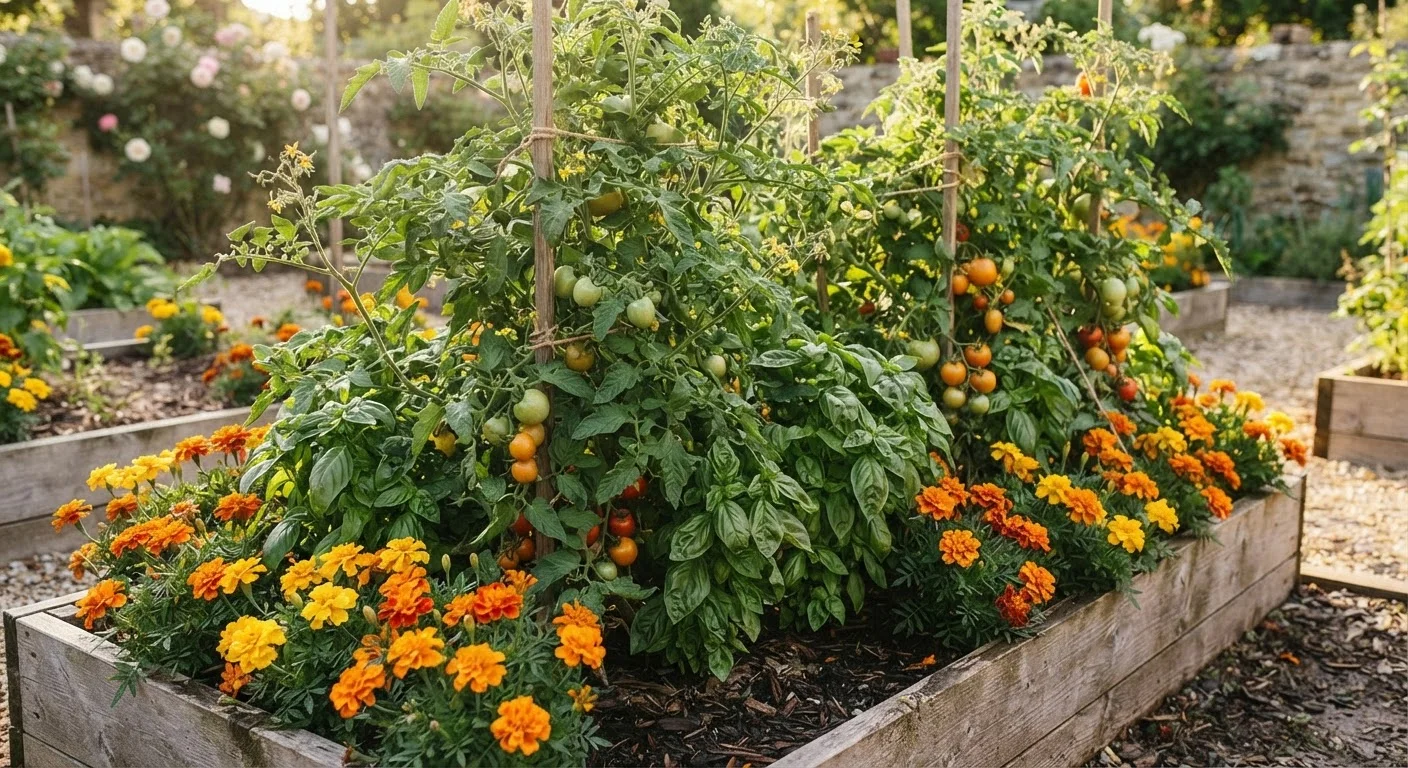
Photo credit: FaqInsider.com
A curated look at well-supported companion planting combinations, what the science says, and a few popular pairings that may be overrated.
Key Takeaways
- Some companion planting pairings have solid research support; others rely mainly on gardening folklore.
- The Three Sisters - corn, beans, and squash - is one of the best-documented productive combinations.
- Marigolds offer measurable pest-deterrent benefits, but proximity and species matter significantly.
- Certain pairings, like fennel near most vegetables, can actively inhibit neighboring plant growth.
- Soil conditions, climate, and garden scale all influence whether a companion pairing succeeds.
- Testing pairings in small sections before committing your whole garden bed reduces risk.
What Companion Planting Actually Means
Companion planting is the practice of growing two or more plant species in close proximity, with the expectation that one or both will benefit. Benefits can include improved pollination, natural pest deterrence, better soil nutrition, or efficient use of garden space. The concept draws from both traditional agricultural knowledge and, more recently, scientific research - though the two don't always agree.
It's worth being honest upfront: not every popular companion planting pairing has robust scientific backing. Some combinations are well-supported by field research and horticultural practice; others are garden lore that sounds convincing but hasn't held up under controlled conditions. This list aims to separate the two as clearly as possible, so you can make planting decisions with a clearer picture of what to expect.
If you're working with limited space, companion planting can be especially practical - see our guide to container gardening for ideas on applying these principles even in small pots and balcony setups.
Tomatoes and Basil
This is perhaps the most widely cited companion pairing in home gardening, and it has some support - though less than its fame might suggest. Basil has been shown in some studies to repel thrips and potentially aphids when planted near tomatoes. Certain basil compounds appear to have insect-deterrent properties, and many gardeners report healthier tomato plants when basil is interplanted.
However, controlled research on yield improvements is inconsistent. The pairing almost certainly doesn't hurt, and basil benefits from similar growing conditions - full sun, warm temperatures, regular water - making them practical neighbors regardless. Plant basil close enough to tomato stems (within 12 to 18 inches) for any deterrent effect to be meaningful.
Basil and tomatoes share ideal growing conditions, making them practical neighbors even if benefits are modest.
The Three Sisters: Corn, Beans, and Squash
Originating with Indigenous agricultural traditions of North America, the Three Sisters combination is one of the most well-documented productive companion systems. Corn provides vertical structure for beans to climb, beans fix atmospheric nitrogen into the soil - benefiting both corn and squash - and squash sprawls along the ground, shading out weeds and retaining soil moisture.
Research has consistently supported this system's efficiency in terms of space use and soil health. It works best in larger beds where corn can be planted in blocks (rather than single rows) for adequate pollination. It's one of the few companion combinations where all three partners demonstrably benefit.
The Three Sisters is one of the most research-supported productive companion systems in home gardening.
Marigolds Near Vegetable Crops
French marigolds (Tagetes patula) have earned their reputation, at least partially. Research has shown that they release compounds from their roots that suppress certain nematodes - microscopic soil-dwelling pests that damage root systems. For this effect to work, marigolds need to be densely planted and grown for a full season in the affected area.
Marigolds also attract beneficial insects and may deter whiteflies when planted alongside tomatoes in greenhouse conditions. Their effectiveness in open outdoor gardens is more variable. Species matters: French marigolds perform better in this role than African marigolds (Tagetes erecta). Interplant them at the edges of beds and throughout rows, not just as a decorative border.
French marigolds suppress soil nematodes when planted densely, but species and density both matter for results.
Fennel: Keep It Isolated
Fennel is one of the clearest examples of a plant that actively harms its neighbors. It releases allelopathic compounds - chemicals that inhibit the germination and growth of nearby plants - and is generally considered incompatible with most vegetables, including tomatoes, peppers, and beans. Even other herbs tend to struggle near fennel.
If you want to grow fennel, give it its own container or a dedicated corner of the garden away from your main beds. It's a beneficial plant for attracting pollinators and predatory insects, so it still earns a place in the garden - just not as a companion. This is a case where a widely grown plant genuinely doesn't play well with others, and the evidence is fairly consistent.
Fennel releases chemicals that inhibit neighboring plants - grow it in isolation, not among your vegetables.
Carrots and Onions: Folklore with Mixed Evidence
The idea that carrots and onions repel each other's pests - carrot fly and onion fly - is popular in companion planting guides. The theory is that the strong scent of each masks the other from egg-laying insects. In practice, the evidence is weak. Controlled studies have generally not confirmed meaningful protection, and pest pressure varies widely by region and season.
That said, these crops share similar spacing needs and don't appear to inhibit each other's growth, so planting them together doesn't hurt. If pest pressure is your concern, physical row covers and crop rotation tend to be more reliably effective tools. It's a good example of a pairing that's harmless but may be overrated as a pest solution.
Carrots and onions coexist without conflict, but their pest-deterrent reputation is not strongly supported by research.
Nasturtiums as Trap Crops
Nasturtiums are frequently recommended as aphid repellents, but the mechanism is more nuanced - they tend to act as trap crops rather than deterrents. Aphids are often attracted to nasturtiums and cluster on them, which can draw pests away from more valuable plants nearby. This can be a useful strategy, but it requires monitoring: if aphid populations on nasturtiums become very large, beneficial predators like ladybugs may not keep pace, and infestations can spread.
Used intentionally and monitored regularly, nasturtiums are a low-cost, edible addition to the garden that provides some practical pest management value. They also attract pollinators and are easy to grow from seed, making them a reasonable investment even if they don't function as a perfect shield.
Nasturtiums attract aphids away from valuable crops - a useful trap crop strategy when actively monitored.
Putting It Into Practice
Companion planting works best when approached as an experiment rather than a guarantee. Start by testing one or two new pairings in a dedicated section of your garden while keeping a control area planted as usual. Note germination rates, pest pressure, and overall plant vigor across the growing season before drawing conclusions.
Start Small and Track Your Results
Before reorganizing your entire garden around companion planting, dedicate a small test bed to a new pairing for one full growing season. Keep basic notes on pest activity, plant size, and harvest yield compared to your standard beds. Real-world observations in your specific soil and climate are more useful than general guides.
Keep in mind that regional climate, soil type, and microclimate - things like a fence that blocks afternoon sun or a nearby downspout that keeps soil wetter - can all shift outcomes significantly. A pairing that thrives in a humid Southern garden may behave differently in a dry Western climate. If you're interested in building a garden that requires less intervention overall, our article on native plants for a low-maintenance yard covers a complementary strategy worth considering alongside companion planting.

Author
Home & Garden Editorial Team
Home & Garden Editorial Team is the collective byline for our editorial team and contributor network. Articles published under this byline or an editorial pen name are researched, written, and reviewed according to our editorial standards for clarity, consistency, and independence before publication.
View all articles →