
Drip Irrigation vs. Sprinkler Systems for Home Gardens
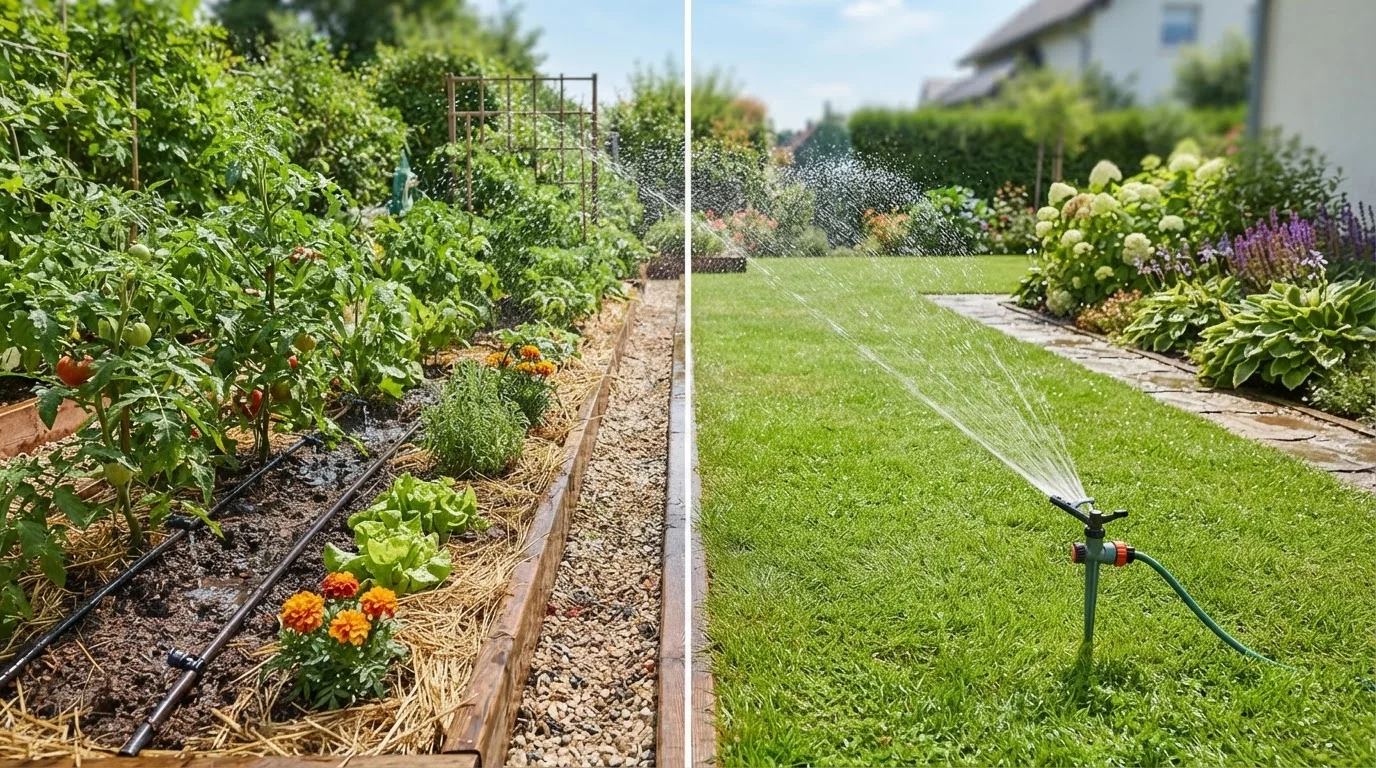
Photo credit: FaqInsider.com
In this article
A side-by-side look at drip irrigation and sprinkler systems — covering water efficiency, plant types, installation complexity, and upkeep.
Key Takeaways
- Drip irrigation delivers water directly to plant roots, reducing evaporation and minimizing weed growth.
- Sprinkler systems are better suited for large lawns and open ground-cover areas needing broad, even coverage.
- Drip systems typically use significantly less water than sprinklers for the same garden area.
- Installation complexity and upfront cost vary considerably between the two approaches.
- The right choice depends on your plant types, garden layout, climate, and how much hands-on maintenance you want.
How Each System Works
Understanding what separates these two watering approaches helps you make the right call for your yard before spending a dollar on materials.
Drip irrigation delivers water slowly and directly to the root zone of individual plants through a network of flexible tubing, emitters, and micro-sprayers laid on or just below the soil surface. Because water goes precisely where plants need it, very little is lost to evaporation or runoff.
Sprinkler systems distribute water in a wide spray pattern above the ground - either through fixed pop-up heads, rotating rotors, or oscillating sprinklers. This makes them ideal for uniform coverage over grass and other densely planted surfaces, but far less precise for individual plants in mixed beds.
Both can be set up with timers and automated controls, but their mechanics - and the problems they're best at solving - differ significantly.
Water Efficiency: A Clear Winner Emerges
Water efficiency is where drip irrigation has a meaningful edge. By targeting the root zone and running slowly, drip systems lose little water to wind drift, misting, or leaf interception. Sprinklers, particularly in warm or windy conditions, can lose a notable portion of output to evaporation before it ever reaches the soil.
30-50%
Water savings with drip vs. sprinkler
The U.S. Environmental Protection Agency (EPA) notes that drip irrigation can be 30 to 50 percent more efficient than conventional sprinkler systems when properly installed.
50%
Outdoor water use on landscapes
According to the EPA's WaterSense program, roughly 50 percent of residential outdoor water use goes to landscape irrigation across the United States.
That said, efficiency depends heavily on proper setup. A poorly calibrated sprinkler system with overlapping zones or misaligned heads can waste just as much water as hand-watering with a hose. Regularly checking for clogged emitters in a drip system - and adjusting sprinkler heads seasonally - keeps either system performing well.
If your region has seasonal water restrictions or you're working to lower your outdoor water use, drip irrigation is generally the more conservation-friendly choice. For more on how watering decisions affect plant health, see our guide on why overwatering harms gardens.
Best Plant Types and Garden Settings
The plants you're growing - and how they're arranged - should heavily influence your system choice.
Drip irrigation works well for:
- Vegetable gardens and raised beds
- Flower borders and perennial beds
- Fruit trees, shrubs, and hedges
- Container gardens (with dedicated emitters per pot)
- Sloped areas where runoff is a concern
Sprinkler systems work well for:
- Established turfgrass lawns
- Ground covers planted in dense, uniform sweeps
- Large open areas where laying tubing isn't practical
- Newly seeded or overseeded lawn areas
Many gardeners find that using both systems - drip lines for planting beds and sprinklers for lawn areas - gives them the best of both. If you're gardening in containers or on a patio, see container gardening watering strategies for targeted advice.
| Drip Irrigation | Sprinkler System | |
|---|---|---|
| Water Efficiency | High - targets root zone directly | Moderate - some evaporation loss |
| Best For | Beds, vegetables, trees, containers | Lawns, large open ground areas |
| Installation Complexity | Low to moderate for small areas | Moderate to high for in-ground systems |
| Upfront Cost (DIY) | Generally lower for basic setups | Higher for in-ground installations |
| Weed Promotion | Low - soil between plants stays dry | Higher - broad coverage wets more soil |
| Seasonal Maintenance | Emitter flushing, tubing checks | Winterization, head alignment |
| Scalability | Easily expanded zone by zone | Requires planning for added zones |
Installation, Cost, and Upkeep
Neither system is especially difficult for a motivated homeowner to install, but the complexity differs.
Drip systems often start with a simple kit: a backflow preventer, filter, pressure regulator, mainline tubing, and emitters. For a modest vegetable garden or small bed, this can be a straightforward weekend project. Expanding coverage across a larger property - routing tubing around obstacles, adjusting emitter flow rates for different plant types - takes more planning.
Sprinkler systems, particularly in-ground versions with buried lateral lines and pop-up heads, typically require more excavation and precise zone planning. While surface-mounted oscillating or hose-end sprinklers require almost no installation effort, in-ground systems are often best assessed or installed with input from a licensed irrigation professional, especially when connecting to a home's main water supply or dealing with local permit requirements. Always verify local codes before beginning any in-ground work.
Maintenance for drip systems means flushing lines periodically, checking for clogged or damaged emitters, and protecting tubing from UV degradation. Sprinkler systems need seasonal winterization in cold climates, head adjustments as landscaping changes, and monitoring for broken or misaligned heads. Both reward a little routine attention. For additional lawn watering guidance, see common lawn watering myths.
Start Small to Test the System
If you're new to drip irrigation, begin with a single raised bed or planting border before expanding to your whole yard. This lets you learn how to adjust emitter flow rates, identify clogging points, and understand your water pressure - all without overcommitting. Most drip kits are modular, so scaling up later is straightforward once you're comfortable with the basics.

Author
Home & Garden Editorial Team
Home & Garden Editorial Team is the collective byline for our editorial team and contributor network. Articles published under this byline or an editorial pen name are researched, written, and reviewed according to our editorial standards for clarity, consistency, and independence before publication.
View all articles →