
Drip Irrigation vs. Sprinkler Systems for Home Gardens
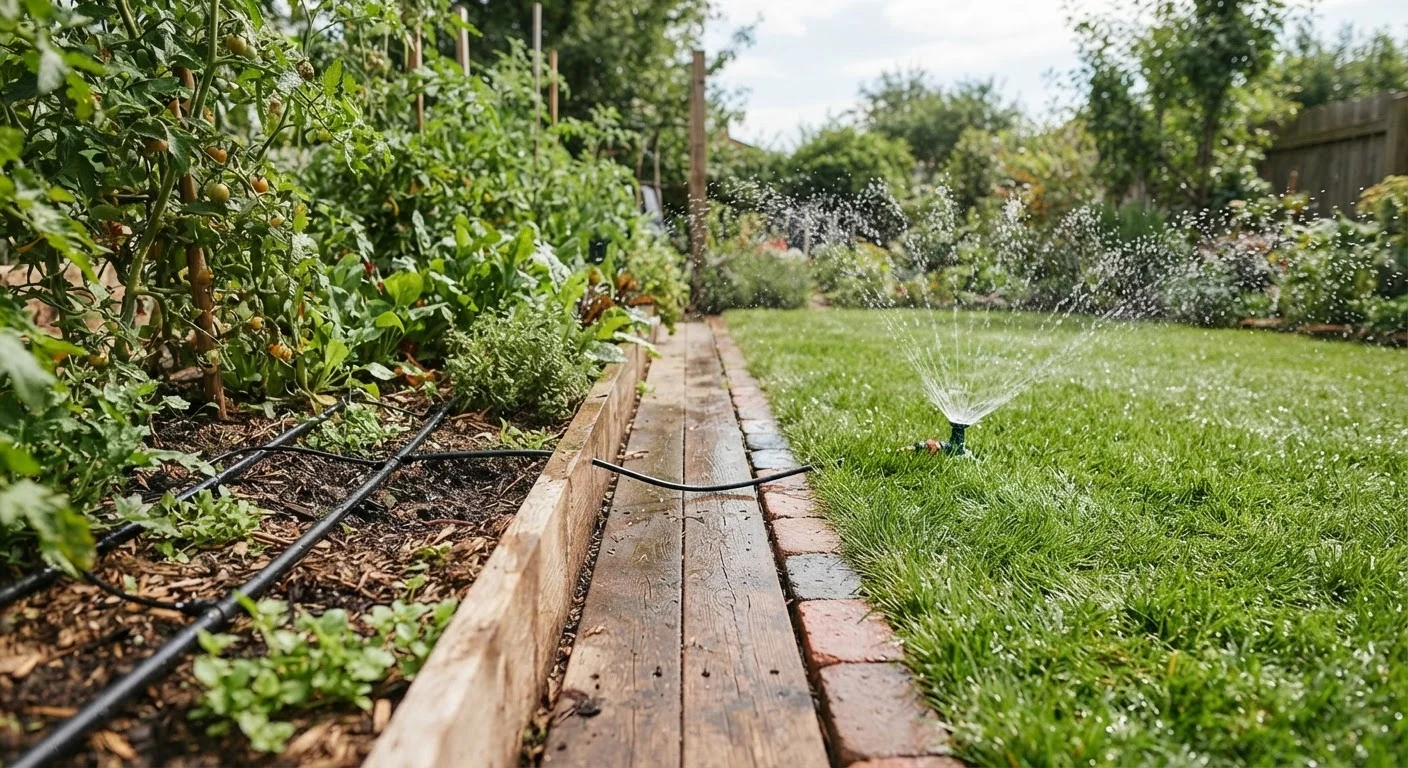
Photo credit: FaqInsider.com
In this article
Compare drip irrigation and sprinkler systems across water efficiency, installation, cost, and plant type to find what suits your yard.
Key Takeaways
- Drip irrigation delivers water directly to plant roots, reducing evaporation and weed growth.
- Sprinkler systems cover large areas quickly but can lose significant water to evaporation and wind drift.
- Drip systems suit vegetable beds, shrubs, and trees; sprinklers work best for lawns and open ground cover.
- Installation complexity and upfront cost differ significantly between the two systems.
- The right choice depends on your garden layout, plant types, water rates, and maintenance tolerance.
How Each System Works
Understanding the mechanics behind each system makes it easier to judge which fits your yard's needs.
Drip irrigation uses a network of tubes and emitters laid on or just below the soil surface. Water seeps out slowly - typically at 0.5 to 4 gallons per hour per emitter - delivering moisture directly to the root zone. Because water never reaches the foliage, disease pressure from leaf wetness is reduced. Systems can be gravity-fed from a rain barrel or connected to a standard outdoor faucet.
Sprinkler systems pressurize water through a main supply line and distribute it through pop-up heads, rotary nozzles, or oscillating arms placed above ground. They broadcast water over a wide surface area, making them well-suited for turf. In-ground systems are typically divided into programmable zones controlled by a timer and solenoid valves.
| Drip Irrigation | Sprinkler System | |
|---|---|---|
| Water Efficiency | ~90% or higher | 65-75% typical |
| Best For | Beds, shrubs, vegetables, trees | Lawns and large open areas |
| DIY Installation | Straightforward, no trenching | Complex; in-ground may need a pro |
| Upfront Cost | Generally lower | Moderate to high for in-ground |
| Maintenance | Check emitters; flush seasonally | Adjust heads; winterize lines |
| Foliage Wetting | No - root-zone only | Yes - full plant surface |
| Coverage Area | Targeted, zone-by-zone | Broad, uniform spray |
Water Efficiency and Plant Health
Water efficiency is one of the sharpest differences between these two approaches. Drip systems commonly operate at 90% or greater efficiency because water is applied slowly at the source with minimal evaporation or runoff. Sprinkler systems, by contrast, typically run at 65-75% efficiency - water lost to wind drift, surface evaporation, and overspray onto pavement or structures adds up quickly, especially in warm or windy climates.
For plant health, drip irrigation keeps foliage dry, which helps reduce fungal diseases like powdery mildew. Sprinklers wet the entire plant surface, which isn't ideal for some vegetables and ornamentals. However, for cool-season grasses and dense ground covers that tolerate surface moisture, sprinklers provide even, full coverage that drip lines cannot replicate easily.
Time Your Watering for Maximum Efficiency
Regardless of which system you use, early morning is the best time to water. Cooler temperatures and calmer winds reduce evaporation, and foliage dries before nightfall - lowering disease risk. Avoid watering in the evening, particularly with sprinklers, since prolonged leaf wetness overnight can encourage fungal problems.
If you're questioning common watering habits, the lawn watering myths article is worth reading before you invest in either system.
Installation, Maintenance, and Cost
Drip irrigation systems are relatively straightforward to install as a DIY project. Basic kits include mainline tubing, emitters, stakes, and connectors - most homeowners can set up a vegetable bed or border planting in an afternoon. The components are typically inexpensive, and no trenching is required. Maintenance involves checking emitters periodically for clogs (mineral deposits are the most common culprit) and flushing the lines seasonally.
In-ground sprinkler systems are more involved. Installing underground supply lines and valve boxes often requires trenching, and the work may need a licensed irrigation contractor depending on your local permit requirements. Always verify local codes before beginning any in-ground irrigation work. Upfront costs for a professionally installed in-ground system can range substantially depending on yard size and zone count. Above-ground oscillating or hose-end sprinklers are far simpler but require manual repositioning.
Over time, drip irrigation can reduce water bills noticeably for gardeners with significant planted bed space, though actual savings depend on local water rates, plant density, and weather patterns.
Which Plants and Spaces Each System Suits Best
Matching the system to the right application is critical. Drip irrigation is best suited for:
- Vegetable and herb gardens
- Raised beds
- Shrubs, trees, and perennial borders
- Container plants - see container gardening watering strategies for more on this approach
- Slopes where runoff is a concern
Sprinkler systems shine in these settings:
- Established lawns of any size
- Ground cover plantings
- Large open areas that are impractical to tube-irrigate
- Newly seeded grass areas that need consistent surface moisture to germinate
Gardeners who've invested in native plants for a low-maintenance yard may find they need little supplemental irrigation at all once plants are established - a factor worth weighing before committing to either system.
For many yards, a hybrid approach makes the most sense: an in-ground or hose-end sprinkler system for the lawn, paired with drip lines for planted beds and borders. This lets each zone receive the right type of water delivery for its specific plants.

Author
Home & Garden Editorial Team
Home & Garden Editorial Team is the collective byline for our editorial team and contributor network. Articles published under this byline or an editorial pen name are researched, written, and reviewed according to our editorial standards for clarity, consistency, and independence before publication.
View all articles →