
Soil pH and Why Your Plants Keep Struggling
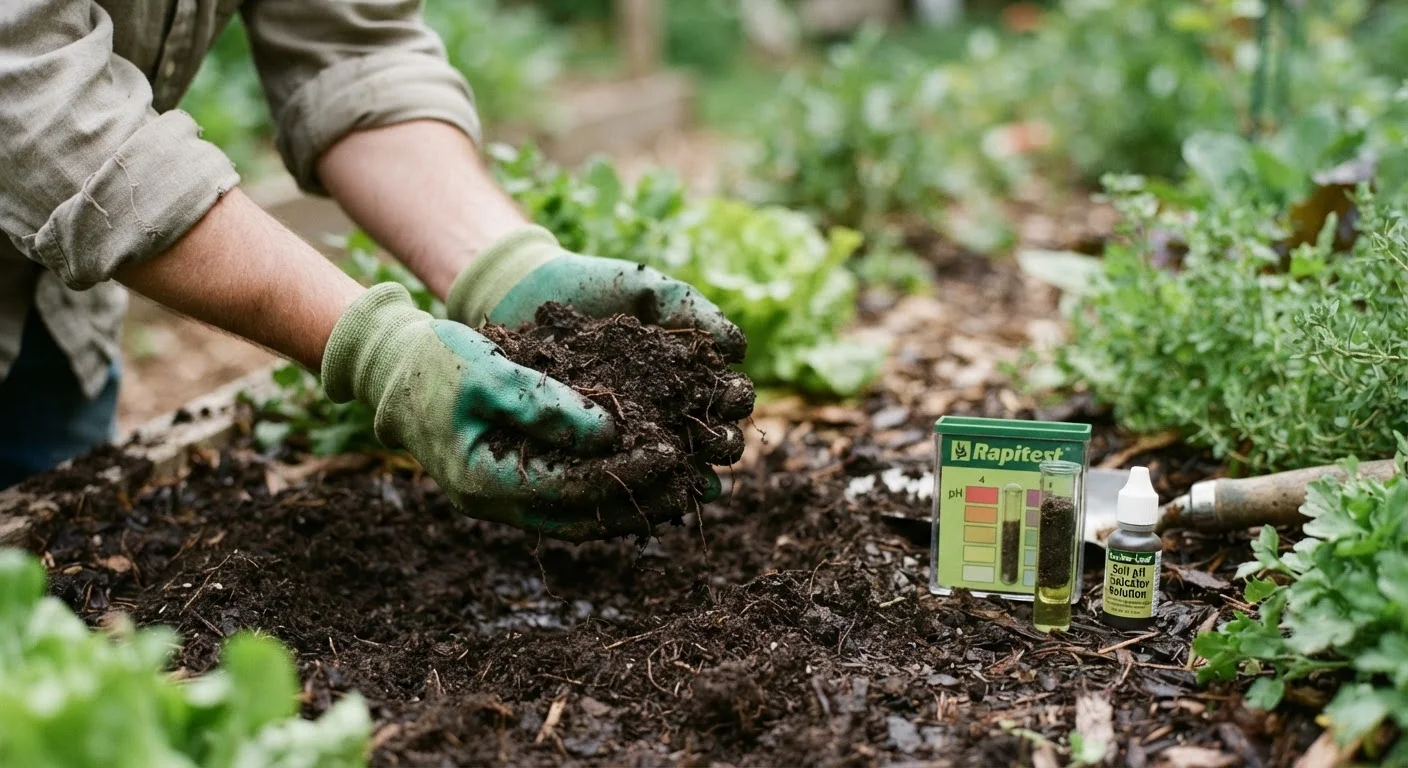
Photo credit: FaqInsider.com
In this article
Learn what soil pH means, how it affects nutrient availability, and what happens when your garden soil is too acidic or alkaline.
Key Takeaways
- Soil pH controls how well plants can absorb nutrients already present in the soil.
- Most vegetables and ornamentals thrive in a pH range of 6.0 to 7.0.
- An inexpensive soil test reveals your pH and guides any necessary corrections.
- Adding lime raises pH; sulfur or acidifying compost lowers it.
- Even well-fertilized plants can show deficiencies if the pH is off.
What Soil pH Actually Does
You can water faithfully, apply fertilizer on schedule, and still watch your plants limp along season after season. The culprit is often hiding in the chemistry of your soil. Soil pH doesn't add or remove nutrients - it controls whether plant roots can access the nutrients that are already there.
Most essential nutrients - nitrogen, phosphorus, potassium, iron, manganese, and others - become available or unavailable depending on the pH of the surrounding soil solution. At the wrong pH, these nutrients form compounds that roots simply cannot take up, no matter how much fertilizer you apply. Understanding this connection is the key to diagnosing a surprisingly large number of garden problems.
6.0-7.0
Optimal pH range for most garden plants
This range is widely cited by university cooperative extension programs as the target for vegetable gardens and general ornamental plantings.
~10x
pH difference between each unit on the scale
Because the pH scale is logarithmic, a soil at pH 5 is ten times more acidic than soil at pH 6 - a significant chemical difference that affects nutrient chemistry.
13
Essential nutrients affected by soil pH
According to agronomic research, all 13 mineral nutrients that plants obtain from soil are influenced to varying degrees by soil pH levels.
The pH Scale and Where Your Garden Fits
The pH scale runs from 0 (extremely acidic) to 14 (extremely alkaline), with 7 as neutral. For most vegetable gardens and general ornamental beds, the ideal target is between 6.0 and 7.0 - a range where the widest variety of nutrients remain soluble and accessible.
Outside that window, specific nutrients become problematic. In acidic soils below pH 6.0, phosphorus binds to aluminum and iron and becomes hard for roots to absorb. Manganese and aluminum themselves can reach levels that are toxic to some plants. In alkaline soils above pH 7.5, iron, manganese, and zinc become scarce, leading to chlorosis (yellowing between leaf veins) even in nutrient-rich soil.
Some plants intentionally prefer the extremes. Blueberries, azaleas, and rhododendrons thrive at pH 4.5-5.5. Asparagus and many herbs tolerate slightly alkaline conditions. Matching your plants to your natural soil pH - or choosing plants suited to what you already have - can be a more practical approach than major amendments. See our companion planting guide for more on choosing compatible plant combinations.
How to Test and Correct Your Soil pH
Testing comes before any correction. Guessing and applying amendments blindly can make things worse. A basic pH test kit from a garden center is a reasonable starting point, but a laboratory soil test - available through most state cooperative extension services - provides a fuller picture, including existing nutrient levels and tailored lime or sulfur recommendations.
Raising pH (Making Soil Less Acidic)
Ground agricultural limestone (calcitic or dolomitic lime) is the standard material for raising pH in acidic soils. Dolomitic lime also adds magnesium, which can be beneficial if your soil is magnesium-deficient. Work lime into the top several inches of soil and water thoroughly. Results take months, not days.
Lowering pH (Making Soil Less Alkaline)
Elemental sulfur is commonly used to acidify alkaline soils. Soil bacteria convert it to sulfuric acid over time, which lowers pH gradually. Adding organic matter - particularly composted wood chips, pine bark, or peat - can also help shift pH downward while building soil structure. For more on building healthy soil over time, see our soil improvement techniques.
Test Before You Amend
Always get a soil test before adding lime or sulfur. Applying amendments without knowing your baseline pH can push the soil in the wrong direction. Many county extension offices provide low-cost testing - it's one of the best investments a home gardener can make.
Regardless of the amendment used, re-test your soil after each growing season. Overcorrection is a real risk, and pH naturally shifts over time due to rainfall, decomposition, and fertilizer use.
The Role of Fertilizer in a pH-Managed Garden
Fertilizers and soil pH work together - or against each other. Applying a balanced fertilizer to soil with an uncorrected pH problem is often money wasted. Conversely, once pH is in range, fertilizers become significantly more effective because nutrients are actually available for uptake.
It's also worth knowing that fertilizer type can influence pH over time. Ammonium-based nitrogen fertilizers tend to gradually acidify soil with repeated use. Understanding this relationship helps you anticipate pH drift and stay ahead of it with periodic testing. Our article on organic vs. synthetic fertilizers explains how fertilizer chemistry affects soil biology in more depth.
Frequently Asked Questions

Author
Home & Garden Editorial Team
Home & Garden Editorial Team is the collective byline for our editorial team and contributor network. Articles published under this byline or an editorial pen name are researched, written, and reviewed according to our editorial standards for clarity, consistency, and independence before publication.
View all articles →