
Reading a Pet Food Label Without Getting Lost in the Fine Print
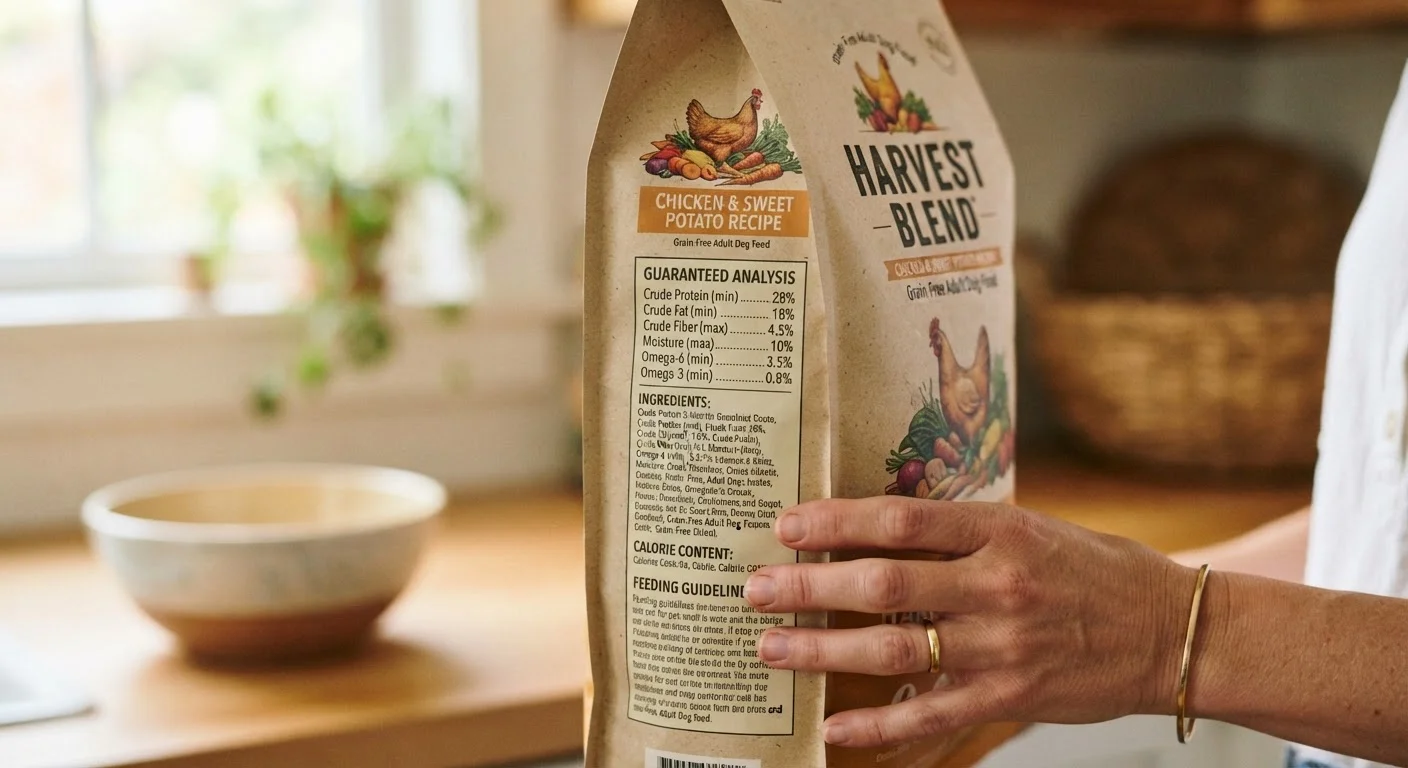
Photo credit: FaqInsider.com
Ingredient lists, guaranteed analysis, and AAFCO statements can be confusing. This plain-language guide helps you understand what you're actually buying.
Key Takeaways
- The AAFCO nutritional adequacy statement tells you whether a food is complete and balanced for your pet's life stage.
- Ingredients are listed by weight before cooking, so meat near the top doesn't always mean meat dominates the formula.
- The guaranteed analysis shows minimum protein and fat, and maximum fiber and moisture - not exact nutrient amounts.
- Life stage matters: food formulated for all life stages or for growth supports puppies and kittens; maintenance formulas are for healthy adults.
- When in doubt about a food choice for your specific pet, consult your veterinarian.
Why Pet Food Labels Feel So Confusing
Pet food packaging is designed to sell as much as to inform. The front of the bag is pure marketing - vivid imagery, bold claims, and carefully chosen words. The real nutritional information lives on the back and sides, buried in small type and regulatory language that most owners have never been taught to read.
The good news: once you know which sections to look for and what each one actually means, navigating a label becomes straightforward. The structure is regulated, which means every compliant pet food label in the U.S. must include the same core components. Learning to read one label essentially teaches you to read them all.
For context, the experience is not entirely different from deciphering a human nutrition panel - if you've ever worked through reading a nutrition facts label, many of the same principles apply. The key difference is that pet food is regulated under a different framework, primarily guided by AAFCO and enforced at the state level.
Marketing Claims Are Not Regulated the Same Way
Terms like "natural," "holistic," or "human-grade" are not uniformly defined or consistently regulated on pet food packaging. These front-of-bag claims are marketing language, not nutritional guarantees. Focus on the structured label sections - ingredient list, guaranteed analysis, and AAFCO statement - rather than banner claims.
How to Read a Pet Food Label Step by Step
The five steps below walk you through the label in the order most useful to an everyday pet owner - starting with the most consequential information and working toward supporting details. Use these steps each time you evaluate a new food or consider switching brands.
What you will need
Find and Read the AAFCO Nutritional Adequacy Statement
Look for a paragraph - often in small print on the back or side of the package - that mentions AAFCO (the Association of American Feed Control Officials). This statement is the single most important sentence on the label. It tells you two things: whether the food is complete and balanced, and which life stage it is formulated for.
A complete-and-balanced statement will read something like: "[Product name] is formulated to meet the nutritional levels established by the AAFCO Dog Food Nutrient Profiles for all life stages." If the label says "for intermittent or supplemental feeding only," the food is not nutritionally complete on its own and should not be a pet's sole diet.
Read the Ingredient List Critically
Ingredients are listed in descending order by pre-cooking weight. A named meat source ("chicken," "salmon") appearing first sounds reassuring, but raw meat contains a lot of water. After cooking, that ingredient may represent a smaller portion of the final product than it appears.
Watch for ingredient splitting: a manufacturer may list "ground corn," "corn gluten meal," and "corn flour" separately. Individually, each falls lower on the list - but combined, corn could outweigh the named protein. This isn't necessarily harmful, but it's worth noticing.
Look for named protein sources ("chicken meal," "deboned turkey") rather than vague terms like "meat by-products" or "animal digest" if ingredient specificity matters to you. For a deeper dive into label terminology, see our pet nutrition labels decoded reference guide.
Interpret the Guaranteed Analysis Panel
The guaranteed analysis lists four values required by law: minimum crude protein, minimum crude fat, maximum crude fiber, and maximum crude moisture. Note that minimums and maximums are not the same as exact amounts - actual values could be higher or lower.
These percentages are measured as-fed, meaning moisture is included. A wet food might show 8% protein while a dry food shows 28%, yet the wet food may actually deliver comparable protein once you account for its much higher moisture content. If you want to compare foods fairly across formats, look into the dry matter basis calculation or ask your veterinarian.
Check the Feeding Guidelines - Then Adjust
Feeding guidelines on the label are starting points, not prescriptions. They are typically based on an average, healthy pet at a given weight. Your pet's actual caloric needs depend on age, activity level, whether they are spayed or neutered, and overall health status.
Use the guidelines to establish an initial portion, then monitor your pet's body condition over several weeks. A veterinarian or veterinary nutritionist can help you determine the right amount if your pet has specific needs. For context on how feeding format affects these decisions, see our guide on wet food vs. dry food trade-offs.
Confirm the Manufacturer's Contact Information
Federal regulations require pet food labels to include the name and address of the manufacturer or distributor. Use this information if you ever need to ask about sourcing, quality control, or recall history. Reputable manufacturers will typically answer questions about where ingredients are sourced and whether they conduct feeding trials.
You can also check the FDA's pet food recall database directly to verify whether a product has been subject to any recent safety actions. This takes only a few minutes and adds a meaningful layer of confidence to your purchase decision.
Labels Don't Replace Vet Guidance
Pet food labels provide general nutritional information but cannot account for your individual pet's health history, breed, age, or medical conditions. Always consult your veterinarian before making significant changes to your pet's diet, especially if your pet has a health condition or is at a sensitive life stage such as pregnancy or senior age.
Use the Dry Matter Basis for Fair Comparisons
Comparing a wet food's protein percentage to a dry food's protein percentage can be misleading because moisture content differs so much. Ask your vet or look up "dry matter basis" calculations to convert both foods to the same moisture-free scale before comparing nutrient levels.

Author
Pets & Animals Editorial Team
Pets & Animals Editorial Team is the collective byline for our editorial team and contributor network. Articles published under this byline or an editorial pen name are researched, written, and reviewed according to our editorial standards for clarity, consistency, and independence before publication.
View all articles →