
Things Pet Owners Get Wrong About Feeding Schedules
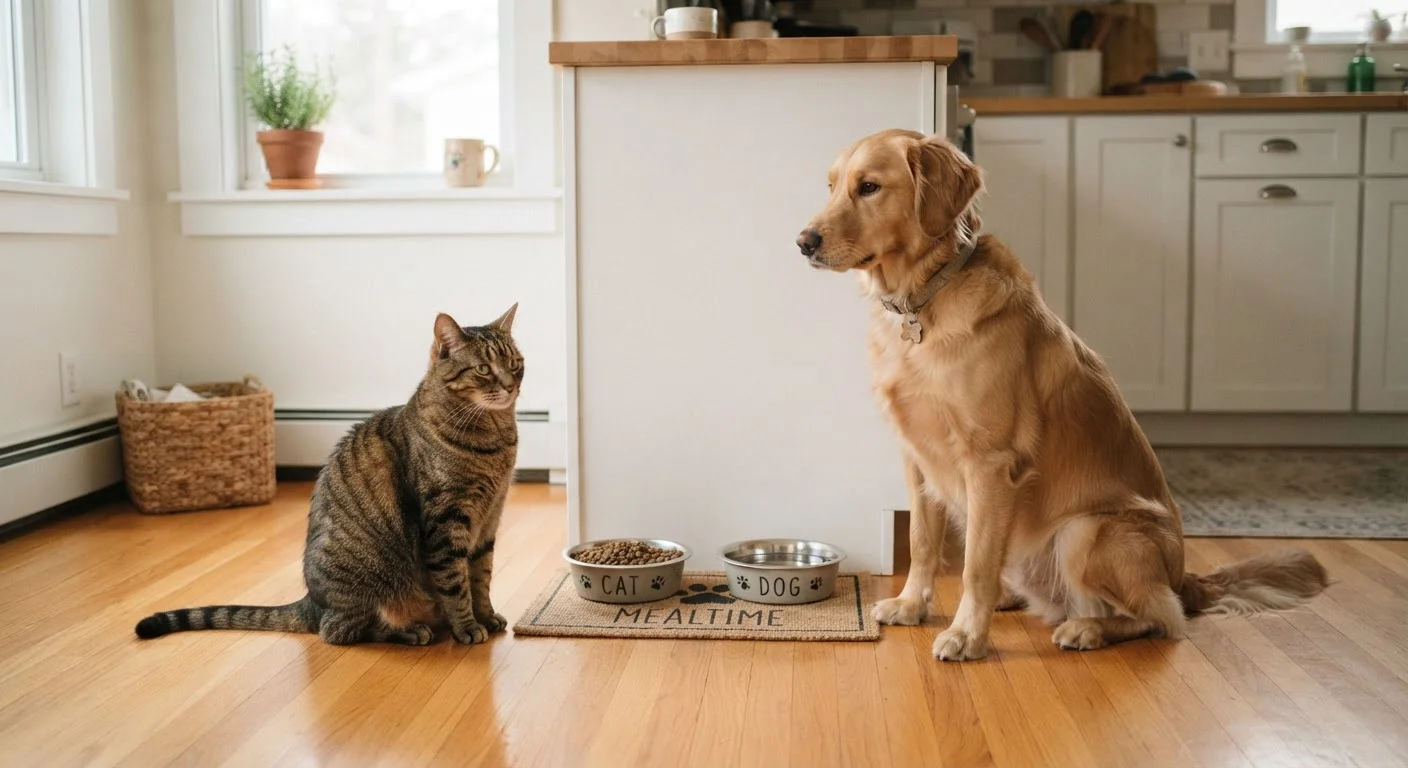
Photo credit: FaqInsider.com
In this article
Free-feeding, overfeeding, and skipping meals all carry real consequences. Find out which feeding habits quietly undermine your pet's health.
Key Takeaways
- Free-feeding dry food all day can lead to obesity and removes a key health monitoring tool.
- Feeding guidelines on pet food packaging are starting points, not personalized prescriptions.
- Pets thrive on consistent meal timing, which supports digestion, behavior, and stress reduction.
- Human food given casually can shift calorie intake far beyond what owners realize.
- Changes in appetite are meaningful health signals - scheduled meals make them much easier to detect.
Why Feeding Schedules Matter More Than Most Owners Think
It's easy to treat pet feeding as a background task - fill the bowl, move on. But how and when you feed your pet shapes their weight, digestion, behavior, and your ability to catch health problems early. Many of the most common pet health issues in the U.S. trace directly back to feeding habits that owners didn't realize were problematic.
This isn't about perfection. It's about understanding a few key principles that make a measurable difference - and correcting the specific errors that quietly undermine your pet's wellbeing over time. For context on how feeding intersects with broader health patterns, it's also worth reviewing common pet health myths that may be shaping your current approach.
~60%
U.S. pets classified as overweight or obese
The Association for Pet Obesity Prevention has estimated that a majority of U.S. dogs and cats are overweight, with overfeeding and free-feeding among the leading contributors.
2x/day
Recommended meal frequency for most adult dogs and cats
Most veterinary nutritionists recommend two structured meals daily for adult pets rather than continuous food access, to support healthy weight management.
The Most Common Feeding Mistakes - and How to Fix Them
The errors below affect owners across all experience levels. They're not signs of negligence - they're the result of misleading defaults, incomplete information, or habits formed without a strong foundation. Each one is correctable.
Leaving food out all day (free-feeding) and assuming the pet will self-regulate.
Why it happens: Many owners assume animals instinctively stop eating when full, but dogs in particular are opportunistic eaters and will often consume whatever is available.
Treating the feeding instructions on pet food packaging as exact, universal guidance.
Why it happens: Labels present feeding amounts as authoritative, so owners follow them literally without accounting for their individual pet's age, activity level, or body condition.
Feeding at inconsistent or unpredictable times each day.
Why it happens: Owners adapt feeding to their own shifting schedule without realizing that irregular timing affects their pet's digestion and stress levels.
Freely giving human food and not counting it toward daily calorie totals.
Why it happens: Table scraps feel like small gestures of affection and don't seem significant in the moment, so they rarely get tracked.
Not adjusting feeding schedules as a pet ages or their health status changes.
Why it happens: Owners establish a routine that works and don't revisit it, even as the pet moves from puppy or kitten to adult to senior, or develops a health condition.
Appetite Changes Are a Health Signal
When a pet eats at set times each day, skipping a meal becomes immediately noticeable. Free-fed pets can go hours - sometimes days - without eating before an owner picks up on the change. Persistent appetite loss warrants a veterinary visit. See when to be concerned about a pet not eating for guidance on timing.
Food format can also play a role in how feeding schedules work in practice. Wet vs. dry food considerations affect palatability, hydration, and how quickly food spoils when left in the bowl - all relevant to how you structure meal windows.
Treats and Table Scraps Add Up Fast
A small cheese cube or piece of chicken may seem harmless, but treats - including table scraps - can account for 30% or more of a pet's daily calorie intake without owners realizing it. Always factor extras into your pet's total daily food budget, and keep high-fat or high-sodium human foods away from pets entirely.
For more on the health dimensions of your pet's overall care, visit the Pet Health & Wellness hub.
This article is for general informational purposes only and does not constitute veterinary or medical advice. Always consult a licensed veterinarian for guidance specific to your pet's health, nutrition, and medical needs.

Author
Pets & Animals Editorial Team
Pets & Animals Editorial Team is the collective byline for our editorial team and contributor network. Articles published under this byline or an editorial pen name are researched, written, and reviewed according to our editorial standards for clarity, consistency, and independence before publication.
View all articles →