
Wet Food vs. Dry Food: How Pet Owners Can Think Through the Choice
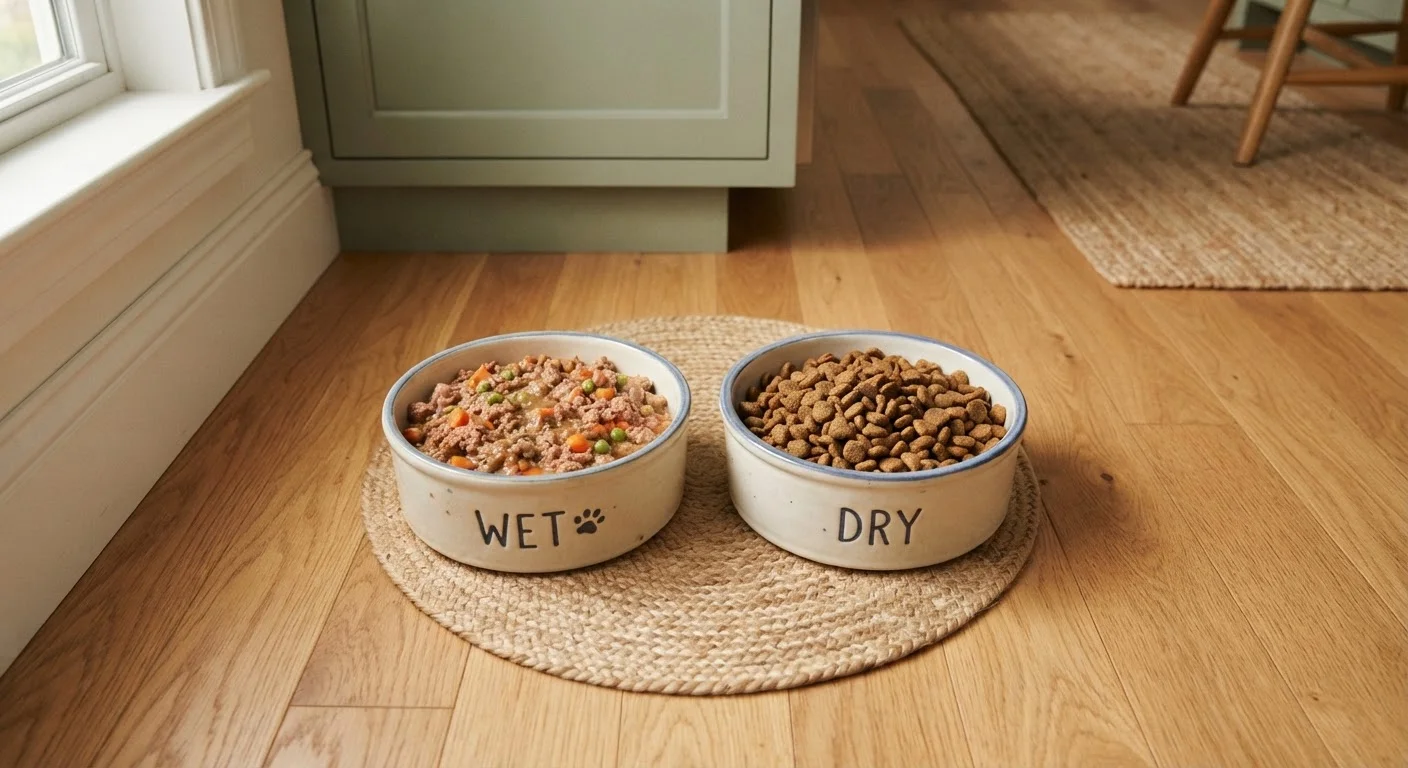
Photo credit: FaqInsider.com
In this article
Canned or kibble? Explore the nutritional trade-offs, dental considerations, and lifestyle factors that shape the right feeding format for your pet.
Key Takeaways
- Wet food contains significantly more moisture, which can support hydration - especially important for cats.
- Dry food is calorie-dense and shelf-stable, making portioning and storage more straightforward for many owners.
- Neither format is universally superior - the right choice depends on your pet's health, age, and lifestyle.
- Many veterinarians support feeding a combination of both formats to balance benefits.
- Always read AAFCO nutritional adequacy statements to confirm a food is complete and balanced for your pet's life stage.
What Actually Differs Between Wet and Dry Pet Food
The most fundamental difference is moisture content. Wet food typically contains 70-80% water, while dry kibble contains just 6-10%. That gap has real consequences for digestion, palatability, and how well certain pets stay hydrated day to day.
Beyond moisture, the two formats differ in how they're manufactured, which affects nutrient density. Because kibble has most of its water removed, it packs more calories and protein per cup than an equivalent volume of canned food. This matters when you're reading feeding guidelines - a half-cup of kibble is nutritionally very different from a half-cup of wet food. Our guide on common portioning mistakes explains why this trips up so many owners.
Both formats can be nutritionally complete - what matters is finding one that carries an AAFCO nutritional adequacy statement for your pet's life stage. See how to decode pet nutrition labels for a plain-language breakdown of what those labels actually mean.
| Criterion | Wet Food (Canned) | Dry Food (Kibble) |
|---|---|---|
| Moisture content | 70-80% | 6-10% |
| Caloric density | Lower per gram | Higher per gram |
| Hydration support | Strong - built-in fluid intake | Minimal - relies on drinking |
| Dental abrasion | Little to none | Mild mechanical abrasion |
| Palatability | Generally higher | Varies by formulation |
| Cost per serving | Typically higher | Typically lower |
| Storage ease | Refrigerate after opening | Shelf-stable, easy to store |
| Texture suitability | Good for seniors, dental pain | Requires chewing ability |
Hydration, Dental Health, and Weight: The Three Big Trade-Offs
Hydration: Cats in particular are prone to under-drinking, and a diet based entirely on dry kibble can leave them chronically under-hydrated. Over time, this increases the risk of urinary tract issues and kidney disease. Wet food provides a reliable fluid source alongside nutrition. Our article on pet hydration beyond the water bowl covers this in more depth.
Dental health: Dry food is often credited with being better for teeth because the crunching action provides mild mechanical abrasion. There's some truth to this, but the effect is modest - kibble alone is not a substitute for regular tooth brushing or veterinary dental cleanings. Wet food, by contrast, doesn't provide that abrasion, but it also doesn't stick to teeth in the way that some owners assume. Pets with existing dental pain may actually do better on soft food.
Weight management: Because kibble is calorie-dense, small measurement errors can quickly add up to overfeeding. Wet food's higher water content means a larger volume per calorie, which can help some pets feel more satisfied. That said, weight is ultimately about total calorie intake - not format. Consult your veterinarian if weight is a concern.
70-80%
Moisture content in typical wet pet food
Compared to just 6-10% in dry kibble, according to general nutritional composition data published by veterinary nutrition sources.
~60%
U.S. cats fed primarily dry food
Veterinary nutrition experts note that most domestic cats consume dry food as their primary diet, despite low natural thirst drive.
1 in 3
U.S. pets estimated to be overweight or obese
The Association for Pet Obesity Prevention has reported that a significant portion of American dogs and cats carry excess weight, often linked to caloric overfeeding regardless of food format.
Practical Factors: Cost, Storage, and Lifestyle Fit
Dry food is generally more economical per calorie and far easier to store. A sealed bag can last weeks without refrigeration, making it straightforward for multi-pet households or owners who travel. Wet food costs more per serving, requires refrigeration after opening, and has a shorter window before it needs to be discarded - typically within a few hours at room temperature.
That said, many owners find a mixed feeding routine hits a practical middle ground: kibble as the dietary base with a small amount of wet food added for palatability and hydration. If you're unsure how to structure your pet's daily feeding routine, reviewing common feeding schedule mistakes can help you avoid habits that quietly undermine your pet's health.
Life stage also matters. Puppies and kittens have different caloric and nutrient needs than adults or seniors - wet food is often easier for very young or very old animals to eat. Our explainer on life-stage pet nutrition walks through how those needs shift over time.
This article provides general pet care information and is not a substitute for personalized veterinary advice. Always consult a licensed veterinarian before making significant changes to your pet's diet, especially if your pet has a health condition.

Author
Pets & Animals Editorial Team
Pets & Animals Editorial Team is the collective byline for our editorial team and contributor network. Articles published under this byline or an editorial pen name are researched, written, and reviewed according to our editorial standards for clarity, consistency, and independence before publication.
View all articles →