
Starting From Scratch: A New Dog Owner's Guide to Training Basics
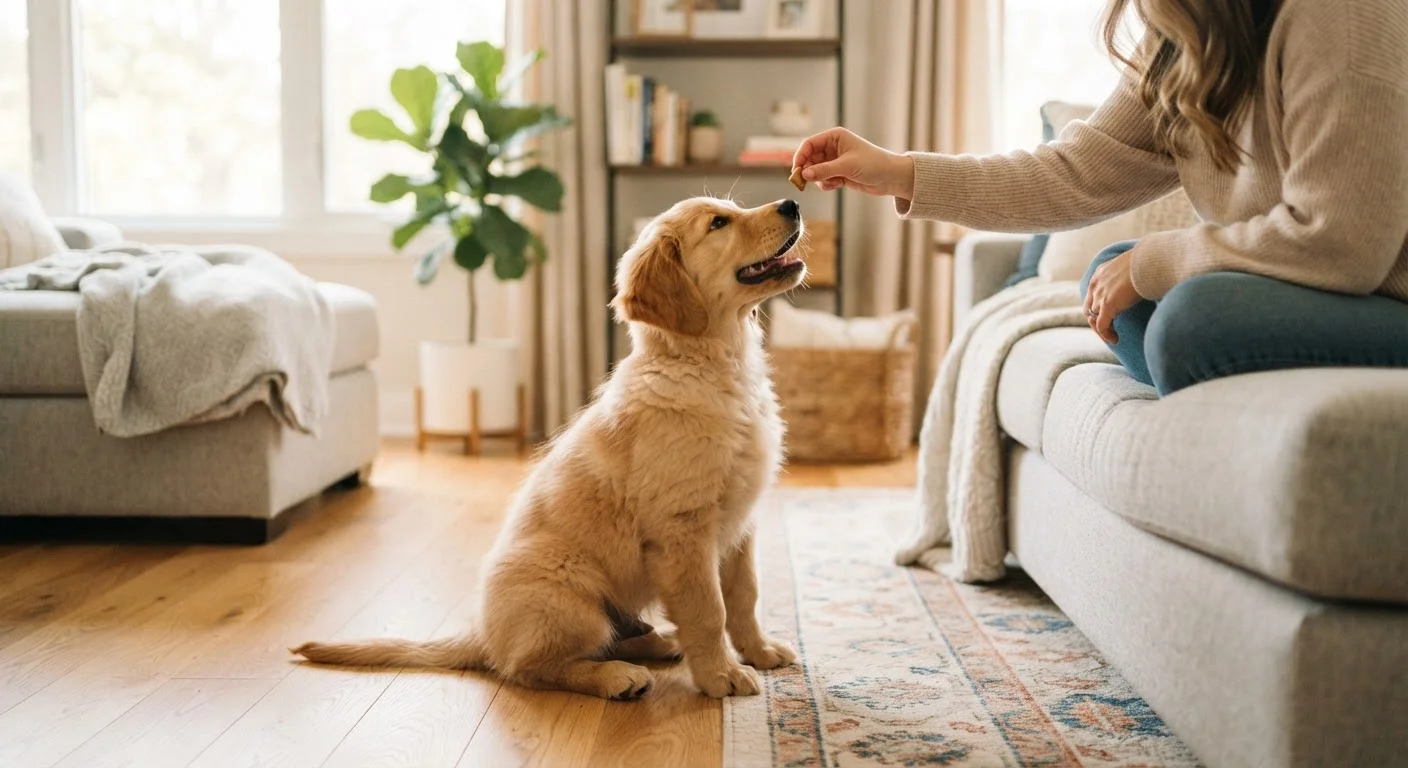
Photo credit: FaqInsider.com
In this article
Never trained a dog before? This beginner-friendly guide covers the foundational concepts, tools, and mindset you need before your first session.
Key Takeaways
- Training is about communication, not control - it builds trust between you and your dog.
- Dogs learn through consistent associations between behavior and consequence.
- Positive reinforcement is the most widely supported training approach for pet dogs.
- Short, focused sessions of 5-10 minutes are more effective than long, infrequent ones.
- You don't need expensive equipment - a leash, treats, and patience go a long way.
- Consistency across all household members is critical to training success.
Why Training Matters More Than You Think
New dog owners often think of training as optional polish - something you do to teach party tricks or stop an annoying habit. In reality, training is the foundation of your relationship with your dog. It's how you communicate expectations, build mutual trust, and give your dog the structure it needs to feel secure in your home.
An untrained dog isn't a bad dog - it's a dog without context. Dogs don't arrive knowing what a couch is for, what the front door means, or why jumping on guests is unwelcome. Training closes that gap, replacing confusion with clarity. For the dog, that clarity is genuinely reassuring. For you, it means a calmer, more enjoyable home.
Training also supports your dog's broader wellbeing. Mental engagement - the kind that comes from learning new things - is as important as physical exercise. A dog that spends time problem-solving and earning rewards is a more content dog overall. For a fuller picture of how mental and physical health intersect for pets, visit the Pet Health & Wellness hub.
Understanding How Dogs Actually Learn
Before your first session, it helps to understand the basic mechanism behind dog learning. Dogs associate behaviors with consequences. When a behavior produces something pleasant, they're more likely to repeat it. When it produces nothing - or something unpleasant - they're less likely to repeat it. This is the core of operant conditioning, and it's the science behind virtually every effective training method.
Positive reinforcement
Adding something the dog finds rewarding immediately after a desired behavior to make that behavior more likely to happen again.
Operant conditioning
A learning process where behaviors are shaped by their consequences - actions that lead to good outcomes get repeated, while those that don't tend to fade.
Marker signal
A precise sound - like a click or the word "yes" - used to tell the dog exactly which behavior earned the reward, bridging the gap before the treat arrives.
Recall
The behavior of a dog reliably returning to its owner when called; one of the most important safety skills a dog can learn.
Impulse control
A dog's ability to pause and choose a calmer behavior instead of acting on immediate instinct - for example, waiting rather than lunging at something interesting.
The approach most widely recommended by veterinary behaviorists and certified trainers is positive reinforcement - rewarding desired behaviors immediately after they occur. The timing matters: a reward delivered within a second or two of the behavior creates a clear link in your dog's mind. Delay that reward by even five seconds, and the connection blurs.
Punishment-based methods may suppress behavior in the moment but can damage trust, increase anxiety, and often don't address what the dog should do instead. Positive reinforcement sidesteps those risks while producing durable, reliable behaviors.
The Tools You Need to Get Started
You don't need a specialized setup to train your dog. The essentials are minimal:
- High-value treats: Small, soft, and smelly. Think small pieces of cooked chicken or commercial training treats. Keep them tiny - you'll be giving many repetitions.
- A standard leash and collar or harness: For initial sessions indoors, a leash isn't always necessary, but it's useful for controlling the environment when you move outside.
- A quiet space: Distractions are your enemy when teaching something new. Start in a low-stimulation area of your home.
- A marker signal: This can be a clicker (a small handheld device that makes a distinct click sound) or a consistent verbal cue like "yes." The marker tells your dog the exact moment it did something right, before the treat arrives.
Before any session, run through the readiness checklist for pet owners to confirm your environment and mindset are set up for success.
Choose Your Marker and Stick With It
Whether you use a clicker or a verbal word like "yes," pick one marker and use it exclusively to signal correct behavior. Switching between markers - or using your marker casually in conversation - dilutes its meaning for your dog. Charge the marker first by pairing it with a treat several times before using it in a real training exercise.
Your First Training Behaviors: Where to Begin
Start with behaviors that are easy for your dog to offer and immediately practical for you. The following three are a strong foundation:
- Sit: Hold a treat just above your dog's nose and slowly move it back over its head. Most dogs will naturally lower their hindquarters as they follow the treat upward. The moment their bottom touches the floor, mark and reward. Once the behavior is reliable, attach the verbal cue "sit."
- Come (recall): Crouch down, open your arms, and enthusiastically call your dog's name followed by "come." When it reaches you, reward generously. A reliable recall is one of the most safety-critical behaviors you can teach.
- Leave it: Place a treat in your closed fist. Let your dog sniff and paw at it. The moment it backs away or loses interest, mark and reward with a different treat from your other hand. This teaches impulse control - a skill with wide practical value.
Keep each session to 5-10 minutes. End while your dog is still engaged and successful, not when it's given up. For guidance on structuring sessions for maximum effectiveness, see Keeping Training Sessions Effective.
Building a Training Habit That Sticks
The biggest obstacle most new owners face isn't their dog - it's consistency. Dogs learn through repetition across contexts and time. A behavior practiced once a week will lag far behind one practiced in brief daily sessions.
Build training into moments that already exist in your day. Ask for a "sit" before placing the food bowl down. Practice "come" in the backyard during morning bathroom breaks. Reinforce "leave it" on walks. These micro-sessions add up quickly without requiring dedicated blocks of time.
Consistency across people matters just as much. If one household member allows jumping while another corrects it, your dog receives contradictory information and progress stalls. Agree on cue words, rules, and response protocols as a household. Watch for the subtle habits that quietly undermine training progress - inconsistency is one of the most common culprits.
If you're considering more structured support, group classes and private training each offer distinct advantages worth weighing against your schedule and goals. Either way, the fundamentals you build now will serve your dog - and your relationship - for years to come.
Frequently Asked Questions

Author
Pets & Animals Editorial Team
Pets & Animals Editorial Team is the collective byline for our editorial team and contributor network. Articles published under this byline or an editorial pen name are researched, written, and reviewed according to our editorial standards for clarity, consistency, and independence before publication.
View all articles →