
The Habits That Quietly Undermine Your Dog's Training Progress
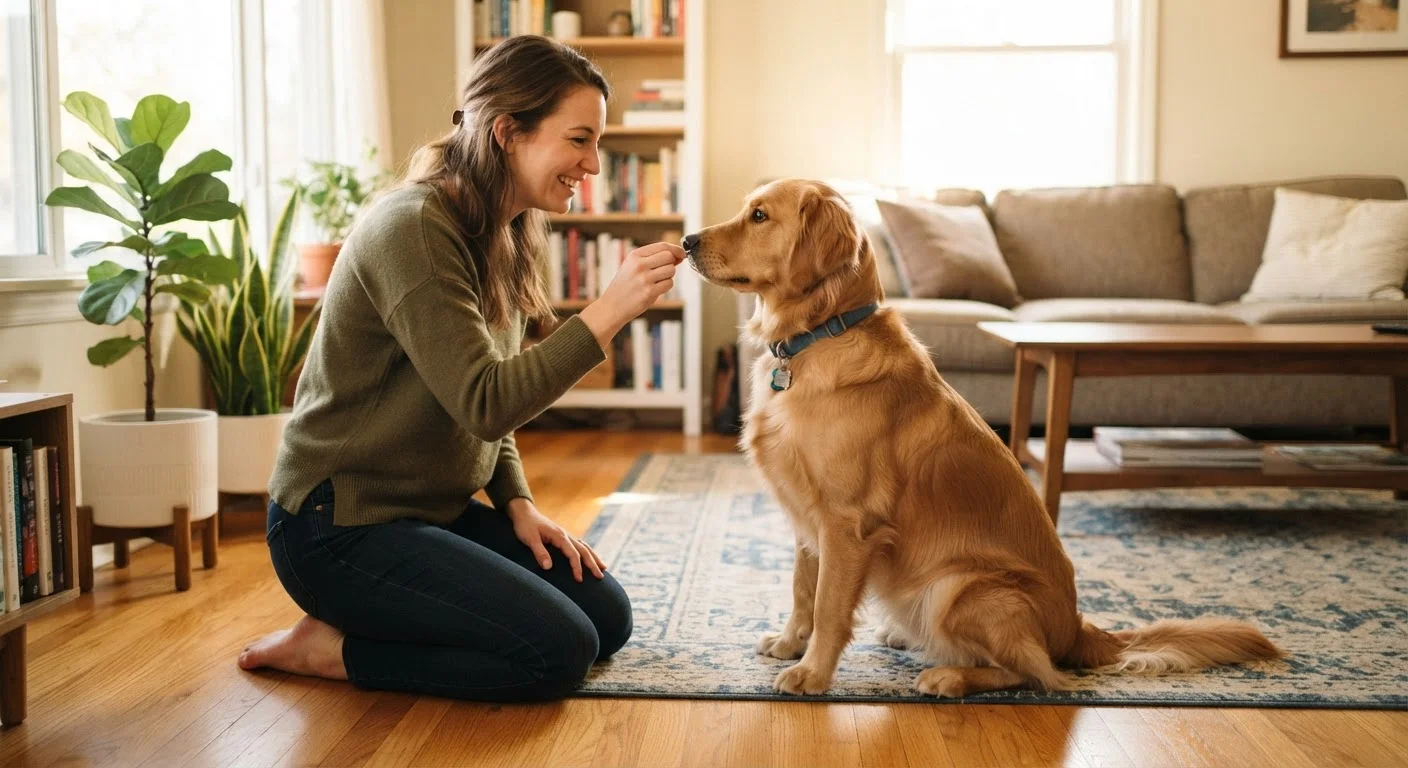
Photo credit: FaqInsider.com
In this article
Inconsistent cues, accidental reinforcement, and rushed sessions are among the subtle patterns that stall progress—here's how to spot and fix them.
Key Takeaways
- Using different words for the same command confuses dogs and slows learning significantly.
- Accidentally rewarding unwanted behavior is one of the most common - and fixable - training errors.
- Sessions that run too long cause mental fatigue, which leads to regression, not progress.
- Every household member must follow the same rules for training to stick reliably.
- Raising difficulty too quickly before a skill is solid sets dogs up to fail.
Why Progress Stalls Even When You're Putting in the Work
Dog training rarely fails because owners aren't trying. It fails because of small, repeated patterns that fly under the radar - inconsistent cues, unintentional rewards, or sessions that push a dog past the point of productive learning. Understanding these patterns is the first step toward fixing them.
If your dog seems to understand a behavior one day and forget it the next, or performs reliably at home but falls apart in new settings, the culprit is almost always one of a handful of trainable habits on the human side of the leash. The good news: once you can see these patterns, they're genuinely straightforward to correct. For a broader foundation, this beginner's guide to training basics is a useful starting point before diving into mistake-proofing.
Using inconsistent verbal cues for the same behavior - saying 'sit,' 'sit down,' and 'get down' interchangeably.
Why it happens: It feels natural in conversation to vary language, so owners don't notice they're doing it. Different household members often introduce their own preferred words without realizing the conflict.
Accidentally rewarding unwanted behavior by giving attention, eye contact, or laughter when the dog does something inconvenient.
Why it happens: Attention - even negative attention - is reinforcing to most dogs. Owners often respond to jumping or barking just to make it stop, which teaches the dog that those behaviors work.
Running training sessions that are too long, pushing past the point where the dog is mentally engaged.
Why it happens: Owners often want to maximize practice time, assuming more repetitions equal faster learning. In reality, canine working memory fatigues quickly.
Advancing to harder criteria before the current skill is truly solid.
Why it happens: Early success is exciting, and it's tempting to raise the bar quickly. But a behavior that works eight times out of ten in a quiet room isn't ready for distractions, distance, or duration.
Inconsistent rules across family members - one person allows the behavior, another corrects it.
Why it happens: Household members often have different tolerances and don't discuss training expectations explicitly. A dog that's allowed on the sofa by one person and scolded by another receives genuinely contradictory information.
Ending the session immediately after a failed repetition, which leaves the dog's last experience as a mistake.
Why it happens: Frustration leads owners to stop when things go wrong rather than setting up one clean success before closing out.
Building Habits That Actually Support Learning
Fixing training mistakes isn't about starting over - it's about tightening up what you're already doing. A few targeted adjustments can produce noticeable improvement within days.
Align your household. Hold a quick family conversation about which cues you're using, what counts as a reward, and what behaviors will or won't be allowed. Written notes on the fridge aren't overkill - they work.
Audit your timing. If you're not sure whether you're rewarding the right moment, try working with a marker signal. Comparing clicker and verbal markers can help you decide which approach suits your routine.
Track your sessions. Even a simple note on your phone - what you practiced, how your dog responded, how long you trained - reveals patterns over time. You might discover you always quit after a bad repetition, or that certain times of day produce much better focus.
Build in distraction gradually. Once a behavior is solid at home, resist the urge to immediately test it at the dog park. Introduce mild distractions first, reward heavily, and scale up slowly. Teaching a reliable stay is a practical example of how to layer difficulty the right way.
Punishment Timing Is Rarely What You Think
If a correction arrives more than a second or two after the behavior, your dog cannot connect the two events. Late corrections don't teach - they just create anxiety around you or the training environment. When in doubt, focus on what to reward rather than what to punish. Research on reinforcement versus correction-based methods offers a useful look at why timing matters so much.
For a deeper look at what consistent, well-structured sessions actually look like in practice, see these evidence-backed principles for effective training. Small habit corrections, applied consistently, are what turn a frustrated trainer into a confident one.

Author
Pets & Animals Editorial Team
Pets & Animals Editorial Team is the collective byline for our editorial team and contributor network. Articles published under this byline or an editorial pen name are researched, written, and reviewed according to our editorial standards for clarity, consistency, and independence before publication.
View all articles →