
The Case for and Against Crate Training
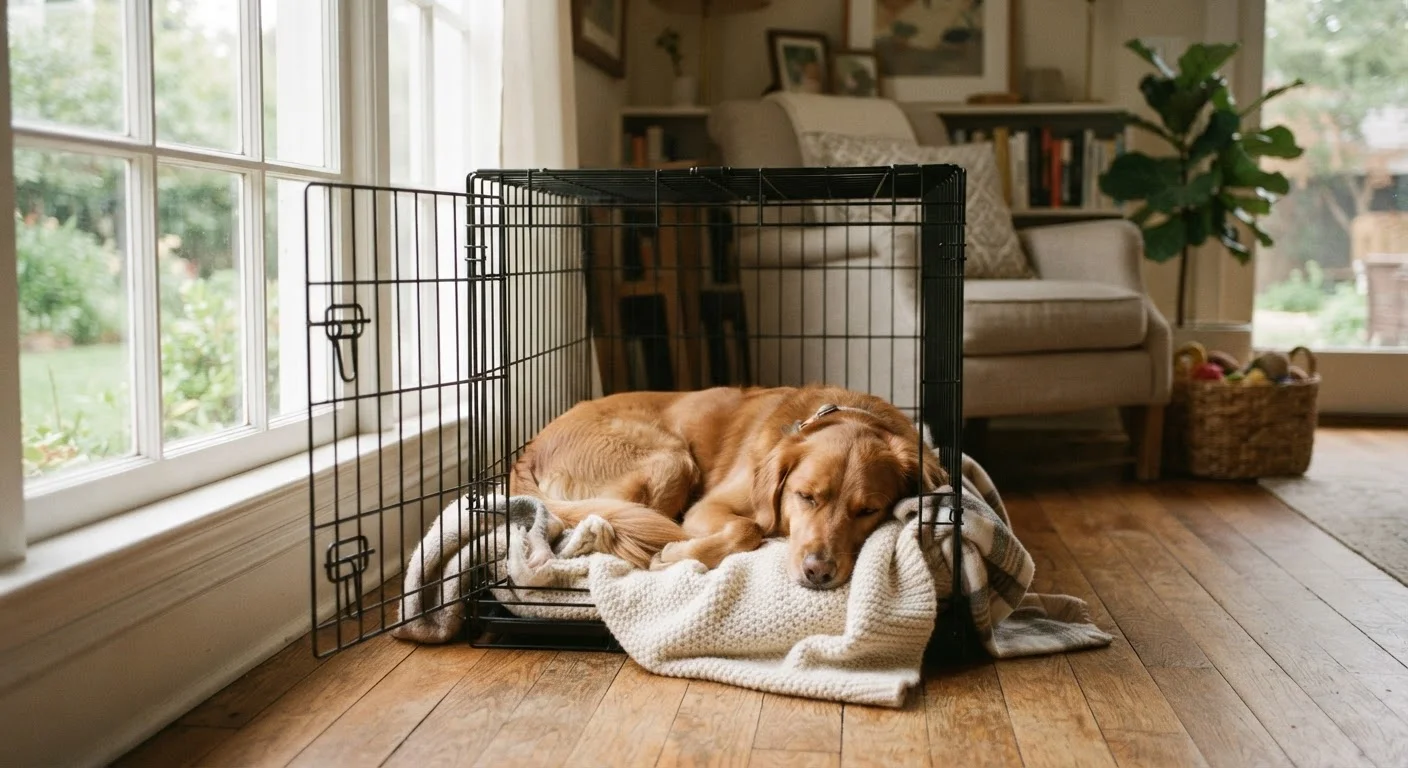
Photo credit: FaqInsider.com
In this article
Crate training divides opinion among pet owners. A balanced look at the benefits, the legitimate concerns, and the conditions under which it tends to work well.
Key Takeaways
- Crate training can support housebreaking and give dogs a secure retreat when done correctly.
- Misuse - including excessive confinement - can cause anxiety and behavioral problems.
- The crate should always be associated with positive experiences, never punishment.
- Most dogs can be crate trained successfully with patience and a gradual introduction.
- Crating is generally not appropriate as a long-term solution for separation anxiety.
Accelerates housetraining for puppies
A properly sized crate leverages a dog's natural reluctance to soil its sleeping area, making consistent outdoor bathroom schedules much easier to establish.
Provides a voluntary safe retreat
Crate-trained dogs often choose to rest in their crate during stressful events, demonstrating genuine comfort rather than mere tolerance of the space.
Reduces household hazards when unsupervised
Containing a dog in a safe space during short absences limits exposure to chewing risks, electrical cords, and toxic substances that could cause injury.
Eases veterinary and travel experiences
Dogs already familiar with enclosed spaces handle overnight vet stays and airline or car travel with considerably less added stress.
Supports post-surgical recovery
Restricted movement is often necessary after orthopedic or soft-tissue procedures, and a crate-comfortable dog will recover more calmly with less risk of reinjury.
High risk of misuse through excessive confinement
Extended daily crating - especially beyond four to five hours for adult dogs - crosses from management into isolation, with documented negative effects on welfare and behavior.
Can worsen separation anxiety
For dogs with underlying anxiety, a closed crate can intensify panic rather than provide comfort, sometimes resulting in self-injury or a worsening of the condition.
Puppies have strict physical limitations
Young puppies cannot hold their bladder long enough for extended crating sessions, meaning mismatched expectations lead to frustration for both dog and owner.
Improper introduction creates lasting aversion
Rushing the process or using the crate punitively can make a dog resistant or fearful of it long-term, undermining the tool's core function.
Not a substitute for exercise or enrichment
A crate addresses containment needs but does nothing to meet a dog's requirements for physical activity, mental stimulation, and social interaction.
What Crate Training Actually Involves
Crate training is the process of teaching a dog to view an enclosed space - typically a wire, plastic, or fabric kennel - as a safe and comfortable place to rest. The goal is voluntary acceptance, not forced confinement. A well-implemented crate training plan introduces the crate gradually, uses treats and meals to build positive associations, and never uses the space as punishment.
The practice is widely used for puppies during housebreaking, for dogs recovering from surgery or injury, and for pets who travel frequently. It draws on the observation that dogs, as den animals, often seek out enclosed spaces on their own. However, that instinct does not mean any dog will automatically find any crate comfortable - context and introduction method matter enormously.
Before evaluating the pros and cons, it helps to understand that almost all expert criticism of crating targets how it is done, not the concept itself. The common training myths that surround crating - including the idea that it is inherently stressful - often reflect misuse rather than the method done well.
The Case For Crate Training
Accelerates housetraining for puppies
A properly sized crate leverages a dog's natural reluctance to soil its sleeping area, making consistent outdoor bathroom schedules much easier to establish.
Provides a voluntary safe retreat
Crate-trained dogs often choose to rest in their crate during stressful events, demonstrating genuine comfort rather than mere tolerance of the space.
Reduces household hazards when unsupervised
Containing a dog in a safe space during short absences limits exposure to chewing risks, electrical cords, and toxic substances that could cause injury.
Eases veterinary and travel experiences
Dogs already familiar with enclosed spaces handle overnight vet stays and airline or car travel with considerably less added stress.
Supports post-surgical recovery
Restricted movement is often necessary after orthopedic or soft-tissue procedures, and a crate-comfortable dog will recover more calmly with less risk of reinjury.
The strongest argument for crate training is its role in housebreaking. Dogs are naturally reluctant to soil their sleeping area, so a properly sized crate encourages bladder control and helps owners establish a consistent outdoor routine. Most trainers and veterinary behaviorists consider this one of the most reliable housetraining tools available for puppies.
Beyond housetraining, a crate can serve as a genuine refuge. Dogs that have been crate trained from an early age often retreat to their crate voluntarily during thunderstorms, busy gatherings, or other stressful events. This self-regulating behavior is a sign the dog associates the space with safety rather than confinement.
For owners, the crate provides peace of mind when supervision is not possible - reducing the risk of destructive behavior or accidental ingestion of household hazards. It also plays a practical role during travel, veterinary stays, and post-surgical recovery, when a dog that is already comfortable in a crate will experience far less additional stress.
The Case Against Crate Training
High risk of misuse through excessive confinement
Extended daily crating - especially beyond four to five hours for adult dogs - crosses from management into isolation, with documented negative effects on welfare and behavior.
Can worsen separation anxiety
For dogs with underlying anxiety, a closed crate can intensify panic rather than provide comfort, sometimes resulting in self-injury or a worsening of the condition.
Puppies have strict physical limitations
Young puppies cannot hold their bladder long enough for extended crating sessions, meaning mismatched expectations lead to frustration for both dog and owner.
Improper introduction creates lasting aversion
Rushing the process or using the crate punitively can make a dog resistant or fearful of it long-term, undermining the tool's core function.
Not a substitute for exercise or enrichment
A crate addresses containment needs but does nothing to meet a dog's requirements for physical activity, mental stimulation, and social interaction.
The most serious objection to crate training is the risk of overuse. A dog left in a crate for eight or more hours a day, every day, is not experiencing a den - it is experiencing prolonged isolation. Puppies in particular cannot physically hold their bladder long enough to justify extended crating, and forcing them to do so creates the very accidents owners are trying to prevent.
Dogs with existing separation anxiety can deteriorate significantly when crated alone. Rather than providing security, the enclosed space can amplify panic - leading to self-injury, excessive vocalization, and a deepened fear of being left alone. In these cases, crating often treats the symptom rather than the underlying problem and should not be used without guidance from a veterinary behaviorist or certified trainer. For a broader look at how environment shapes wellbeing, see our piece on indoor vs. outdoor pet considerations.
When to Seek Professional Guidance
If your dog shows signs of significant distress in the crate - including frantic attempts to escape, self-injury, sustained vocalization, or elimination despite being let out frequently - this may indicate separation anxiety or another behavioral issue that warrants professional assessment. A certified applied animal behaviorist or veterinary behaviorist can help distinguish situational crate aversion from a deeper anxiety disorder and recommend an appropriate plan. Do not attempt to simply wait out severe distress responses.
Making It Work: Conditions for Success
Whether crate training succeeds largely depends on implementation. A few principles consistently separate good outcomes from poor ones:
- Correct sizing: The crate should be large enough for the dog to stand, turn around, and lie down comfortably - but not so large that a puppy treats one corner as a bathroom.
- Gradual introduction: Rushing a dog into the crate and closing the door immediately creates a negative association. Start with the door open, feed meals inside, and increase closed-door time in small increments over days or weeks.
- Time limits: Adult dogs should generally not be crated for more than four to five hours at a stretch; puppies far less, based on age. The crate is a temporary measure, not a primary living space.
- Positive only: Never use the crate as punishment. The moment the crate becomes associated with a bad experience, that association is difficult to reverse.
For practical guidance on the broader principles behind effective training, the core practices behaviorists recommend apply directly to crate introduction as well.
4-5 hrs
Maximum recommended adult dog crate time
Most veterinary behaviorists and certified trainers advise against crating adult dogs for more than four to five consecutive hours during the day.
~1 hr/month
Bladder control guideline for puppies
A commonly cited rule of thumb is that puppies can hold their bladder approximately one hour for each month of age, up to a practical maximum.

Author
Pets & Animals Editorial Team
Pets & Animals Editorial Team is the collective byline for our editorial team and contributor network. Articles published under this byline or an editorial pen name are researched, written, and reviewed according to our editorial standards for clarity, consistency, and independence before publication.
View all articles →