
Indoor vs. Outdoor Pets: Weighing the Real Risks and Benefits
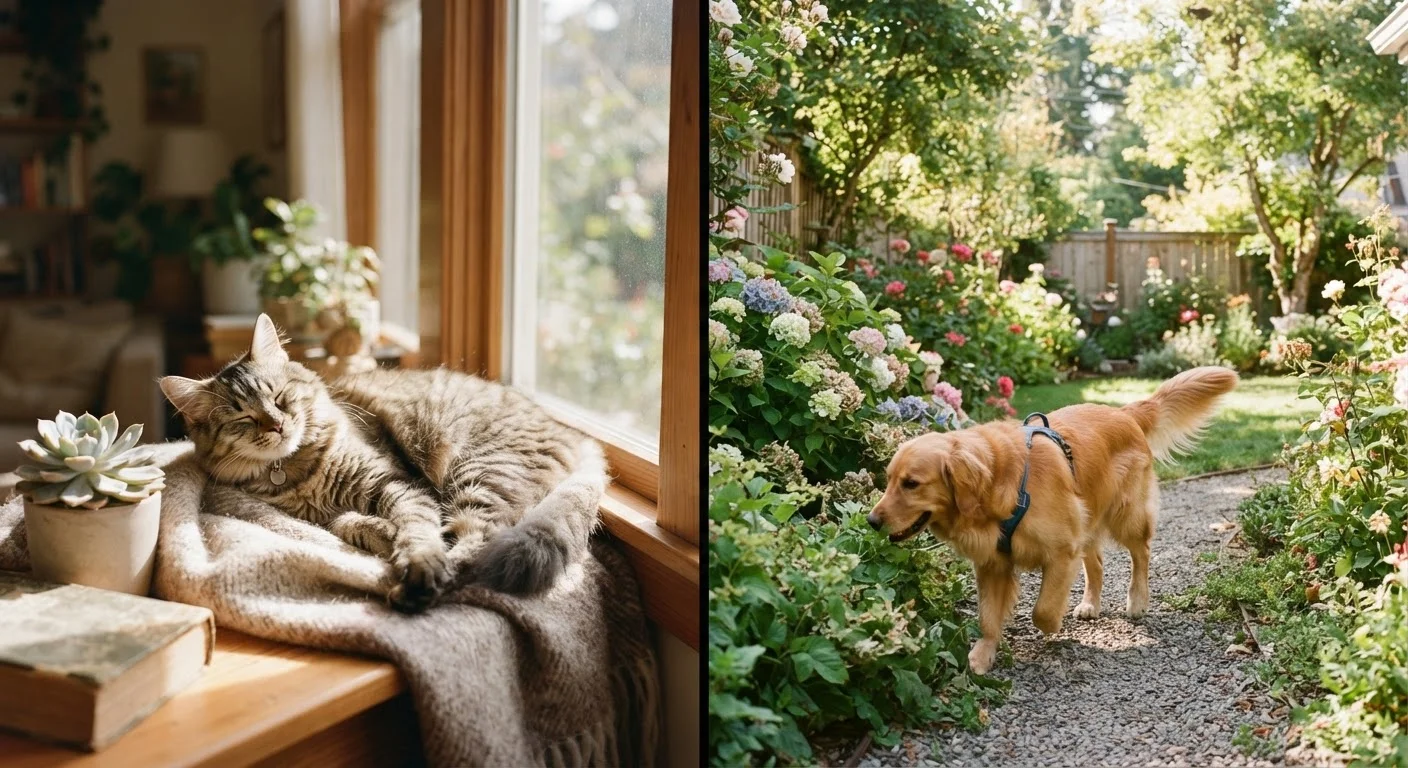
Photo credit: FaqInsider.com
In this article
Keeping a pet indoors or allowing outdoor access involves genuine trade-offs. Here's a balanced look at safety, enrichment, and health factors.
Key Takeaways
- Indoor pets generally live longer due to reduced exposure to traffic, predators, and disease.
- Outdoor access provides enrichment and exercise that can be difficult to fully replicate indoors.
- The right choice depends on your pet's species, breed, temperament, and your local environment.
- Many owners find that supervised or structured outdoor time offers a middle-ground approach.
- Regular veterinary care matters for both indoor and outdoor pets.
Significantly reduced exposure to traffic and accidents
Vehicle collisions are among the leading causes of death for free-roaming cats and dogs. Keeping pets indoors essentially eliminates this risk.
Lower risk of infectious disease and parasites
Indoor pets have far less contact with other animals carrying diseases like feline leukemia, distemper, or Lyme-carrying ticks, reducing both illness risk and treatment costs.
Easier health monitoring and behavior tracking
Owners who spend time with indoor pets in a controlled environment are more likely to notice early signs of illness - changes in appetite, litter box habits, or mobility - before they become serious.
Protection from predators and aggressive animals
Depending on your area, outdoor pets may face threats from coyotes, hawks, loose dogs, or other wildlife. Indoor living removes these hazards entirely.
Greater control over diet and toxin exposure
Outdoor pets may consume garbage, toxic plants, antifreeze, or bait poisons without the owner's knowledge. Indoor environments allow for much tighter oversight.
Harder to meet natural enrichment and exercise needs
Indoor environments require deliberate effort to provide the sensory variety, movement, and exploration that pets would naturally get outside. Without this, behavioral problems can develop.
Higher risk of boredom-related behavioral issues
Cats and dogs lacking adequate stimulation may develop anxiety, excessive vocalization, destructive chewing, or inappropriate elimination - all signs that their environment isn't meeting their needs.
Outdoor access exposes pets to traffic and injury risks
Free-roaming animals, particularly cats, face elevated risk of vehicle strikes, falls, and encounters with traps or hazardous materials in residential areas.
Greater exposure to parasites and infectious disease
Fleas, ticks, heartworm-carrying mosquitoes, and contact with infected animals are all more likely for outdoor pets, requiring consistent preventive veterinary care.
Unpredictable encounters with other animals
Even in suburban settings, outdoor pets may face aggression from neighborhood dogs, wildlife, or feral animals, leading to injuries that require veterinary attention.
Environmental hazards including toxins and extreme weather
Lawn chemicals, antifreeze in driveways, toxic plants, and weather extremes pose real dangers to unsupervised outdoor pets, particularly in urban and suburban neighborhoods.
Why This Decision Matters More Than You Might Think
Whether to keep a pet strictly indoors, allow free outdoor roaming, or find a middle ground is one of the most consequential everyday decisions a pet owner makes. It affects lifespan, behavioral health, disease exposure, and overall quality of life. Yet there's rarely a single correct answer - the right choice depends on your pet's species, temperament, and the specific risks in your neighborhood.
This article focuses primarily on cats and dogs, the pets for whom this debate is most common, though many principles apply broadly. For a deeper look at how environment intersects with long-term wellness, the Pet Health & Wellness hub is a strong starting point.
This Debate Looks Different for Different Pets
The indoor vs. outdoor question is most pressing for cats, and relevant for dogs in different ways. For dogs, the question is rarely all-or-nothing - most dogs require outdoor exercise regardless of where they sleep or spend downtime. For cats, the stakes tend to be higher because unsupervised roaming carries more distinct risks. Always factor in your pet's species, breed characteristics, age, and health status when making this call.
The Case for Keeping Pets Indoors
Indoor pets are shielded from a long list of hazards that outdoor environments present daily. Cats kept exclusively indoors have an average lifespan significantly longer than those allowed to roam freely - a difference veterinary and animal welfare organizations commonly attribute to reduced trauma, disease, and predator exposure.
Significantly reduced exposure to traffic and accidents
Vehicle collisions are among the leading causes of death for free-roaming cats and dogs. Keeping pets indoors essentially eliminates this risk.
Lower risk of infectious disease and parasites
Indoor pets have far less contact with other animals carrying diseases like feline leukemia, distemper, or Lyme-carrying ticks, reducing both illness risk and treatment costs.
Easier health monitoring and behavior tracking
Owners who spend time with indoor pets in a controlled environment are more likely to notice early signs of illness - changes in appetite, litter box habits, or mobility - before they become serious.
Protection from predators and aggressive animals
Depending on your area, outdoor pets may face threats from coyotes, hawks, loose dogs, or other wildlife. Indoor living removes these hazards entirely.
Greater control over diet and toxin exposure
Outdoor pets may consume garbage, toxic plants, antifreeze, or bait poisons without the owner's knowledge. Indoor environments allow for much tighter oversight.
Beyond safety, indoor environments give owners more control over diet, behavior monitoring, and early detection of health changes. If you're weighing how often to schedule checkups, our article on annual vet visits vs. as-needed care explores how lifestyle factors into that calculus.
The main challenge with indoor-only living is meeting your pet's enrichment needs. Boredom isn't just an inconvenience - it can lead to destructive behavior, anxiety, and even physical health decline. See why mental enrichment matters for indoor pets for practical strategies.
The Case for Allowing Outdoor Access
Outdoor environments offer something genuinely difficult to replicate inside four walls: the unpredictable, sensory-rich stimulation of the natural world. Sniffing, foraging, climbing, and patrolling territory fulfill deep behavioral drives, particularly in cats and working or sporting dog breeds.
Harder to meet natural enrichment and exercise needs
Indoor environments require deliberate effort to provide the sensory variety, movement, and exploration that pets would naturally get outside. Without this, behavioral problems can develop.
Higher risk of boredom-related behavioral issues
Cats and dogs lacking adequate stimulation may develop anxiety, excessive vocalization, destructive chewing, or inappropriate elimination - all signs that their environment isn't meeting their needs.
Outdoor access exposes pets to traffic and injury risks
Free-roaming animals, particularly cats, face elevated risk of vehicle strikes, falls, and encounters with traps or hazardous materials in residential areas.
Greater exposure to parasites and infectious disease
Fleas, ticks, heartworm-carrying mosquitoes, and contact with infected animals are all more likely for outdoor pets, requiring consistent preventive veterinary care.
Unpredictable encounters with other animals
Even in suburban settings, outdoor pets may face aggression from neighborhood dogs, wildlife, or feral animals, leading to injuries that require veterinary attention.
Environmental hazards including toxins and extreme weather
Lawn chemicals, antifreeze in driveways, toxic plants, and weather extremes pose real dangers to unsupervised outdoor pets, particularly in urban and suburban neighborhoods.
Physical activity benefits are also meaningful. Dogs who spend time outdoors tend to get more varied, instinct-driven movement than structured leash walks alone provide. For a breakdown of how activity needs differ across pet types, see exercise needs across common pet types.
However, outdoor access is not without serious trade-offs. Traffic, toxins, disease vectors like fleas and ticks, aggressive animals, and extreme weather all represent genuine threats. Free-roaming cats also have a well-documented impact on local wildlife populations, which is worth factoring into the decision.
Finding a Practical Middle Ground
For many pet owners, the most workable solution isn't a binary choice. Supervised outdoor time - through leash walks, enclosed catios, fenced yards, or structured play sessions - can deliver meaningful enrichment while limiting the most serious risks.
10-15 yrs
Average indoor cat lifespan
Veterinary and animal welfare sources generally cite indoor cats living 10-15 years on average, compared to 2-5 years for free-roaming outdoor cats in many environments.
~70%
U.S. pet owners with outdoor-access pets
Surveys by the American Pet Products Association have found that a significant proportion of cat owners allow at least some outdoor access, despite recommendations from many veterinary groups.
Training plays a role here too. A dog reliably responsive to recall commands is meaningfully safer in semi-supervised outdoor settings. Our guide on the case for and against crate training touches on how structured training shapes a pet's overall behavior and adaptability.
If your outdoor space includes a garden or lawn, it's worth checking that plants, fertilizers, and pest-control products are pet-safe. The Lawn & Garden hub covers maintenance considerations that may affect pets who access those spaces.
Ultimately, honest assessment of your local environment, your pet's individual temperament, and your capacity to provide enrichment indoors will guide you toward the right balance. Neither lifestyle is automatically better - the details are what matter.
This article provides general pet care information and is not a substitute for advice from a licensed veterinarian familiar with your individual pet's health and history.

Author
Pets & Animals Editorial Team
Pets & Animals Editorial Team is the collective byline for our editorial team and contributor network. Articles published under this byline or an editorial pen name are researched, written, and reviewed according to our editorial standards for clarity, consistency, and independence before publication.
View all articles →