
What to Keep in Your Carry-On for Health Emergencies Mid-Flight
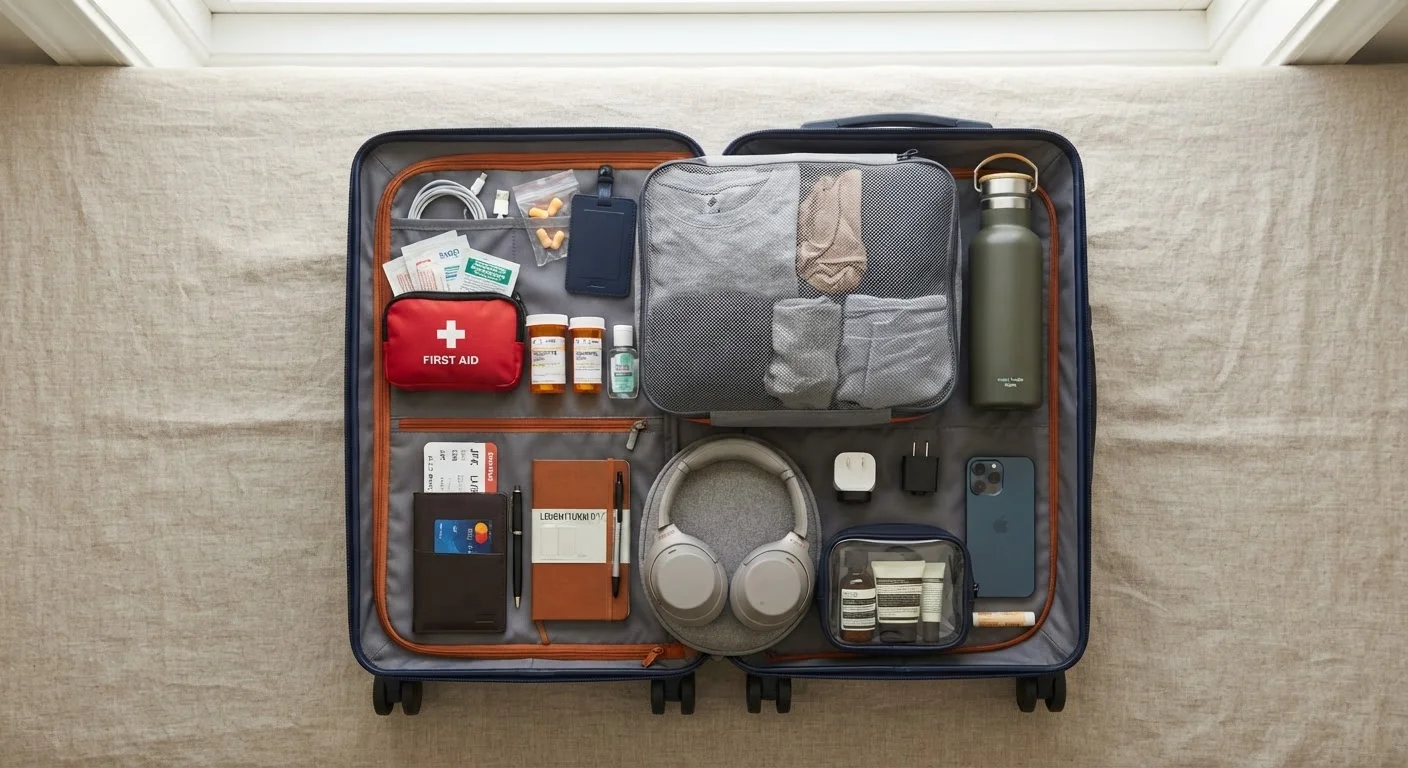
Photo credit: FaqInsider.com
Medical situations can arise at 35,000 feet. A well-prepared carry-on bag can make a meaningful difference in how you cope until landing.
Key Takeaways
- Prescription medications should always travel in your carry-on, never in checked luggage.
- A compact health kit with OTC remedies and documentation can cover most common in-flight issues.
- Travelers managing chronic conditions need a more personalized carry-on health plan.
- Hydration, compression, and movement are low-tech tools that support circulation on long flights.
- TSA liquid rules apply to carry-on medications - keep doses in labeled, original containers when possible.
Why Your Carry-On Is Your In-Flight Medicine Cabinet
At 35,000 feet, your options narrow fast. The cabin environment - low humidity, reduced air pressure, limited movement - can aggravate underlying conditions, trigger new symptoms, or turn a minor headache into a miserable eight-hour ordeal. Flight crews are trained in first aid and aircraft carry basic emergency equipment, but they are not medical professionals and their supplies are limited.
That's why what you pack in your carry-on matters more than most travelers realize. A thoughtfully assembled health kit won't replace emergency medical care, but it can help you manage discomfort, stabilize a developing issue, and advocate for yourself until you land. If you're still in the planning phase before departure, see our pre-trip health preparation timeline for how to get organized well ahead of your flight.
Medications - Prescription
Medications - Over-the-Counter
Wound and Comfort Supplies
Documentation and Communication
Hydration and Movement
What to Pack and Why It Matters
The items in the checklist above fall into two categories: universally useful supplies every traveler should consider, and condition-specific items that depend on your personal health picture. Focus first on the must-have items - they address the most common in-flight problems, from dehydration and ear pain to nausea and allergic reactions.
Don't Pack Medications in Checked Luggage
Checked bags are regularly delayed, lost, or held by customs - sometimes for days. If your essential medications end up in a missing bag, you may face a serious gap in care. Always keep a full supply of any medication you cannot safely miss in your carry-on, even if this means splitting a supply between bags as a backup.
TSA Rules Apply to Liquid Medications
Liquid medications are exempt from the standard 3.4-ounce TSA limit but must be declared at the security checkpoint and kept separate for screening. Carry documentation from your prescriber for injectable or unusual medications to avoid delays. Rules can change, so verify current requirements on the TSA website before your travel date.
If you're managing a chronic condition, your carry-on health kit will look more detailed. Our guide on managing a chronic condition while traveling covers medication timing across time zones, documentation needs, and how to communicate your needs to airline staff. For a broader look at assembling a full travel kit beyond just the flight, check out building a travel first aid kit that's actually useful.
Soft-sided zippered pouch or travel organizer
Keeps medications and supplies grouped together and easy to access without unpacking your whole bag.
Reusable water bottle
Enables consistent hydration throughout the flight without depending solely on the beverage cart.
Compression socks
Supports healthy circulation during long periods of seated inactivity to help reduce leg swelling.
Written medication and allergy summary
Provides critical health information quickly if you need assistance from crew or a fellow passenger with medical training.
TSA-compliant clear quart bag
Stores liquid medications and toiletries in the required format for carry-on security screening.
Small pulse oximeter
Allows travelers with respiratory or cardiac concerns to monitor blood oxygen saturation levels; consult your doctor about whether this is appropriate for you.
A few practical notes on packing: keep all medications in their original labeled containers when possible, and carry a brief written summary of your conditions, current medications, and allergies. This document is invaluable if a fellow passenger with medical training steps in to help or if you need treatment upon landing. Store it somewhere accessible - the outer pocket of your bag, not buried underneath everything else.
This article is for general informational purposes only and does not constitute medical advice. Consult a qualified healthcare professional before travel, especially if you have existing health conditions or are unsure about medications or supplements.

Author
Travel Editorial Team
Travel Editorial Team is the collective byline for our editorial team and contributor network. Articles published under this byline or an editorial pen name are researched, written, and reviewed according to our editorial standards for clarity, consistency, and independence before publication.
View all articles →