
Before You Fly: A Pre-Trip Health Preparation Timeline
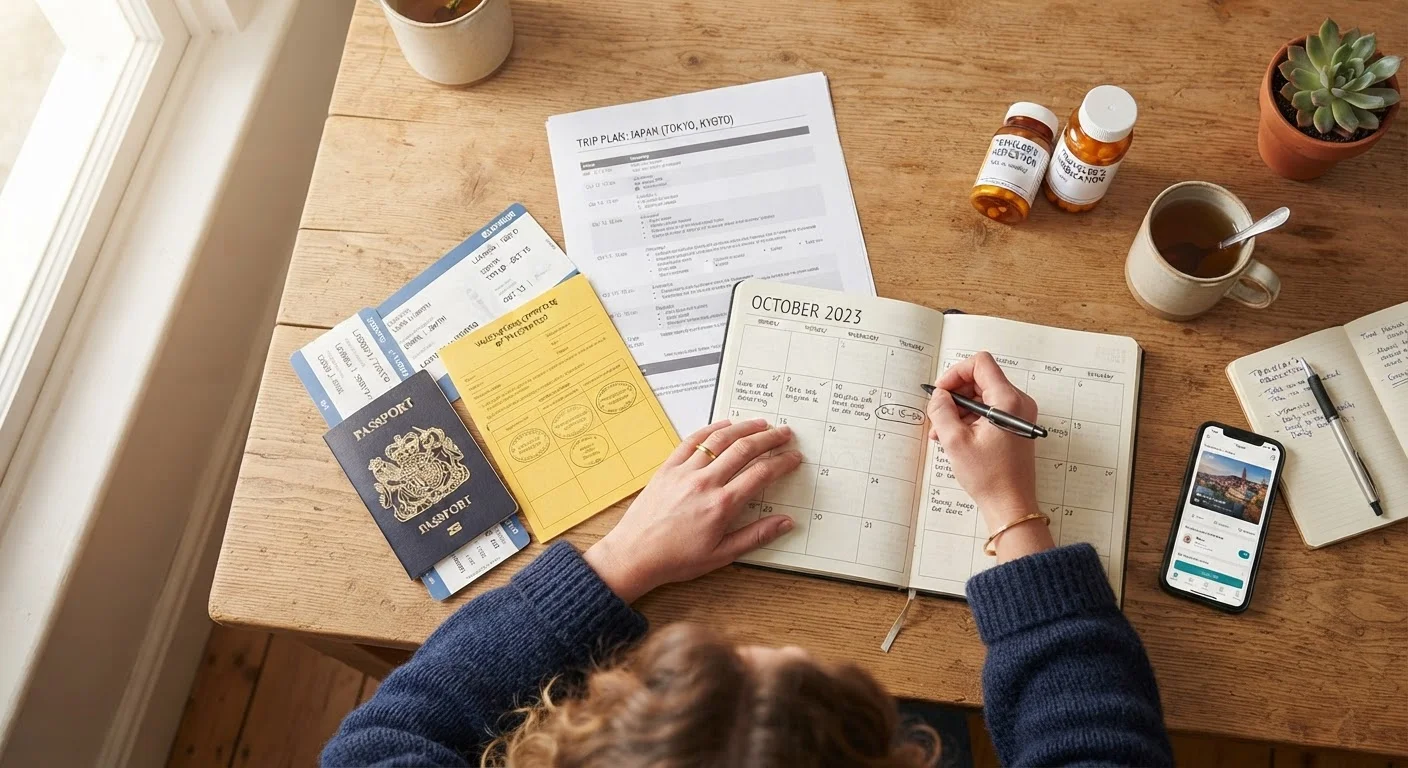
Photo credit: FaqInsider.com
In this article
From vaccinations to prescription refills, here's how to work backward from your departure date to arrive prepared and protected.
Key Takeaways
- Some vaccinations require 4-6 weeks to reach full effectiveness - start your health prep early.
- A travel medicine consultation is the most efficient way to identify destination-specific health risks.
- Carry copies of all prescriptions and a letter from your doctor when traveling with medications.
- Travel health insurance and medical evacuation coverage are separate from standard trip insurance.
- Verify all entry health requirements directly with official government or embassy sources before departure.
Why a Timeline - Not Just a List - Matters
Most travelers think of health prep as a last-minute errand: pick up some antacids, toss in a bandage kit, done. But certain health steps have hard biological deadlines. A typhoid vaccine, for example, should be administered at least two weeks before travel, while some hepatitis series require two months or more. Starting too late simply means the protection isn't there when you need it.
Working backward from your departure date - rather than forward from today - changes everything. It turns vague intentions into concrete appointments and gives you time to address surprises, like a prescription that needs prior authorization or a vaccine your doctor has to order specially.
For a full picture of everything that needs to come together before an international trip, see our comprehensive pre-departure reference. This checklist focuses specifically on the health dimension, organized by when each step should happen.
8+ Weeks Before Departure
4-8 Weeks Before Departure
1-4 Weeks Before Departure
48-72 Hours Before Departure
Tools You'll Need Along the Way
You don't need anything fancy to work through this timeline - just the right contacts and documents in one place. Here's what to gather before you start.
CDC Traveler's Health Website (wwwnc.cdc.gov/travel)
Look up destination-specific vaccination recommendations, disease alerts, and health notices from the U.S. Centers for Disease Control and Prevention.
Travel Medicine Clinic or Provider
A specialist who can administer destination-appropriate vaccines, prescribe preventive medications, and review your personal health history in context of your trip.
Personal Vaccination Record (Yellow Card or equivalent)
Official documentation of your immunization history, required for entry in some countries and useful for medical consultations abroad.
Travel Health Insurance Policy
Covers emergency medical care and, if purchased separately, medical evacuation costs that standard domestic health plans typically exclude abroad.
Secure Document Storage App or Encrypted Cloud Folder
Store digital backups of prescriptions, vaccination records, insurance cards, and your doctor's letter in a place you can access from any device.
Destination Country Embassy or Consulate Website
Verify current official entry health requirements, including any mandatory vaccinations or health declarations, directly from the source.
If you're managing an ongoing health condition, the preparation steps are more involved. Our guide on managing chronic conditions while traveling covers medication logistics, climate considerations, and how to communicate with medical providers abroad.
Key Risks to Prepare For
Always Verify Entry Requirements Officially
Health entry requirements - including mandatory vaccinations and health declarations - can change with little notice. Never rely solely on a third-party travel site or this checklist for these details. Check the official website of your destination country's embassy or government health authority within two weeks of departure. Arriving without the correct documentation can result in denied boarding or quarantine at the border.
Beyond vaccinations, health preparation means thinking through in-flight physiology, food and water safety at your destination, and what happens if something goes wrong medically while you're away. Travelers on long-haul flights should also understand circulation risks - what the research actually shows about DVT and air travel is worth a read before a multi-hour flight.
For the broader logistics of international planning beyond health, our international trip planning walkthrough covers documents, bookings, and arrival prep from start to finish.
Medications in Checked Luggage Are a Risk
Checked bags are occasionally lost, delayed, or misrouted - sometimes for days. Any medication you need regularly, including daily prescriptions and destination-specific preventives like antimalarials, should travel in your carry-on bag. Keep them in original labeled containers to avoid issues at security or customs.
This article is for general informational purposes only and does not constitute medical advice. Consult a qualified healthcare provider for guidance specific to your health history, destination, and travel itinerary.

Author
Travel Editorial Team
Travel Editorial Team is the collective byline for our editorial team and contributor network. Articles published under this byline or an editorial pen name are researched, written, and reviewed according to our editorial standards for clarity, consistency, and independence before publication.
View all articles →