
Grout, Caulk, and Where Each One Belongs in a Tiled Bathroom
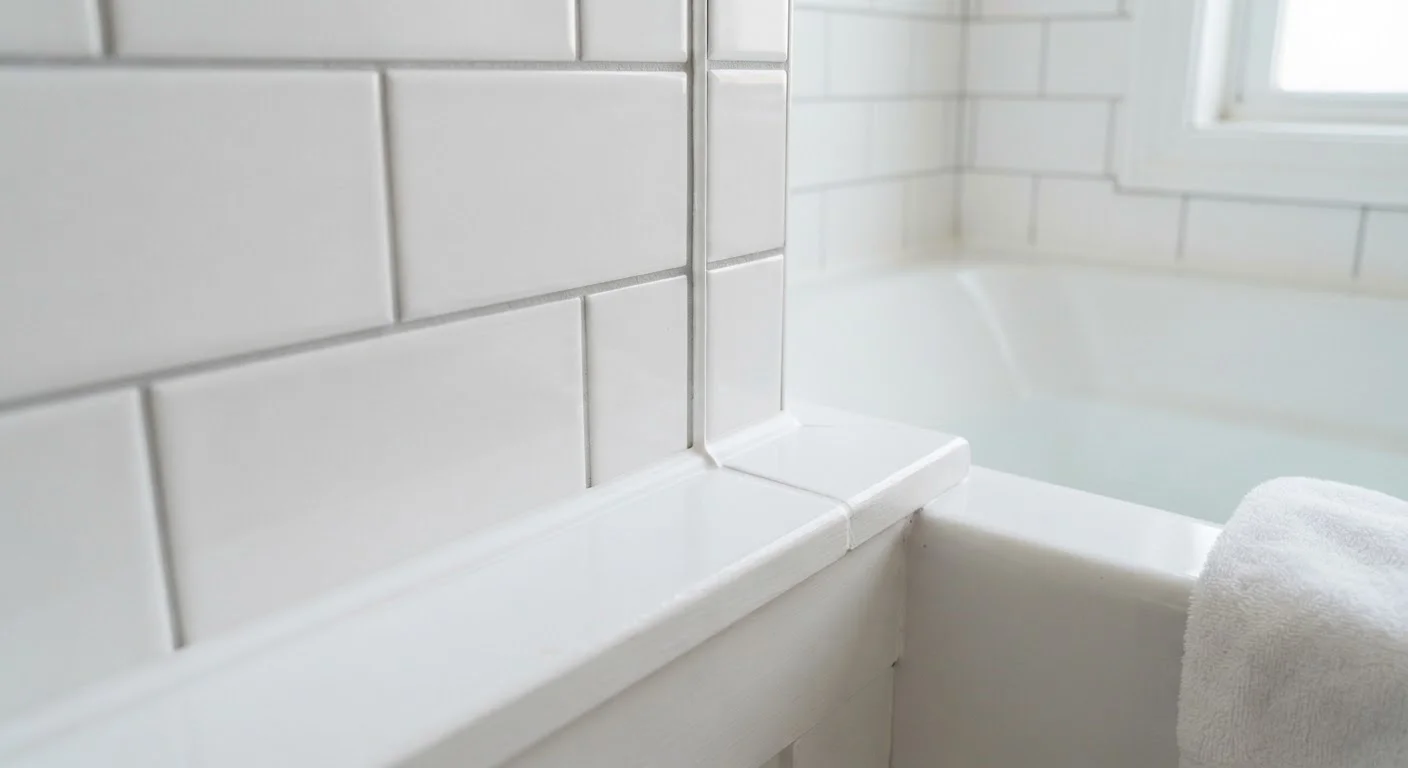
Photo credit: FaqInsider.com
In this article
Using the wrong material in the wrong place is a common tile mistake. This guide clarifies where grout ends and caulk begins — and why it matters.
Key Takeaways
- Grout is a rigid filler used between tiles; it cannot flex and will crack at movement joints.
- Caulk is a flexible sealant required wherever two different planes or materials meet.
- Using grout in corners or along tub edges leads to cracking and water infiltration over time.
- The tub-to-tile joint and all inside corners in a tiled shower must always be caulked, not grouted.
- Matching caulk color to your grout creates a seamless appearance without sacrificing function.
Why the Mix-Up Happens - and Why It Matters
Grout and caulk look similar when wet, come in matching colors, and both fill gaps near tile. It's easy to assume they're interchangeable. They aren't - and using the wrong one in the wrong location is one of the most common mistakes that leads to cracked joints, mold behind walls, and costly water damage.
The core difference is physics. Grout is cement-based and rigid once cured. Caulk - whether silicone, latex, or sanded acrylic - remains permanently flexible. Bathrooms are dynamic environments: tubs flex under weight, floors vibrate, walls expand and contract with temperature and humidity. Any joint that spans two different surfaces, or sits at a change of direction, experiences movement. Rigid grout placed in those joints will crack - often within a season or two - opening a pathway for water to reach the substrate beneath your tile.
Understanding this distinction is foundational. As our guide to bathroom remodel missteps explains, small oversights in material selection compound quickly into structural problems that exceed their original repair cost several times over.
| Criterion | Grout | Caulk |
|---|---|---|
| Material composition | Cement-based, rigid when cured | Silicone or latex, remains flexible |
| Primary use location | Between tiles on flat surfaces | Corners, plane changes, fixture joints |
| Handles movement? | No - cracks under flex | Yes - designed to flex |
| Water resistance | Moderate; can absorb moisture | High (especially silicone) |
| Mold resistance | Lower; porous without sealer | Higher; non-porous surface |
| Tub-to-tile joint | Incorrect - will crack | Correct choice |
| Inside shower corners | Incorrect - will crack | Correct choice |
| Ease of repair | Requires regrout tool to remove | Can be cut out and reapplied |
Where Grout Belongs
Grout's job is to fill the consistent, narrow gaps between tiles across a flat plane - a wall field, a shower floor, a backsplash. It bonds the tile edges together, helps distribute minor loads, and gives the installation its finished, cohesive look. There are two main types worth knowing:
- Sanded grout contains fine sand filler and is used for joints wider than approximately 1/8 inch. The sand adds body and reduces shrinkage.
- Unsanded (non-sanded) grout is smoother and used for narrower joints, as well as polished stone tiles where sand could scratch the surface.
Both types cure hard. That hardness is ideal for stable, flat surfaces - but it becomes a liability the moment movement is introduced. Never use grout in a corner, along a threshold, or at any joint where two different planes or materials meet.
~1/8"
Joint width threshold for sanded vs. unsanded grout
Industry tile installation guidelines generally recommend switching from unsanded to sanded grout for joints wider than approximately 1/8 inch to prevent cracking.
24 hrs
Typical silicone caulk cure time before water exposure
Most silicone caulk manufacturers specify a minimum 24-hour cure period before the joint should be exposed to water, though some formulas vary.
Where Caulk Belongs - and Which Type to Use
In a tiled bathroom, caulk belongs at every change-of-plane joint: the seam where the tub deck meets the wall tile, every inside corner in the shower, the joint where tile meets a vanity top, and anywhere tile transitions to another material like a wood threshold or metal strip.
For wet areas like showers and tub surrounds, 100% silicone caulk is the most water-resistant option. It doesn't absorb moisture and resists mold growth better than latex alternatives. The trade-off is that it's harder to tool and can be difficult to remove cleanly if you need to redo it.
Sanded latex caulk is a practical middle ground - flexible, paintable, and available in colors formulated to match standard grout shades. It's easier to apply neatly and well-suited for areas that stay damp rather than continuously wet. For a deeper look at how caulk behaves in different sealing contexts, see our overview of grout and caulk joint applications.
One practical tip: when choosing caulk, bring a grout chip or photo to the hardware store. Most major grout lines have a coordinating caulk color, making it straightforward to achieve a visually consistent finish even where you're switching materials.
The Tub-Wall Joint: The Most Commonly Grouted Spot That Shouldn't Be
The horizontal seam where your bathtub deck meets the tile wall is the single most frequently mishandled joint in bathroom tile work. It looks like a tile-to-tile joint - but it isn't. The tub is an independent fixture that deflects slightly every time someone steps into it. The wall tile is anchored to the studs. These two surfaces move independently.
Grout placed in this joint will crack within months in most homes - sometimes sooner. Once cracked, water infiltrates the gap, saturates the backer board or drywall behind the tile, and creates the conditions for mold and structural rot. By the time those problems become visible, repair costs frequently run into the thousands of dollars.
The correct approach: rake out any old grout in this joint completely, clean the surfaces, and fill it with a bead of silicone caulk. Smooth it with a wet finger or caulk tool, remove the tape if you used any, and allow it to cure fully before exposing it to water - typically 24 hours, though product labels vary.
Caulk plays a similarly important waterproofing role in other locations around the home. Our article on window caulking covers how the same principle of sealing movement joints applies beyond the bathroom.
Matching Caulk Color to Your Grout
Most grout manufacturers produce a coordinating caulk in the same color range, specifically designed to blend with their grout products. When selecting caulk for corners and movement joints, check whether your grout brand offers a matching caulk - many do. If an exact match isn't available, bring a dry grout sample to compare in-store under natural light, since caulk colors can shift slightly once cured.

Author
Home & Garden Editorial Team
Home & Garden Editorial Team is the collective byline for our editorial team and contributor network. Articles published under this byline or an editorial pen name are researched, written, and reviewed according to our editorial standards for clarity, consistency, and independence before publication.
View all articles →